An air compressor leaks air due to several common issues, including loose fittings, worn seals and gaskets, damaged hoses, faulty valves, and corrosion. These leaks can waste 20-30% of compressed air, increasing energy consumption and reducing equipment lifespan. Addressing these problems quickly can save significant costs and prolong the life of your air compressor system.
Understanding Air Compressor Leaks
An air compressor converts power into potential energy stored in pressurized air, which then powers pneumatic tools. When a leak occurs, this stored energy escapes, forcing the compressor to work harder to maintain pressure. This overworking leads to several detrimental effects:
- Increased Energy Consumption: Leaks can account for 20-30% of wasted compressed air in industrial settings, directly increasing electricity bills.
- Reduced Equipment Lifespan: Continuous cycling and extended run times stress the compressor’s motor and components, accelerating wear.
- Decreased Productivity: Fluctuating or low air pressure impairs tool performance, leading to inefficiencies.
- Higher Maintenance Costs: Increased strain often results in more frequent breakdowns and costly repairs.
Common Culprits: Why Your Air Compressor Leaks
Air leaks can occur in various parts of a compressed air system, from the compressor unit to the distribution network and tools. Identifying the specific source is the first step toward a lasting solution.
Loose Fittings and Connections
Constant vibration and regular usage can cause threaded fittings, couplings, and connections to loosen. These are often the easiest leaks to fix. Poor initial installation or the absence of proper thread sealants can also contribute to leaks at these points.
Worn Seals and Gaskets
Seals and gaskets create airtight barriers. Exposure to heat, pressure cycles, oils, and general wear can cause these materials to harden, crack, or deteriorate. When a seal or gasket fails, air escapes. This includes O-rings in quick disconnects or seals within internal compressor components.
Damaged Hoses and Tubing
Flexible hoses and rigid tubes transport compressed air. They are susceptible to damage from abrasion, kinks, punctures, UV light, and chemical degradation. Even small micro-fractures can become significant leak points, especially at higher pressures.
Faulty Valves
Several valves control airflow and pressure. Malfunctions can lead to leaks:
- Pressure Switch/Unloader Valve: Continuous air leaking from the unloader valve after the compressor shuts off typically indicates a stuck-open check valve.
- Safety Relief Valve: If the safety relief valve leaks when the compressor is pumping, it may be due to internal component failure or improper seating.
- Check Valve: A faulty or stuck-open check valve allows air to bleed back out of the tank.
Corrosion and Rust
In older systems or humid environments, internal and external corrosion can weaken metal components like the air tank, pipes, and fittings. Rust can create pinholes or compromise seals, leading to persistent leaks.
Detecting Air Compressor Leaks Effectively
Before fixing a leak, you need to find it. Several methods range from simple observations to specialized tools.
Visual Inspection
|
Our Picks for the Best Air Compressor in 2026
As an Amazon Associate I earn from qualifying purchases.
|
||
| Num | Product | Action |
|---|---|---|
| 1 | AC Compressor for 2000-2027 Chevy Silverado/GMC Sierra/Cadillac Escalade (4.8L/5.3L/6.0L V8) | OE Replaces 15036042, 15707611, CO29002C,78363, 78362 | A/C Compressor & Kit |

|
| 2 | ECOMAX Air Compressor 6 Gallon 150 PSI Pancake Portable Oil-free Tank with 10 PCS Accessories Kit |
|
| 3 | Metabo HPT Pancake Air Compressor, 6-Gallon 165PSI, Portable Air Compressor with 1.0 HP Oil-Free High Efficiency Motor, Lihghtweight, Quick Couplers for Fast Tool Changes, EC711S |
|
| 4 | Airmoto Tire Inflator Portable Air Compressor - Air Pump for Car Tires with Digital Pressure Gauge, LED Light and Auto Shut-Off Function - Cordless Pump for Car, Motorcycle, Bicycle, Ball |
|
| 5 | California Air Tools CAT-4710W 1.0 HP Quiet and Oil-Free Air Compressor with Wheels, 4.7 Gallon Steel Tank, 75 dBA Noise Level, Lightweight |
|
| 6 | CRAFTSMAN Air Compressor, 2 Gallon Portable Air Compressor 1/3HP Max 125 PSI Oil-Free Light Weight with 10 PCS Accessory Kit |
|
| 7 | Tire Inflator Portable Air Compressor, 150PSI Cordless Air Pump for Car Tires with Auto Shut-Off, Portable Tire Pump for Car, Bike, Motorcycle and Balls |
|
| 8 | Craftsman Air Compressors 6 Gallon Portable Pancake Air Compressor,Oil Free Max 150 Psi 1.0HP 2.6 CFM@90PSI Electric Air Compressor Shop Air Compressor, CMXECXA02106410 |
|
| 9 | DEWALT Tire Inflator Portable Air Compressor 20V MAX, Car Air Pump with Automatic Shut Off, LED Light, Tool Only (DCC020IB) |
|
| 10 | Quiet Air Compressor, Only 68dB, 5 Gallon Steel Tank, 2.8CFM @ 90PSI, Oil-Free, Electric Air Compressor Perfect for Woodwork Nailing, Garage, Car, Pneumatic Tool, Includes 11 Accessories |
|
Start with a thorough visual check for obvious signs of damage like cracked hoses, loose fittings, or corroded pipes. Many leaks are too small to be seen visually.
Audible Hissing Sounds
In a quiet environment, escaping pressurized air often creates a distinct hissing sound. Listen carefully around your compressor and air lines. This method is effective for moderately sized leaks but challenging in noisy workshops.
Soapy Water Test
This is a reliable and cost-effective method. With the compressor pressurized, apply a solution of soapy water to suspected areas. Bubbles will form at the leak point, making it visible.
Ultrasonic Leak Detectors
For small or inaudible leaks, especially in noisy environments, an ultrasonic leak detector is invaluable. These devices pick up high-frequency sounds from turbulent air, converting them into an audible sound or visual indicator. They are highly accurate for large systems.
5 Quick Fixes for Common Air Compressor Leaks
Once you’ve identified the source of the leak, it’s time to take action. Here are five quick fixes for the most common air compressor leaks:
1. Tighten Loose Connections
Many leaks stem from simple loose fittings, couplings, and pipe joints. A turn with a wrench is often all that’s needed. Routinely checking and tightening these points can prevent leaks. Do not over-tighten, as this can strip threads. For threaded connections, ensure proper thread sealant or Teflon tape was used.
2. Replace Worn Seals and Gaskets
If the soapy water test reveals bubbles around a gasket or O-ring, it’s likely worn out. Turn off and depressurize your air compressor, then carefully remove the old seal or gasket and replace it with a new one that matches original specifications. This is a common fix for leaks in pressure switches, tank drains, or between compressor components.
3. Repair or Replace Damaged Hoses and Tubing
Cracked, brittle, or punctured hoses and tubes are clear culprits. For small, localized damage on a rubber hose, you might use a hose repair kit or cut out the damaged section and install a new fitting. However, if the damage is extensive or on rigid tubing, complete replacement is often the safest solution. Always use high-quality materials designed for compressed air applications.
4. Address Faulty Valves
Leaks from valves require specific attention:
- Unloader Valve: If the unloader valve on your pressure switch leaks continuously after the compressor shuts off, the internal check valve is likely stuck open. Inspect, clean, or replace the check valve. The pressure switch assembly may need replacement if the unloader valve is integral and damaged.
- Safety Relief Valve: If a safety relief valve is leaking, it could indicate it’s faulty or that system pressure is too high. Ensure system pressure is within operating limits. If the leak persists, the relief valve may need cleaning or replacement.
- Drain Valves: Leaky drain valves are often due to accumulated debris or worn seals. Clean the valve thoroughly, and if the leak continues, replace the valve.
5. Apply Sealants or Epoxy for Minor Tank Leaks
For very small pinholes or minor surface corrosion leaks on the air tank (not structural cracks), a high-strength epoxy like JB Weld can offer a quick, temporary fix. Thoroughly clean and rough up the area with sandpaper. Mix and apply a generous, even layer over the leak, extending about half an inch in all directions. Allow it to cure completely before repressurizing. A compromised tank with significant rust or structural damage should always be replaced for safety.
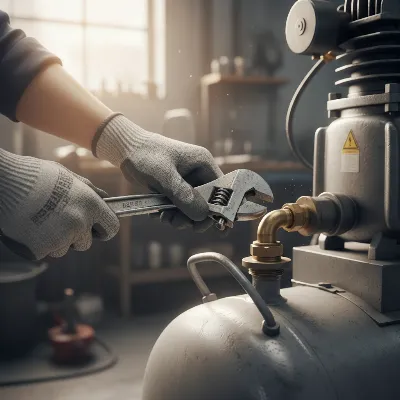 Technician tightening a loose fitting on an air compressor pipe to prevent air leakage
Preventing Future Air Compressor Leaks
Preventative measures are more cost-effective than reactive repairs. Incorporating these practices can significantly reduce future air leaks.
Regular Maintenance Checks
Implement a routine inspection schedule, including visual checks, listening for unusual noises, and periodic soapy water tests on all connections, hoses, and valves. Promptly address any issues. Drain condensate from the tank daily to prevent internal corrosion.
Using High-Quality Components
Invest in durable, high-quality fittings, hoses, and seals from reputable manufacturers. Quality components withstand pressures and stresses, leading to fewer leaks and breakdowns.
Optimizing System Pressure
Running your compressor at higher pressure than necessary increases stress and exacerbates leak rates. Identify the minimum pressure required for your air tools and operate accordingly. Even a slight reduction can significantly decrease air lost through leaks.
Employee Training
Educate anyone who operates or maintains the system on proper usage, common leak indicators, and basic troubleshooting. This ensures early identification and correct handling of potential issues.
Reputable Air Compressor Brands
Choosing an air compressor from a reputable brand can significantly impact its reliability and longevity, minimizing leaks. Brands like Ingersoll Rand, Atlas Copco, Quincy, Sullair, and Chicago Pneumatic are renowned for robust engineering and quality parts. For smaller applications, Makita, DeWalt, Campbell Hausfeld, and California Air Tools offer reliable options. Investing in a well-regarded brand often means better build quality, fewer problems, and easier access to replacement parts.
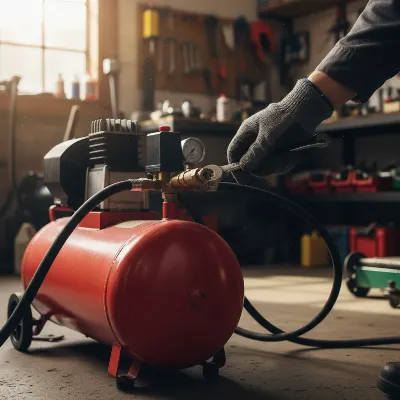 Hand performing maintenance on an air compressor, checking connections and hoses.
Conclusion
An air compressor leaking air is a significant source of energy waste, reduced productivity, and accelerated equipment wear. By understanding common causes—from loose fittings and worn seals to damaged hoses and faulty valves—you can effectively diagnose and address these issues. Implementing quick fixes like tightening connections, replacing compromised components, and carefully applying sealants can restore efficiency. A proactive approach through regular maintenance, investing in quality parts, optimizing system pressure, and training personnel will dramatically reduce future leaks. Prioritizing your compressed air system’s health extends its lifespan and ensures tools operate at peak performance, saving time and money.
Fix Common Air Compressor Leaks
This guide provides five quick steps to identify and fix common air compressor leaks, improving efficiency and extending equipment life.
Inspect all fittings, couplings, and pipe joints for looseness. Use a wrench to tighten any loose connections, being careful not to over-tighten and strip threads. Ensure proper thread sealant or Teflon tape was used during initial installation for threaded connections.
If a soapy water test indicates bubbles around a gasket or O-ring, it's likely worn out. Turn off and depressurize the compressor, then carefully remove and replace the old seal or gasket with a new one matching original specifications. This is common for pressure switches or tank drains.
Check for cracked, brittle, or punctured hoses and tubes. For small damage on rubber hoses, use a repair kit or cut out the damaged section and install a new fitting. For extensive damage or rigid tubing, complete replacement with high-quality materials designed for compressed air is often the safest solution.
For unloader valve leaks after compressor shutdown, inspect and clean or replace the internal check valve. If a safety relief valve leaks, ensure system pressure is correct; if it persists, clean or replace the valve. Clean or replace drain valves if they leak due to debris or worn seals.
For very small pinholes or minor surface corrosion on the air tank (not structural cracks), clean and rough up the area with sandpaper. Apply a high-strength epoxy like JB Weld, extending about half an inch in all directions. Allow it to cure completely before repressurizing the tank; replace significantly damaged tanks for safety.

I tried all the tips for my old Porter-Cable, especially looking for damaged hoses, but I’m still having trouble pinpointing the exact spot. The soapy water trick helped me find a general area, but it’s a slow leak and hard to see the bubbles. Wish there was a bit more detail on really tiny leaks.
My air compressor was constantly cycling, and I suspected a leak. The part about checking for loose fittings was super helpful. I tightened a few connections I hadn’t even thought about, and it definitely improved things. Still hear a tiny hiss, so I’ll be checking the valves next, but it’s much better than before.
I was losing so much pressure and couldn’t figure out why. Turns out, it was a worn seal on my old Craftsman compressor, just like mentioned. Replaced it and the difference is night and day. My tools are running much more efficiently now, and I’m not constantly waiting for the tank to refill. Great advice!
My energy bill was getting ridiculous, and I never connected it to my air compressor running all the time. The explanation about 20-30% wasted air really hit home. I found a corroded connection on my main line, cleaned it up, and sealed it. It’s amazing how much quieter my shop is now, and I’m hoping to see a difference in my next bill.