Stepping into your home garage, you envision a space of productivity, where projects come to life with the right tools at your fingertips. Among the most versatile and essential pieces of equipment for any serious DIYer or automotive enthusiast is the air compressor. These powerhouses transform electricity into kinetic energy, providing the compressed air needed to run everything from impact wrenches and nail guns to paint sprayers and tire inflators. Choosing the best air compressor for your home garage in 2026 means navigating a market rich with options, balancing power, noise, portability, and budget. This comprehensive guide is designed to cut through the noise, offering expert insights to help you select the ideal companion for your workshop needs.
Overview of Air Compressors
At its core, an air compressor is a machine that converts power, often from an electric motor or gasoline engine, into potential energy stored in pressurized air. It works by forcing air into a storage tank, increasing its pressure. When that air is released, it can power a wide array of pneumatic tools and applications. For home garages, the primary need is typically for piston-type compressors, which are well-suited for intermittent use.
While industrial settings might utilize more complex rotary screw or centrifugal compressors, these are generally oversized and over-powered for a typical home environment due to their continuous operation design, larger footprint, and higher cost. Home garage applications commonly involve tasks such as inflating car and bike tires, cleaning debris with a blow gun, operating various nail guns for carpentry, using impact wrenches for vehicle maintenance, and even light-duty spray painting. The efficiency and safety of these tasks depend heavily on selecting a compressor that matches the tool’s specific air volume and pressure requirements. For air compressor buying guides on this site.
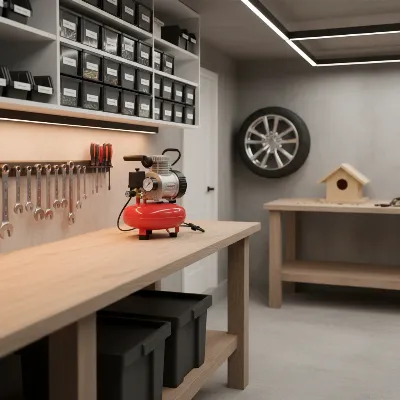 A compact electric air compressor in a well-organized home garage with various tools visible in the background, showing practical application.
Classification of Air Compressors for Home Use
Understanding the different types of air compressors tailored for home use is crucial for making an informed decision. The majority of models suitable for a home garage fall under the piston (or reciprocating) category, which can be further categorized by their design and lubrication method.
Piston Air Compressors
Piston air compressors are the most common and practical choice for home garages. They operate using a piston that moves within a cylinder, compressing air into a storage tank. This simple, reliable mechanism makes them a staple for DIY projects.
- Advantages: Piston compressors are generally more affordable upfront, simpler in design, and easier to maintain for basic tasks. They deliver strong, high-pressure output, making them ideal for tools that require short, powerful bursts of air. Many models are portable, designed with handles and wheels for easy movement around the garage or to different job sites.
- Disadvantages: Compared to their industrial counterparts, piston compressors can be noisier during operation, which is a significant factor in a residential setting. They typically have a lower duty cycle, meaning they require rest periods to cool down after continuous operation, which can interrupt longer tasks like sanding or grinding.
- Suitable Applications: These compressors excel at tasks such as inflating vehicle tires, powering pneumatic nailers (brad, finish, or even some framing nailers), using air blow guns for cleaning, and operating smaller air tools intermittently, such as air ratchets or light impact wrenches.
Oil-Free vs. Oil-Lubricated
|
Our Picks for the Best Air Compressor in 2026
As an Amazon Associate I earn from qualifying purchases.
|
||
| Num | Product | Action |
|---|---|---|
| 1 | Airmoto Tire Inflator Portable Air Compressor - Air Pump for Car Tires with Digital Pressure Gauge, LED Light and Auto Shut-Off Function - Cordless Pump for Car, Motorcycle, Bicycle, Ball |

|
| 2 | Tire Inflator Portable Air Compressor, 150PSI Cordless Air Pump for Car Tires with Auto Shut-Off, Portable Tire Pump for Car, Bike, Motorcycle and Balls |
|
| 3 | CRAFTSMAN Air Compressor, 2 Gallon Portable Air Compressor 1/3HP Max 125 PSI Oil-Free Light Weight with 10 PCS Accessory Kit |
|
| 4 | Quiet Air Compressor, Only 68dB, 5 Gallon Steel Tank, 2.8CFM @ 90PSI, Oil-Free, Electric Air Compressor Perfect for Woodwork Nailing, Garage, Car, Pneumatic Tool, Includes 11 Accessories |
|
| 5 | AC Compressor for 2000-2027 Chevy Silverado/GMC Sierra/Cadillac Escalade (4.8L/5.3L/6.0L V8) | OE Replaces 15036042, 15707611, CO29002C,78363, 78362 | A/C Compressor & Kit |
|
| 6 | ECOMAX Air Compressor 6 Gallon 150 PSI Pancake Portable Oil-free Tank with 10 PCS Accessories Kit |
|
| 7 | Metabo HPT Pancake Air Compressor, 6-Gallon 165PSI, Portable Air Compressor with 1.0 HP Oil-Free High Efficiency Motor, Lihghtweight, Quick Couplers for Fast Tool Changes, EC711S |
|
| 8 | DEWALT Tire Inflator Portable Air Compressor 20V MAX, Car Air Pump with Automatic Shut Off, LED Light, Tool Only (DCC020IB) |
|
| 9 | Craftsman Air Compressors 6 Gallon Portable Pancake Air Compressor,Oil Free Max 150 Psi 1.0HP 2.6 CFM@90PSI Electric Air Compressor Shop Air Compressor, CMXECXA02106410 |
|
| 10 | California Air Tools CAT-4710W 1.0 HP Quiet and Oil-Free Air Compressor with Wheels, 4.7 Gallon Steel Tank, 75 dBA Noise Level, Lightweight |
|
The lubrication system of an air compressor significantly impacts its performance, maintenance, and the quality of the compressed air.
- Oil-Free Pumps: These compressors use a permanent, Teflon-coated piston, eliminating the need for oil.
- Pros: Oil-free pumps require virtually no maintenance (no oil changes), are lighter, and produce cleaner air, making them ideal for painting or airbrushing where oil contamination is undesirable. They also perform better in colder garage environments as there’s no oil to thicken.
- Cons: They tend to be noisier than oil-lubricated models and may have a slightly shorter lifespan due to increased friction, though modern designs are significantly improving durability.
- Oil-Lubricated Pumps: These traditional compressors use oil to lubricate internal components, reducing friction and heat.
- Pros: Oil-lubricated compressors are generally more durable, have a longer lifespan, and operate quieter than oil-free models. They are built for heavier, more continuous use.
- Cons: They require regular oil changes and checks, adding to maintenance. The compressed air can also contain oil mist, which necessitates filtration for applications like painting. They can also be heavier and harder to start in very cold temperatures due to oil viscosity.
For the vast majority of home garage users, an oil-free air compressor is the preferred choice due to its low maintenance, cleaner air, and often lighter weight.
Comparison Table: Key Home Garage Air Compressor Types
When selecting an air compressor for your home garage, different designs cater to various needs. Here’s a comparison of common types you’ll encounter, focusing on features relevant to home use.
| Feature | Pancake Compressor | Hot Dog Compressor | Twin Stack Compressor | Vertical Compressor |
|---|---|---|---|---|
| Tank Size | Typically 2-6 gallons | Typically 3-8 gallons | Typically 4-10 gallons | Typically 20-30+ gallons |
| Portability | Excellent (compact, stable, easy to carry) | Good (portable, but length can be awkward) | Good (stacked design, often with handles) | Moderate (usually wheeled, but heavy/tall) |
| Noise Level | Varies, often moderate to high | Varies, often moderate to high | Varies, often moderate to high | Can be quieter, especially larger units |
| Stability | Very stable (low center of gravity) | Decent (can be prone to tipping if long) | Good | Good (vertical footprint saves floor space) |
| Typical Tasks | Inflating, brad/finish nailing, blow guns | Inflating, nailing, light automotive | Nailing, light impact wrenches, spray painting | Heavier impact wrenches, sanders, grinders, painting |
| Footprint | Small, wide | Medium, long | Medium, stacked | Small, tall |
| Maintenance | Generally oil-free, low maintenance | Generally oil-free, low maintenance | Can be oil-free or oil-lubricated | Often oil-lubricated for larger sizes, requires more maintenance |
How to Choose the Right Air Compressor (Buying Guide)
Selecting the perfect air compressor for your home garage involves carefully considering your specific needs, budget, and desired features. By focusing on key specifications, you can ensure your investment genuinely powers your projects.
Determine Your Usage Needs
Before diving into models, list the tools you plan to operate. This will guide your CFM, PSI, and tank volume requirements.
- Cubic Feet per Minute (CFM): This measures the volume of air a compressor delivers at a specific pressure. Always look for the CFM at 90 PSI, as most air tools operate at this pressure. Your compressor’s CFM at 90 PSI must exceed your most air-hungry tool’s requirement.
- 0.5 – 2.0 CFM: Suitable for brad nailers, finish nailers, inflating tires, and blow guns.
- 2.0 – 4.0 CFM: Can handle standard air tools like drills, small impact wrenches, and ratchets for intermittent use.
- 5.0+ CFM: Required for continuous-use tools such as sanders, grinders, and most spray guns.
- “For maximum efficiency, always add about 50 percent to your tool’s required CFM to ensure your compressor isn’t constantly cycling, which can shorten its lifespan and overheat the motor.”
- Pounds per Square Inch (PSI): This is the pressure at which air is delivered. Most air tools require at least 90 PSI to function effectively. A higher maximum PSI means the compressor can store more air, allowing tools to run longer before the compressor cycles on again. For home use, a maximum pressure of 120-175 PSI is common and sufficient.
- Tank Volume: Measured in gallons, the tank size acts as an air reserve.
- 2-6 Gallons: Excellent for quick, burst-usage tools like nail guns or tire inflators. Portable and easy to store.
- 8-20 Gallons: A sweet spot for most DIYers, offering a good balance for intermittent use of various tools, including some impact wrenches and occasional spray painting, without excessive cycling.
- 20+ Gallons: Ideal for more demanding, continuous tasks like extended sanding, grinding, or larger painting projects, allowing for longer run times between cycles.
- Amp Draw: Most home garages run on standard 15-amp, 120V circuits. Look for “Low Amp Draw” motors (under 10 amps) to avoid tripping breakers, especially if your garage circuit is shared with lights or other equipment.
Budget Considerations
Air compressor prices vary significantly based on size, power, features, and brand. You can find portable units for light tasks starting around $100-$200, while more robust models capable of running multiple tools can range from $300-$800. Professional-grade or larger vertical models for extensive use can exceed $1,000. Consider your long-term needs and the types of projects you anticipate doing to find the best value within your budget. Remember that investing in a quality unit now can save you money on repairs and replacements down the line.
Brand and Supplier
Opting for reputable brands ensures better quality, reliability, and customer support. Brands like California Air Tools, DEWALT, Craftsman, Porter-Cable, Campbell Hausfeld, Makita, Ingersoll Rand, and Stealth are consistently well-regarded in the home garage segment. Purchasing from authorized dealers or well-known retailers often provides access to better warranties and after-sales service.
The Top 10 Best Air Compressors for Home Garages in 2026
Here’s a curated list of the top air compressors that stand out for home garage use in 2026, offering a range of features to suit different DIY needs and budgets.
1. California Air Tools 8010 Ultra Quiet Air Compressor
This model is a top contender for its exceptional quiet operation and low amp draw, making it perfect for residential settings.
- Key Specs: 8.0 Gallon Tank, 1.0 HP (2.0 HP Peak), 2.20 CFM @ 90 PSI, 60 dB noise level, Oil-Free, 8.5 Amp Draw.
- Pros: Ultra-quiet operation (conversation level), easy cold-weather starts, won’t trip standard 15-amp garage circuits, highly portable with wheels.
- Cons: Lower CFM for heavy-duty continuous tools.
2. DEWALT DWFP55126 6-Gallon Pancake Air Compressor
A robust and reliable choice known for its durability and cold-weather performance.
- Key Specs: 6 Gallon Tank, 165 Max PSI, 2.6 CFM @ 90 PSI, 80-89 dB noise level, Oil-Free.
- Pros: High max PSI, quick recovery, dual couplers for two users, durable build, reliable cold-weather start.
- Cons: Can be louder than “ultra-quiet” models, a bit heavier for its class.
3. Craftsman CMEC6150K 6-Gallon Pancake Air Compressor
An affordable and dependable workhorse, ideal for a wide range of common garage tasks.
- Key Specs: 6 Gallon Tank, 150 Max PSI, 2.6 SCFM @ 90 PSI, 80-89 dB noise level, Oil-Free.
- Pros: Compact and lightweight, budget-friendly, good for general DIY, often comes with an accessory kit.
- Cons: Can be noisy, may run warmer during extended use.
4. Porter-Cable C2002 6-Gallon Pancake Compressor
Similar to the Craftsman, this pancake compressor offers solid performance and portability.
- Key Specs: 6 Gallon Tank, 150 Max PSI, 2.6 SCFM @ 90 PSI, around 82 dB noise level (estimated), Oil-Free.
- Pros: Stable pancake design, lightweight, dual couplers, low-amp motor for easy cold starts.
- Cons: Can be noisy for indoor use, some users report minor issues with the drain valve.
5. California Air Tools 10020C Ultra Quiet Air Compressor
For heavier DIY tasks, this model provides increased power while maintaining quiet operation.
- Key Specs: 10 Gallon Tank, 125 Max PSI, 5.30 CFM @ 90 PSI, 70 dB noise level, Oil-Free, 7.0 Amp Draw.
- Pros: High CFM for more demanding tools (impact wrenches, spray guns), significantly quieter than standard compressors, longer continuous run time.
- Cons: Heavier and larger than pancake models, lower max PSI compared to some competitors.
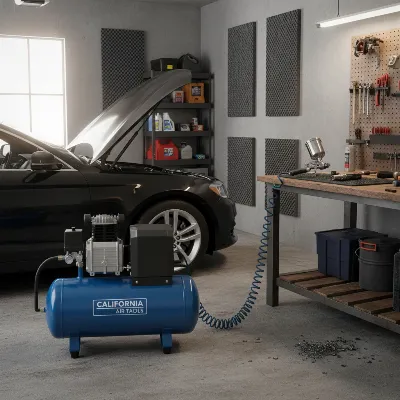 A powerful yet quiet air compressor with a 10-gallon tank in a garage workshop, connected to an impact wrench, highlighting its utility.
6. Stealth SAQ-20018 20-Gallon Ultra Quiet Air Compressor
A great option for those needing more air capacity and power for sustained tasks without excessive noise.
- Key Specs: 20 Gallon Tank, 150 Max PSI, 5.1 SCFM @ 90 PSI, 68 dB noise level, Oil-Free.
- Pros: Very quiet operation for a larger tank, ample air supply for demanding tools, good for extended use, oil-free for low maintenance.
- Cons: Larger footprint requires more space, heavier, longer fill time than smaller units.
7. Campbell Hausfeld Quiet 8 Gallon Air Compressor
A well-rounded, quiet model that’s portable and comes with a useful accessory kit.
- Key Specs: 8 Gallon Tank, 125 Max PSI, 2.4 CFM @ 90 PSI, 68 dB noise level, Oil-Free.
- Pros: Very quiet, good air output for its size, portable with wheels and handle, often includes accessories.
- Cons: Max PSI is on the lower side, not ideal for the most air-intensive tools.
8. Makita MAC5200 Big Bore 3.0 HP Air Compressor
A robust, oil-lubricated compressor known for its high CFM and durable construction.
- Key Specs: 5.2 Gallon Tank, 140 Max PSI, 6.5 CFM @ 90 PSI, 90 dB noise level, Oil-Lubricated.
- Pros: High CFM for powerful tools, durable cast iron cylinder, efficient oil-lubricated pump for longevity, portable with a wheel kit.
- Cons: Noticeably noisy, requires oil maintenance.
9. Ingersoll Rand P1IU-A9 Portable Twin Stack Air Compressor
Built for continuous, heavy-duty operation with a 100% duty cycle, this model is a workhorse.
- Key Specs: 4 Gallon Twin Stack Tank, 135 Max PSI, 4.3 CFM @ 90 PSI, 79 dB noise level, Oil-Lubricated.
- Pros: 100% duty cycle allows continuous use, high-quality construction, two universal couplers, smooth power delivery.
- Cons: Heavier and less portable due to lack of wheels (despite being portable), requires oil maintenance.
10. BOSTITCH CAP1512 Light-Duty Air Compressor
An excellent compact option for light tasks and maximum portability.
- Key Specs: 1.2 Gallon Tank, 150 Max PSI, 2.8 SCFM @ 90 PSI, 89 dB noise level, Oil-Free.
- Pros: Extremely lightweight and portable, high max PSI for its size, quick recovery, dual-user capability, thermal protection.
- Cons: Small tank size limits continuous use for air-hungry tools, can be noisy.
Usage and Maintenance Tips for Your Air Compressor
Ensuring your air compressor provides years of reliable service requires proper usage and regular maintenance. Neglecting these aspects can lead to costly repairs and reduced performance.
“Just like any high-performance machine, your air compressor thrives on a routine. Consistent checks and basic upkeep are the secrets to its longevity and peak efficiency,” advises a seasoned pneumatic tool technician.
Safety Precautions
Always prioritize safety when operating an air compressor:
- Read the Manual: Familiarize yourself with the manufacturer’s specific safety guidelines and operating instructions.
- Eye and Ear Protection: Always wear safety glasses or goggles to protect against debris, and use hearing protection, especially with noisier models.
- Ventilation: Operate electric compressors in dry, well-ventilated areas. Never use gasoline-powered compressors indoors due to exhaust fumes.
- Electrical Safety: Ensure your compressor’s power requirements match your electrical supply. Avoid using undersized or excessively long extension cords, as this can cause voltage drops and motor overheating.
- Pressure Release: Always release air pressure from the tank before performing maintenance or storing the compressor for an extended period.
Regular Maintenance Checklist
Proactive maintenance is key to extending the life of your air compressor.
- Drain the Tank: Condensation naturally forms inside the air tank. This moisture, if left undrained, can lead to rust and tank corrosion. Drain the tank daily or after each use by opening the drain valve at the bottom.
- Check and Change Air Filters: A clogged air filter restricts airflow, forcing the compressor to work harder and potentially overheat. Inspect the air intake filter regularly (e.g., monthly) and clean or replace it as needed, particularly in dusty environments.
- Check and Change Oil (for oil-lubricated models): For oil-lubricated compressors, regularly check the oil level using the dipstick and change the oil according to the manufacturer’s recommendations (typically every few hundred hours or annually). Use only the specified compressor oil.
- Inspect Hoses and Fittings: Check all hoses for cracks, leaks, or wear. Ensure all connections and couplers are tight and free from leaks. A soapy water solution can help detect subtle leaks.
- Tighten Fasteners: Vibrations during operation can cause nuts, bolts, and screws to loosen over time. Periodically check and tighten all fasteners to maintain structural integrity and reduce noise.
- Clean Intake Vents and Cooling Fins: Keep the intake vents and cooling fins free from dust and debris to ensure proper airflow and prevent overheating of the motor and pump.
By adhering to these simple yet critical maintenance routines, your air compressor will remain a reliable and efficient workhorse in your home garage for many years.
Conclusion
Choosing the ideal air compressor for your home garage in 2026 is an investment in your workshop’s capabilities and your DIY future. From inflating tires to powering intricate pneumatic tools, the right air compressor can dramatically enhance your productivity and project quality. Whether you prioritize whisper-quiet operation, robust power for heavy-duty tasks, or ultra-portability for various job sites, the market offers a diverse range of top-tier models from reputable brands like California Air Tools, DEWALT, and Craftsman. By carefully considering your specific needs for CFM, PSI, tank size, and noise level, you can confidently select a model that perfectly aligns with your projects and budget. Don’t let your next project be limited by insufficient air power; equip your garage with a compressor that empowers you to tackle any challenge.
What exciting projects will you unleash with your new air compressor?
Frequently Asked Questions
What size air compressor do I need for a typical home garage?
For most home garage DIYers, an air compressor with a 6-gallon to 20-gallon tank is ideal. A 6-gallon pancake compressor is excellent for tire inflation, brad nailing, and general cleanup. If you plan to use more demanding tools like framing nailers, impact wrenches, or spray guns, a 20-gallon model provides more sustained airflow and reduces motor cycling.
Is an oil-free air compressor a good choice for home use?
Yes, oil-free air compressors are highly recommended for most home garage users. They require minimal maintenance as there’s no oil to change, perform well in cold weather, and deliver cleaner air, which is crucial for painting or airbrushing projects. While potentially noisier than oiled units, many modern oil-free compressors, like those from California Air Tools, are designed to be ultra-quiet.
Can I use a small portable tire inflator as my main garage compressor?
No, a small portable tire inflator is not a suitable replacement for a full-fledged garage air compressor if you intend to use air tools. Tire inflators are designed for intermittent, low-volume tasks like inflating tires or sports equipment. They lack the sustained CFM (air volume) and tank capacity required to power pneumatic tools like nail guns, impact wrenches, or paint sprayers.
How important is the ‘duty cycle’ rating for a home garage air compressor?
The duty cycle indicates the percentage of time a compressor can run within a given period before needing to rest. For occasional, short-burst tasks typical in a home garage, a standard duty cycle (e.g., 50-75%) is usually sufficient. However, for continuous, air-intensive applications like sanding or grinding, a higher duty cycle or a larger tank is beneficial to prevent overheating and ensure uninterrupted workflow.
Can I use an extension cord with my air compressor?
It is generally advised to avoid using extension cords with air compressors, as they can cause voltage drops. This can lead to motor overheating, reduced efficiency, and potentially tripping circuit breakers. If an extension cord is absolutely necessary, ensure it is a heavy-duty, 12-gauge cord and keep its length as short as possible (preferably under 25 feet). Using a longer air hose is always a safer alternative.
