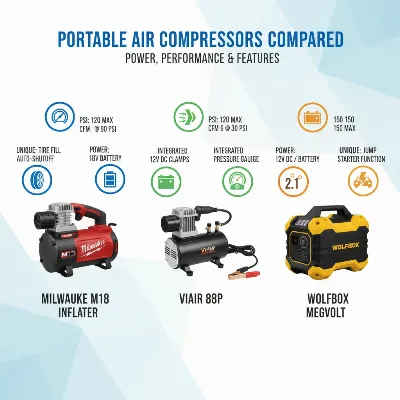
An automotive shop operates on precision, power, and efficiency, and at the heart of much of that work lies a dependable air compressor. From the rapid impact of wrenches to the fine mist of a paint sprayer, compressed air fuels a vast array of essential tools and equipment. Choosing the right heavy-duty air compressor isn’t just about having air; it’s about ensuring consistent performance, minimizing downtime, and supporting the continuous demands of a busy professional environment. This guide will walk you through the types, critical features, and maintenance tips to help you select an air compressor that truly serves as the backbone of your auto shop.
Overview of Air Compressors
Air compressors are mechanical devices that take in ambient air, compress it to a higher pressure, and store it in a tank. This stored, pressurized air is then used to power pneumatic tools and machinery. In an auto shop, this translates to everything from inflating tires and cleaning parts to operating lifts, painting vehicles, and driving heavy-duty impact wrenches. Without a robust and reliable air compressor, many critical tasks would grind to a halt, significantly impacting productivity and service quality. Understanding the fundamental types and their operational principles is the first step toward making an informed decision for your business.
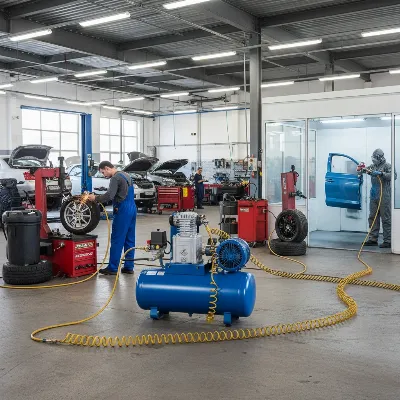 A powerful heavy-duty air compressor supplying compressed air to multiple tools in a bustling auto repair shop, showcasing various pneumatic tools in action, realistic style, wide-angle shot, bright workshop lighting
Types of Air Compressors
The world of air compressors offers several designs, each with distinct advantages and disadvantages. For auto shops, the primary focus is typically on two main types: piston and rotary screw compressors. Centrifugal compressors, while powerful, are generally reserved for much larger industrial applications.
Piston Air Compressors
Piston compressors, also known as reciprocating compressors, operate using a crankshaft, connecting rod, and piston assembly to compress air within a cylinder. As the piston moves down, it draws air into the cylinder; as it moves up, it compresses the air and pushes it into the storage tank.
- Pros: Piston compressors typically have a lower initial purchase price, making them an attractive option for smaller shops or those with budget constraints. Their design is relatively straightforward, which can lead to simpler routine maintenance tasks.
- Cons: These units often have a limited duty cycle, meaning they cannot run continuously without overheating, usually requiring downtime after a certain period of operation (e.g., 60-70% duty cycle). They are also notoriously noisy and can produce significant vibration, which might necessitate special placement or soundproofing. Piston compressors operate at higher internal temperatures (around 300-400°F), which means the compressed air tends to contain more moisture, requiring additional drying equipment for sensitive applications like painting. Over time, their components can wear out, leading to a gradual loss of flow and eventual costly rebuilds.
- Applications: Piston compressors are best suited for intermittent use, where air demand is not constant. This might include smaller automotive repair shops, home garages, or specialized tasks that only require air occasionally, such as tire inflation or operating a single impact wrench for short bursts.
|
Our Picks for the Best Air Compressor in 2026
As an Amazon Associate I earn from qualifying purchases.
|
||
| Num | Product | Action |
|---|---|---|
| 1 | Tire Inflator Portable Air Compressor, 150PSI Cordless Air Pump for Car Tires with Auto Shut-Off, Portable Tire Pump for Car, Bike, Motorcycle and Balls |

|
| 2 | Metabo HPT Pancake Air Compressor, 6-Gallon 165PSI, Portable Air Compressor with 1.0 HP Oil-Free High Efficiency Motor, Lihghtweight, Quick Couplers for Fast Tool Changes, EC711S |
|
| 3 | Craftsman Air Compressors 6 Gallon Portable Pancake Air Compressor,Oil Free Max 150 Psi 1.0HP 2.6 CFM@90PSI Electric Air Compressor Shop Air Compressor, CMXECXA02106410 |
|
| 4 | Quiet Air Compressor, Only 68dB, 5 Gallon Steel Tank, 2.8CFM @ 90PSI, Oil-Free, Electric Air Compressor Perfect for Woodwork Nailing, Garage, Car, Pneumatic Tool, Includes 11 Accessories |
|
| 5 | ECOMAX Air Compressor 6 Gallon 150 PSI Pancake Portable Oil-free Tank with 10 PCS Accessories Kit |
|
| 6 | AC Compressor for 2000-2027 Chevy Silverado/GMC Sierra/Cadillac Escalade (4.8L/5.3L/6.0L V8) | OE Replaces 15036042, 15707611, CO29002C,78363, 78362 | A/C Compressor & Kit |
|
| 7 | California Air Tools CAT-4710W 1.0 HP Quiet and Oil-Free Air Compressor with Wheels, 4.7 Gallon Steel Tank, 75 dBA Noise Level, Lightweight |
|
| 8 | DEWALT Tire Inflator Portable Air Compressor 20V MAX, Car Air Pump with Automatic Shut Off, LED Light, Tool Only (DCC020IB) |
|
| 9 | CRAFTSMAN Air Compressor, 2 Gallon Portable Air Compressor 1/3HP Max 125 PSI Oil-Free Light Weight with 10 PCS Accessory Kit |
|
| 10 | Airmoto Tire Inflator Portable Air Compressor - Air Pump for Car Tires with Digital Pressure Gauge, LED Light and Auto Shut-Off Function - Cordless Pump for Car, Motorcycle, Bicycle, Ball |
|
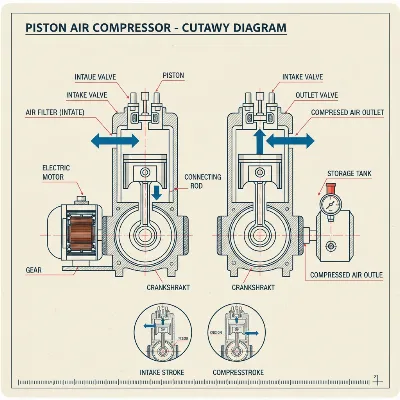 An illustrative diagram of a piston air compressor, showing its internal components like pistons, cylinders, crankshaft, and intake/outlet valves, in a clean, engineering drawing style
Rotary Screw Air Compressors
Rotary screw compressors use two interlocking helical rotors (screws) that rotate in opposite directions. Air is drawn in at one end, trapped between the rotors, and progressively compressed as it moves along the length of the screws before being discharged.
- Pros: These compressors are designed for continuous operation, offering a 100% duty cycle, which is essential for busy auto shops with constant air demands. They are significantly more energy-efficient for sustained high-volume use and produce a much quieter output, allowing for normal conversation nearby without special insulation. Rotary screw compressors operate at lower internal temperatures (around 170-200°F), resulting in drier, cleaner air, which is crucial for applications like paint booths. They also boast a longer lifespan and offer a consistent, pulsation-free airflow, ensuring stable tool performance.
- Cons: The main drawback of rotary screw compressors is their higher initial purchase price compared to piston models. While they are highly reliable and have fewer wearing parts (rotors don’t touch), their routine maintenance can be more complex and costly due to more service points, such as fluid filters and separators, often requiring specialized knowledge.
- Applications: Rotary screw compressors are the preferred choice for heavy-duty, high-demand automotive repair shops, full-service garages, and operations that require continuous airflow, such as multiple bays running tools simultaneously, collision repair, and professional spray painting.
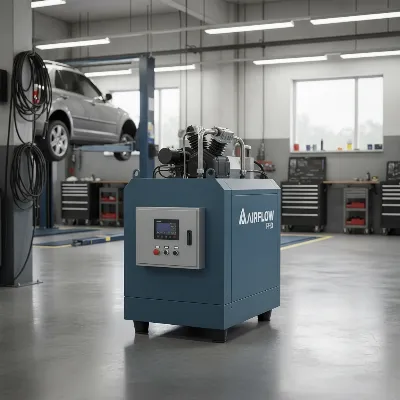 A photo of a modern, industrial rotary screw air compressor in a clean workshop environment, emphasizing its enclosed design and robust construction, realistic and functional aesthetic
Centrifugal Air Compressors
Centrifugal compressors are used for extremely high-volume, low-pressure applications, typically found in very large industrial settings like manufacturing plants or major fleet operations. They are not generally suitable or cost-effective for typical auto shop needs, which require higher pressure at moderate to high volumes.
Comparison Table: Piston vs. Rotary Screw Compressors
Understanding the key differences between piston and rotary screw compressors is vital for selecting the right workhorse for your auto shop. This table outlines the critical factors for comparison:
| Feature | Piston Compressor | Rotary Screw Compressor |
|---|---|---|
| Initial Cost | Lower | Higher |
| Duty Cycle | Intermittent (60-70%) | Continuous (100%) |
| Noise Level | High (often requires isolation) | Low (suitable for indoor placement) |
| Operating Temp. | High (300-400°F internal) | Low (170-200°F internal) |
| Air Quality | More moisture, higher oil carry-over | Drier, cleaner air, lower oil carry-over |
| Efficiency | Less efficient for continuous high-demand | Highly efficient for continuous operation |
| Maintenance | Simpler routine, but costly major rebuilds eventually | More involved routine, longer component life |
| Lifespan | Shorter overall, prone to wear | Longer overall, highly reliable |
| Best For | Small shops, occasional use, specific low-demand tools | Busy auto shops, continuous use, paint booths, multiple tools simultaneously |
How to Choose the Right Heavy-Duty Air Compressor for Your Auto Shop
Selecting the ideal air compressor involves a careful assessment of your current operations and future growth plans. It’s an investment that impacts your shop’s productivity and profitability.
Determine Your Shop’s Needs
The first and most crucial step is to analyze your specific air demands. Consider all the pneumatic tools you use, how often they’re used, and how many might operate simultaneously.
- CFM (Cubic Feet Per Minute): This measures the volume of air a compressor can deliver per minute at a specific pressure. Every air-powered tool has a CFM rating. To determine your total requirement, list all the tools that might run at the same time and sum their CFM needs. Professional shops often require 10+ CFM for continuous, heavy-duty work. Tools like paint spray guns, sandblasters, and grinders typically demand higher CFM, while impact wrenches and ratchets might require 4-5 CFM each. It’s always wise to add a buffer (e.g., 1.25x your calculated total CFM) to account for potential leaks and future expansion.
- PSI (Pounds Per Square Inch): This measures the air pressure. Most automotive air tools operate effectively between 80 and 90 PSI. However, choosing a compressor that can deliver up to 125-150 PSI offers greater flexibility and ensures consistent performance when running multiple tools or those requiring a quick burst of higher power. Always check the maximum PSI requirements of your most demanding tools.
- Tank Size: While tank size doesn’t directly affect the airflow (CFM) a compressor can produce, it acts as a reservoir for compressed air. A larger tank, typically 60 to 80 gallons or more for auto shops, provides a buffer, allowing the compressor to run less frequently and supply consistent air for longer durations without pressure drops. This is especially beneficial for tasks like spray painting or when multiple technicians are using air tools simultaneously.
- Horsepower (HP): The horsepower rating indicates the motor’s power. Most automotive shops find units between 5 to 7.5 HP sufficient, but high-volume environments with continuous heavy tool use might need 10 HP or more to maintain consistent pressure and airflow across several bays.
- Duty Cycle: If your shop experiences constant air demand throughout the day, a compressor with a 100% duty cycle, like a rotary screw unit, is essential. Piston compressors with limited duty cycles are unsuitable for continuous, heavy use.
- Air Quality (Oil-Free vs. Oil-Lubricated): For general pneumatic tool operation, oil-lubricated compressors are common. However, if your shop includes a paint booth or performs detailing where clean, contaminant-free air is critical, an oil-free compressor or a system with robust air filtration (dryers, coalescing filters) is mandatory to prevent defects in finishes.
- Noise Level: Consider your workspace environment. If the compressor will be located near working areas, a quieter rotary screw compressor can significantly improve comfort and communication.
- Electrical Requirements: Heavy-duty compressors often require a dedicated electrical circuit, and larger industrial units may need three-phase electrical service. Ensure your shop’s electrical infrastructure can support the chosen compressor’s power demands.
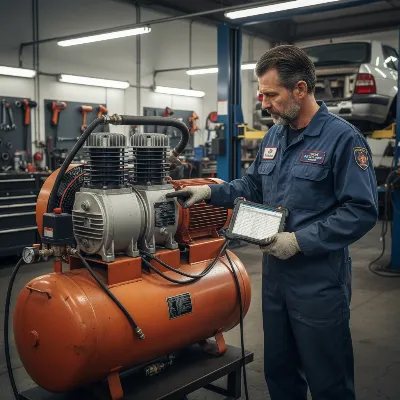 A skilled mechanic or auto shop owner in a garage, intently reviewing the specifications label on a heavy-duty air compressor, possibly with a tablet or notebook in hand, reflecting a thoughtful decision-making process
Set Your Budget
While the initial purchase price is a factor, it’s critical to consider the total cost of ownership (TCO). A cheaper compressor might have higher operating costs due to energy consumption, frequent maintenance, or shorter lifespan. Rotary screw compressors, though more expensive upfront, often offer lower TCO over their lifetime due to greater energy efficiency and reduced downtime.
Research Brands and Suppliers
Investigate reputable brands known for their durability and performance in automotive applications. Look for manufacturers that offer strong warranties, accessible parts, and reliable customer support or local service networks. Leading brands like Ingersoll Rand, Quincy, Champion, and Atlas Copco are often favored for their robust build quality and long-standing presence in industrial settings. A reliable supplier can also provide expert advice on sizing and installation, ensuring your investment is well-placed.
Leading Heavy-Duty Air Compressor Brands for Auto Shops
Several manufacturers stand out for producing heavy-duty air compressors that meet the rigorous demands of auto shops. These brands are recognized for their durability, performance, and technological innovation.
- Ingersoll Rand: A highly respected name in the industry, Ingersoll Rand compressors are known for their robust construction and reliability, making them a top choice for high-volume, full-service automotive shops that require continuous operation and exceptional longevity.
- Quincy Compressor: Quincy is often praised for its quiet operation and energy efficiency, particularly with its rotary screw models. They are an excellent option for shops where noise reduction is a priority, or for indoor bays.
- Champion: Champion compressors are recognized for their long-term durability and the ease with which many of their units can be rebuilt, offering a cost-effective solution over a long service life.
- Atlas Copco: A global leader in compressed air solutions, Atlas Copco offers a wide range of highly efficient and advanced rotary screw compressors known for their cutting-edge technology and suitability for demanding industrial environments.
- Kaishan: Kaishan specializes in rotary screw compressors, providing reliable and efficient options that are often a significant upgrade for growing auto shops moving beyond smaller reciprocating units.
While specific models vary, focusing on brands with a proven track record ensures you’re investing in equipment built to withstand the daily grind of an automotive environment.
Safe Operation and Maintenance for Auto Shop Air Compressors
To maximize the lifespan, maintain efficiency, and ensure the safe operation of your heavy-duty air compressor, a consistent schedule of safety checks and preventive maintenance is paramount. Skipping these steps can lead to costly breakdowns, reduced performance, and potential safety hazards.
Safety Measures
- Proper Installation: Ensure the compressor is installed in a well-ventilated area, away from heat sources, with sufficient clearance for air circulation and maintenance access. Stationary units should be securely anchored.
- Test Safety Relief Valves: Regularly test the pressure relief valve to ensure it functions correctly and will release excess pressure in an emergency.
- Secure Connections: Frequently inspect all hoses, fittings, and connections for wear, cracks, or leaks. Leaks not only waste energy but can also cause sudden hose ruptures.
- Electrical Safety: Verify that all electrical connections are tight and intact. Ensure the compressor is connected to the correct voltage and a dedicated circuit as specified by the manufacturer.
Maintenance Schedule
A structured maintenance plan helps catch minor issues before they escalate into major problems, extending the life of your compressor and ensuring reliable performance.
- Daily Checks:
- Drain Condensate: Daily draining of water from the air receiver tank is crucial to prevent rust and maintain air quality.
- Check Oil Levels: For oil-lubricated compressors, ensure the oil level is within the recommended range.
- Visual Inspection: Look for any visible damage, leaks, or unusual conditions.
- Listen for Noises: Pay attention to any unusual rattling, hissing, or grinding sounds that could indicate an issue.
- Weekly/Monthly Checks:
- Clean Air Intake Filter: A dirty filter restricts airflow, reducing efficiency and potentially damaging the motor. Clean or replace as needed.
- Inspect Belts: Check belt tension and condition; adjust or replace if there are signs of wear.
- Check for Leaks: Conduct a more thorough check for air or oil leaks.
- Clean Exterior: Remove dust and debris from the compressor’s external surfaces and cooling fins to ensure proper heat dissipation.
- Annually (or per manufacturer’s hours-based schedule):
- Complete Oil Change: Replace compressor oil according to the manufacturer’s recommendations (often annually or after a specified number of operating hours).
- Replace Filters: Change oil filters, air filters, and separator elements (for oil-injected rotary screw compressors).
- Professional Inspection: Schedule a professional service to inspect the entire system, including internal components, pressure switches, and safety valves, and calibrate as necessary.
- Piping Inspection: Check the entire compressed air piping system for any corrosion or leaks.
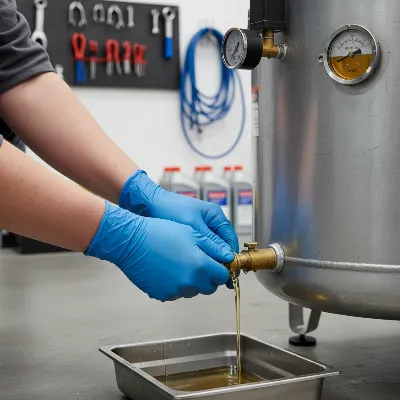 A close-up shot of a technician performing routine maintenance on a heavy-duty air compressor in an auto shop, focusing on draining a condensation valve or checking an oil gauge, with a clean and professional aesthetic
By adhering to a diligent maintenance schedule, your heavy-duty air compressor will remain a reliable and efficient asset, supporting the demanding workload of your auto shop for many years.
Conclusion
Selecting the best heavy-duty air compressor for your auto shop is a critical decision that impacts daily operations, long-term efficiency, and overall profitability. By carefully assessing your specific CFM, PSI, and duty cycle requirements, considering the advantages of piston versus rotary screw technology, and investing in a reputable brand, you can ensure your shop is powered by a reliable and high-performing system. Remember that the initial cost is only part of the equation; factors like energy efficiency, maintenance, and longevity contribute significantly to the total cost of ownership. Prioritizing consistent safety checks and a robust maintenance schedule will protect your investment and keep your shop running smoothly.
What advancements do you foresee in heavy-duty air compressor technology that could further revolutionize auto shop operations in the coming years?
Frequently Asked Questions
What CFM and PSI do I need for an auto shop?
For an auto shop, professional-grade tools often require 4-5 CFM each at 90 PSI. For continuous heavy-duty work or multiple tools operating simultaneously, aim for a compressor delivering at least 10-15 CFM. While 90 PSI is common for tools, having a compressor capable of 125-150 PSI offers greater flexibility and stable performance.
Is a piston or rotary screw compressor better for an auto shop?
For smaller shops with intermittent use, a piston compressor can be a cost-effective choice. However, for busy auto shops with continuous, heavy air demands, a rotary screw compressor is generally superior. They offer a 100% duty cycle, higher energy efficiency, quieter operation, and deliver cleaner, drier air, making them ideal for high-volume work and sensitive applications like painting.
How often should I drain my air compressor tank?
You should drain the condensate from your air compressor tank daily. Water accumulation can lead to rust inside the tank, reduce its capacity, and introduce moisture into your air lines, which can damage air tools and affect paint finishes.
What are the signs that my air compressor needs maintenance?
Common signs that your Air Compressor needs maintenance include unusual noises (rattling, hissing), reduced airflow or pressure, frequent cycling on/off, visible leaks (air or oil), overheating, or an increase in energy consumption. Addressing these signs promptly can prevent more significant issues.
Can I use an oil-lubricated compressor for painting?
While an oil-lubricated compressor can be used for painting, it is generally not recommended without extensive air filtration and drying equipment. Oil particles and moisture from the compressor can contaminate the paint finish, leading to defects. For professional painting applications, an oil-free compressor or a system with a multi-stage filtration and drying system is crucial for optimal results.