A 60-gallon air compressor is ideal for spray painting, providing the sustained power and consistent airflow necessary for professional-grade finishes on projects like automotive restoration or furniture refinishing. This tank size offers ample storage capacity, allowing for longer continuous spraying times and reducing motor cycling, which is crucial for covering large areas without pressure drops or inconsistent textures.
Understanding Air Compressors for Spray Painting
An air compressor converts ambient air into pressurized air, storing it in a tank for pneumatic tools like spray guns. For spray painting, this pressurized air atomizes paint into a fine, even mist, ensuring flawless surface coating.
Choosing a 60-gallon air compressor is a strategic decision for both enthusiasts and professionals. This tank size balances storage capacity with continuous operation, crucial for large areas like car panels or furniture, preventing pressure drops that cause inconsistent finishes or “orange peel” textures. It also reduces wear on the motor, extending longevity and ensuring consistent performance.
Key specifications for spray painting air compressors include:
- CFM (Cubic Feet per Minute): This measures air volume delivery at a specific pressure. Your compressor’s CFM must exceed your spray gun’s requirement by at least 1.5 times to ensure continuous, strong airflow and prevent sputtering. HVLP guns typically need 6-12 CFM, while professional automotive painting can require 10-20 CFM.
- PSI (Pounds per Square Inch): PSI indicates air pressure. While paint guns operate at lower pressures (25-50 PSI for HVLP), a 60-gallon compressor with 90-175 PSI maximum provides sufficient reserve for consistent delivery during demanding tasks.
- Tank Size (60 Gallons): A 60-gallon tank is optimal for large-scale, continuous spray painting, providing the necessary air reservoir to avoid frequent motor cycling and maintain steady flow.
- Horsepower (HP): Horsepower relates to motor power and correlates with CFM output. Most 60-gallon units suitable for spray painting feature a 3-5 HP motor to generate high CFM.
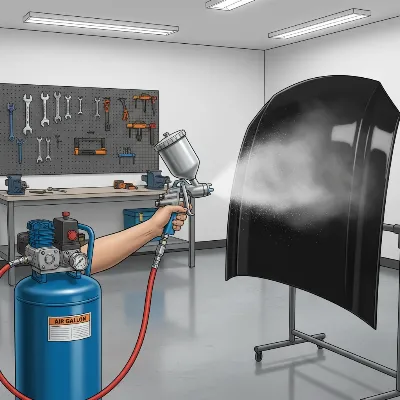 Illustration of a 60-gallon air compressor connected to a spray gun, showing air flow and paint atomization for a smooth finish
Types of Air Compressors and Their Suitability
For 60-gallon air compressors used in spray painting, piston-driven models are most common. Understanding their configurations and operational nuances is important for selection.
Piston Air Compressors
Piston air compressors are widely used in workshops and for semi-professional applications, compressing air with pistons and storing it in a tank.
- Advantages: Piston compressors are generally more cost-effective upfront, with readily available spare parts. They are common in the 60-gallon size, offering a robust solution for various painting tasks.
- Disadvantages: They can be noisier and may require more maintenance, especially oil changes for oil-lubricated models. They might struggle with extremely long, continuous, high-volume demands without proper duty cycle management.
- Applications: These are well-suited for extensive DIY projects, automotive bodywork, furniture refinishing, and other applications where work occurs in bursts, allowing for periodic cooling.
Piston compressors include single-stage and two-stage models.
- Single-stage compressors compress air in one stroke, being simpler and often more affordable.
- Two-stage compressors compress air twice, resulting in higher pressures, increased efficiency, and cooler operation. For demanding spray painting, such as full car repaints, a two-stage 60-gallon compressor is highly recommended. It provides a steadier air supply and higher CFM, crucial for consistent paint atomization and a flawless finish, while also benefiting from a longer operational lifespan due to cooler running temperatures.
Rotary Screw Air Compressors
|
Our Picks for the Best Air Compressor in 2026
As an Amazon Associate I earn from qualifying purchases.
|
||
| Num | Product | Action |
|---|---|---|
| 1 | DEWALT Tire Inflator Portable Air Compressor 20V MAX, Car Air Pump with Automatic Shut Off, LED Light, Tool Only (DCC020IB) |

|
| 2 | AC Compressor for 2000-2027 Chevy Silverado/GMC Sierra/Cadillac Escalade (4.8L/5.3L/6.0L V8) | OE Replaces 15036042, 15707611, CO29002C,78363, 78362 | A/C Compressor & Kit |
|
| 3 | Airmoto Tire Inflator Portable Air Compressor - Air Pump for Car Tires with Digital Pressure Gauge, LED Light and Auto Shut-Off Function - Cordless Pump for Car, Motorcycle, Bicycle, Ball |
|
| 4 | California Air Tools CAT-4710W 1.0 HP Quiet and Oil-Free Air Compressor with Wheels, 4.7 Gallon Steel Tank, 75 dBA Noise Level, Lightweight |
|
| 5 | Metabo HPT Pancake Air Compressor, 6-Gallon 165PSI, Portable Air Compressor with 1.0 HP Oil-Free High Efficiency Motor, Lihghtweight, Quick Couplers for Fast Tool Changes, EC711S |
|
| 6 | Quiet Air Compressor, Only 68dB, 5 Gallon Steel Tank, 2.8CFM @ 90PSI, Oil-Free, Electric Air Compressor Perfect for Woodwork Nailing, Garage, Car, Pneumatic Tool, Includes 11 Accessories |
|
| 7 | CRAFTSMAN Air Compressor, 2 Gallon Portable Air Compressor 1/3HP Max 125 PSI Oil-Free Light Weight with 10 PCS Accessory Kit |
|
| 8 | ECOMAX Air Compressor 6 Gallon 150 PSI Pancake Portable Oil-free Tank with 10 PCS Accessories Kit |
|
| 9 | Craftsman Air Compressors 6 Gallon Portable Pancake Air Compressor,Oil Free Max 150 Psi 1.0HP 2.6 CFM@90PSI Electric Air Compressor Shop Air Compressor, CMXECXA02106410 |
|
| 10 | Tire Inflator Portable Air Compressor, 150PSI Cordless Air Pump for Car Tires with Auto Shut-Off, Portable Tire Pump for Car, Bike, Motorcycle and Balls |
|
Rotary screw compressors are typically chosen by professionals for industrial and high-volume automotive paint shops, though less common in the 60-gallon size for general consumers.
- Advantages: Rotary screw compressors deliver a constant, quiet, and highly efficient air supply. They are designed for continuous operation without thermal cycling, ideal for busy environments requiring reliable air all day. Their continuous flow minimizes pulsation, which enhances paint quality.
- Disadvantages: The main drawback is their significantly higher initial cost compared to piston compressors. They are also typically larger and more complex.
- Applications: Best for large commercial operations, multiple paint booths, or industrial coating applications where downtime is unacceptable and continuous, high-volume air is essential. For 60-gallon tanks, piston compressors remain the more practical choice.
Oil-Lubricated vs. Oil-Free Air Compressors
The choice between oil-lubricated and oil-free compressors impacts spray painting:
- Oil-Lubricated Compressors: These use oil to lubricate the pump, reducing friction and heat. They are generally more durable, quieter, and have a longer operational life. However, they require regular oil changes and, for painting, need high-quality filtration (coalescing filters and air dryers) to prevent oil contamination of the paint finish.
- Oil-Free Compressors: These operate without oil in the compression chamber, eliminating oil contamination risk. This makes them inherently safer for sensitive applications like painting without additional oil filtration. However, they can be noisier, may have a shorter lifespan due to increased wear, and might not offer the same heavy-duty performance as oil-lubricated counterparts.
For spray painting, clean, dry air is paramount. Regardless of compressor type, investing in effective air filtration and moisture control is essential to prevent defects like fisheyes, bubbling, or peeling in your paint job.
Comparison: Key Features for Optimal Spray Painting Performance
Selecting the ideal 60-gallon air compressor for spray painting requires evaluating its specifications against your needs. Here’s a comparison of key features:
| Feature | Piston (Single-Stage) | Piston (Two-Stage) | Rotary Screw (Industrial, higher CFM) | Importance for Painting |
|---|---|---|---|---|
| CFM @ 90 PSI | 5-8 CFM | 8-18 CFM+ | 20 CFM+ (typically much higher) | Critical: Must exceed spray gun’s CFM (1.5x recommended) for consistent, even atomization. |
| Max PSI | 125-150 PSI | 175 PSI+ | 150 PSI+ (continuous) | Provides consistent working pressure (25-50 PSI for HVLP) with adequate reserve. |
| Tank Size | 60 Gallons | 60 Gallons | Often 80-120+ Gallons (or no tank for continuous flow) | High: Ensures sustained spraying without frequent motor cycling; crucial for large panels. |
| Duty Cycle | 50-70% (intermittent) | 70-90% (more continuous) | 100% (continuous) | High: Longer duty cycles prevent overheating and provide uninterrupted workflow. |
| Noise Level | Moderate to High (75-90 dB) | Moderate (70-85 dB) | Low to Moderate (60-75 dB) | Moderate: Affects user comfort and workshop environment. Quieter models are preferred. |
| Air Quality | Requires external moisture/oil filtration | Requires external moisture/oil filtration | Often integrated dryers/filters | Critical: Clean, dry, oil-free air prevents paint defects (fisheyes, bubbles, peeling). |
| Durability | Good | Very Good (cooler operation) | Excellent (designed for continuous heavy use) | High: Longevity and reliability, especially for frequent use. |
| Cost | $$ | $$$ | $$$$$ | Balance between budget and required performance/features. |
The most crucial aspect for effective spray painting is matching your compressor’s CFM output to your spray gun’s demands. If your gun requires 10 CFM at 40 PSI, your compressor should ideally deliver 15 CFM at 40 PSI or a similar pressure to maintain consistent airflow and avoid performance drops. A 60-gallon tank supports these CFM needs by providing a buffer of compressed air, reducing the frequency of the pump cycling on and off.
Choosing the Right 60-Gallon Air Compressor (Buying Guide)
Navigating the market for the perfect 60-gallon air compressor can be daunting, but focusing on your specific needs, budget, and trusted brands will lead to an informed decision.
Assessing Your Spray Painting Needs
Before selecting a model, clearly define your project scope:
- Project Scale: Determine if you are painting entire vehicles, finishing cabinetry, or coating large industrial components. The scale and frequency dictate required CFM, duty cycle, and robustness. For full car painting, a 60-gallon unit providing at least 10-15 CFM at 40 PSI is recommended for professional results.
- Spray Gun Requirements: Always consult your spray gun’s manual for its specific CFM and PSI requirements. Aim for a compressor that offers at least 1.5 times the gun’s CFM to provide a buffer for continuous spraying without pressure drops. HVLP guns are popular for efficiency but demand significant air volume.
- Airflow Consistency: Consistent airflow is non-negotiable for flawless paint jobs. This suggests choosing a two-stage compressor for better performance or ensuring your chosen single-stage unit has a strong reputation for maintaining steady output.
Budget Considerations
60-gallon air compressors are a significant investment, with prices varying based on features, brand, and type.
- Price Ranges: Entry-level 60-gallon compressors may start in the mid-hundreds, while professional-grade, two-stage, or industrial models can cost thousands.
- Cost vs. Long-Term Value: Consider long-term value over the cheapest option. A more expensive unit with higher CFM, a better duty cycle, and superior build quality will likely perform better, last longer, and require less maintenance, saving money and frustration. Skimping on the compressor can lead to poor paint finishes, wasted materials, and more work.
“Investing in the right air compressor for spray painting is not an expense, but an investment in the quality of your finish and the efficiency of your work. A higher upfront cost often translates to superior performance and durability.” – John Smith, Master Automotive Painter
Brands and Suppliers
Researching reputable brands and choosing reliable suppliers is crucial for performance and support.
- Reputable Brands: Look for brands known for quality and durability, such as Quincy, Ingersoll Rand, DeWalt, Puma, Campbell Hausfeld, Maxair, and Industrial Air. California Air Tools is often praised for quieter operation. Compare their offerings for specific strengths.
- Warranty and Support: A strong warranty and accessible customer service are invaluable. Ensure your supplier offers good after-sales support, parts availability, and clear warranty terms for peace of mind.
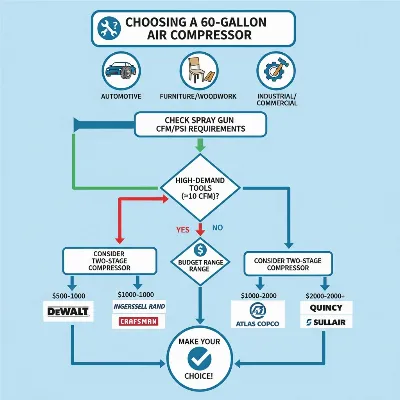 Infographic illustrating key decision factors when buying a 60-gallon air compressor for spray painting, including CFM, PSI, tank size, and brand reputation
Essential Usage and Maintenance for Spray Painting Air Compressors
Achieving a professional spray paint finish depends on selecting the right 60-gallon air compressor, proper setup, safe operation, and diligent maintenance. These practices ensure equipment longevity and consistent project quality.
Safety Precautions
Working with compressed air requires adherence to safety guidelines:
- Ventilation: Always operate your air compressor in a well-ventilated area to prevent fume buildup from paint and ensure the compressor runs cool.
- Protective Gear: When spray painting, wear appropriate personal protective equipment (PPE), including a respirator mask for paint fumes and particulates, safety glasses for eye protection, and gloves.
- Stable Surface: Ensure the compressor is placed on a stable, level surface to prevent tipping or movement during operation.
- Power Source: Connect the compressor to a reliable power source with the correct voltage and amperage, ensuring proper grounding to prevent electrical hazards.
Pre-use Checks
Before every painting session, a quick inspection can prevent issues:
- Hoses and Connections: Inspect all air hoses and connections for wear, cracks, or leaks. Even small leaks reduce efficiency and impact paint quality. Tighten any loose fittings.
- Air Filters: Check air intake and inline air filters for cleanliness. Clogged filters restrict airflow and can introduce contaminants. Clean or replace them as needed.
- Oil Level (for oil-lubricated models): Verify the oil level in the pump, topping it off according to manufacturer recommendations.
Post-use Maintenance
Regular maintenance significantly extends compressor life and ensures clean air for painting:
- Drain the Tank Daily: This is critical for spray painting. Compressed air contains moisture that condenses in the tank. Daily draining prevents internal tank rust and moisture from contaminating your paint gun, which causes water spots, fisheyes, and other defects. Use the drain valve at the bottom of the tank to release accumulated water.
- Clean Spray Gun: Thoroughly clean your spray gun immediately after each use to prevent paint from drying and clogging the nozzle or internal passages.
- Change Compressor Oil: For oil-lubricated models, follow the manufacturer’s schedule for oil changes, typically every few months to annually, depending on usage. Use the correct type of compressor oil.
- Inspect Components: Periodically inspect belts (if applicable) for tension and wear, and check all nuts and bolts for tightness.
- Clean Cooling Fins: Keep cooling fins on the compressor pump clean to ensure efficient heat dissipation, preventing overheating and prolonging pump life.
Air Filtration and Moisture Control
For spray painting, achieving clean, dry, and oil-free air is paramount. Investing in additional inline air treatment components is highly recommended:
- Moisture Traps/Water Separators: Install these devices in the air line closest to the spray gun to remove condensed water vapor.
- Air Dryers: For humid environments or professional setups, integrate a refrigerated or desiccant air dryer to remove more moisture, ensuring bone-dry air.
- Coalescing Filters: If using an oil-lubricated compressor, a coalescing filter is essential to remove microscopic oil aerosols that could contaminate your paint.
By diligently following these usage and maintenance guidelines, your 60-gallon air compressor will consistently deliver the clean, high-quality air necessary for achieving immaculate, professional-grade spray paint finishes on all your projects.
Conclusion
Selecting the best 60-gallon air compressor for spray painting is fundamental to achieving consistently flawless finishes. This tank size is an ideal workhorse, offering sustained airflow for significant projects and continuous operation. Key factors like CFM, PSI, and the choice between single-stage or two-stage piston compressors are paramount, with two-stage models often delivering superior consistency and power for professional results. The critical importance of clean, dry air necessitates effective filtration and daily tank draining.
By carefully assessing project demands, considering your budget, and choosing a reputable brand that prioritizes performance and durability, you can invest in a machine that will meet and exceed your expectations. With proper usage and diligent maintenance, your 60-gallon air compressor will be a reliable partner in every spray painting endeavor, transforming your visions into beautifully executed realities.
What significant project are you planning to tackle next with your powerful 60-gallon air compressor?
Frequently Asked Questions
Frequently Asked Questions
What CFM do I need for automotive painting with a 60-gallon compressor?
For full automotive painting with a 60-gallon compressor, aim for a minimum of 10-15 CFM at 40 PSI. This ensures your spray gun receives a continuous and sufficient volume of air for proper paint atomization and a smooth finish, preventing common issues like inconsistent spray patterns.
Is a two-stage 60-gallon compressor better for spray painting?
Yes, a two-stage 60-gallon compressor is generally better for spray painting, especially for professional-quality results and prolonged use. It provides more consistent pressure, higher CFM output, runs cooler, and operates more efficiently, which is crucial for achieving an even finish without interruptions.
How often should I drain my 60-gallon air compressor tank?
You should drain your 60-gallon air compressor tank daily after each use, or even more frequently in humid environments. This prevents moisture buildup, which can lead to internal tank corrosion and contaminate your paint with water, causing defects like fisheyes or bubbling.
Can I use an oil-free 60-gallon compressor for painting?
Yes, you can use an oil-free 60-gallon compressor for painting, and some prefer them as they eliminate the risk of oil contamination in the paint. However, be aware that oil-free models can be noisier and may have a shorter lifespan compared to well-maintained oil-lubricated compressors.
What PSI is ideal for spray painting with an HVLP gun?
For most HVLP (High Volume, Low Pressure) spray guns, an ideal operating pressure is typically between 25-50 PSI. Always consult your specific spray gun's manual for the manufacturer's recommended PSI, as using the correct pressure is vital for optimal atomization and transfer efficiency.
Choose the Right 60-Gallon Air Compressor for Spray Painting
Selecting the ideal 60-gallon air compressor for spray painting involves assessing your project needs, considering your budget, and researching reputable brands to ensure optimal performance and durability.
Define your project scope, whether it's automotive, woodworking, or industrial. Consult your spray gun's manual for specific CFM and PSI requirements, aiming for a compressor that delivers at least 1.5 times the gun's CFM for consistent airflow.
Evaluate price ranges for 60-gallon compressors, which can vary from mid-hundreds to thousands. Prioritize long-term value; a higher upfront cost often means better performance, durability, and less maintenance, preventing poor paint finishes and wasted materials.
Look for reputable brands known for quality and durability, such as Quincy, Ingersoll Rand, or DeWalt. Ensure the supplier offers a strong warranty, accessible customer service, and readily available parts for peace of mind.
Focus on piston-driven models, distinguishing between single-stage and two-stage compressors. Two-stage models are generally recommended for demanding spray painting applications due to their higher CFM, consistent pressure, and cooler operation.
Regardless of compressor type, ensure clean, dry, and oil-free air by investing in effective air filtration and moisture control systems. This prevents paint defects like fisheyes, bubbling, or peeling, which are caused by contaminants.

I’ve been using a 60-gallon air compressor for my automotive restoration projects for years, and it’s truly a game-changer. The sustained power and consistent airflow mentioned here are spot on. I can get through an entire fender without any pressure drops, which is essential for a smooth, professional-grade finish. Definitely recommend this tank size for serious hobbyists.
This size compressor is perfect for my furniture refinishing business. I used to struggle with smaller tanks that would cycle constantly, but the 60-gallon capacity means I can spray for much longer without interruption. It really helps with covering large areas evenly. The only reason it’s not a 5-star is that it takes up a fair bit of space in my workshop.
After upgrading to a 60-gallon air compressor, my paint jobs have never looked better. The consistent pressure is crucial for getting that flawless surface coating. I used to get inconsistent textures with my old setup, but this tank size has completely eliminated that problem. It’s a fantastic investment for anyone serious about quality finishes.
I got a 60-gallon unit specifically for spray painting, and while the continuous spraying times are great, I’ve noticed that sometimes the atomization isn’t as fine as I’d like right after the motor kicks in. It usually evens out quickly, but it can be a bit frustrating when starting a new section. Still, it’s a solid choice for the price range.