An air compressor is an indispensable tool in workshops and garages, powering everything from impact wrenches to paint sprayers. However, like any hardworking machine, it can encounter issues that disrupt its operation. One common culprit behind erratic behavior or complete shutdown is a faulty pressure switch. This vital component acts as the brain of your compressor, dictating when the motor kicks in to build pressure and when it shuts off to prevent over-pressurization. Facing a repair might seem daunting, but replacing an air compressor pressure switch is a manageable DIY task for many homeowners and technicians. This comprehensive guide will walk you through identifying a bad switch, preparing for the replacement, executing the steps safely, and ensuring your compressor returns to optimal performance.
Understanding Your Air Compressor’s Pressure Switch
At its core, an air compressor pressure switch is an electro-mechanical device designed to automate the compressor’s operation. It monitors the air pressure within the tank and triggers the motor to start (cut-in pressure) when the pressure drops below a certain threshold. Conversely, it deactivates the motor (cut-out pressure) once the desired maximum pressure is achieved, protecting the tank and motor from damage due to over-pressurization. This continuous cycling ensures a consistent air supply for your tools while preventing unnecessary strain on the system.
The pressure switch is a critical component for both the functionality and safety of your air compressor. A malfunctioning switch can lead to a range of problems, from inconvenient operational quirks to potentially dangerous conditions. Recognizing the symptoms of a failing pressure switch is the first step toward a successful repair.
Common symptoms of a faulty pressure switch include:
- Compressor Fails to Turn On: If your compressor doesn’t start even when the tank pressure is low, and there are no electrical supply issues, the switch may not be correctly detecting the pressure drop.
- Compressor Fails to Turn Off: A more dangerous symptom occurs when the compressor continues to run past its designated cut-out pressure, often leading to the safety relief valve activating to release excess air. This indicates the switch isn’t signaling the motor to stop.
- Rapid Cycling: The compressor turns on and off frequently, often without building sufficient pressure, suggesting the switch is inaccurately reading tank pressure or its internal contacts are worn.
- Air Leaks: While not always directly from the switch’s internal mechanism, a faulty unloader valve (often integrated with the pressure switch) can cause air to continuously bleed from the switch area even when the compressor is off.
- Unusual Noises: Clicking or buzzing sounds from the switch can indicate loose connections or internal component wear.
- Visible Damage or Rust: Any external damage, corrosion, or burnt marks on the switch housing or terminals is a clear indicator of a problem.
Addressing these issues promptly not only restores your compressor’s efficiency but also prevents further damage to other components and ensures safe operation.
Essential Tools and Safety Precautions
Before embarking on any air compressor repair, meticulous preparation and an unwavering commitment to safety are paramount. Working with compressed air and electrical components carries inherent risks, so taking the necessary precautions is non-negotiable.
Tools You’ll Need
Gathering the right tools beforehand will streamline the replacement process and help ensure a smooth, efficient repair.
- Work Gloves: To protect your hands from sharp edges, heat, and potential electrical hazards.
- Wrench Set / Nut Driver Set: For loosening and tightening various fittings and fasteners.
- Screwdrivers (Phillips and Torx): Depending on the screws securing your compressor’s housing and pressure switch.
- Wire Strippers: For preparing electrical wire ends if necessary.
- Thread-Sealing Tape (Teflon Tape): Essential for creating airtight seals on threaded pipe connections, preventing leaks.
- Digital Camera or Smartphone: To take detailed photos of the wiring configuration before disconnecting anything. This is invaluable for correct reassembly.
- Hose-Puller Pliers / Heavy-Duty Wire Cutters: Some compressor models use specific crimp clamps for hoses that may require these tools for removal.
- Circuit Tester or Multimeter (Optional but Recommended): For verifying that power is truly off and for troubleshooting electrical connections.
|
Our Picks for the Best Air Compressor in 2026
As an Amazon Associate I earn from qualifying purchases.
|
||
| Num | Product | Action |
|---|---|---|
| 1 | Airmoto Tire Inflator Portable Air Compressor - Air Pump for Car Tires with Digital Pressure Gauge, LED Light and Auto Shut-Off Function - Cordless Pump for Car, Motorcycle, Bicycle, Ball |

|
| 2 | California Air Tools CAT-4710W 1.0 HP Quiet and Oil-Free Air Compressor with Wheels, 4.7 Gallon Steel Tank, 75 dBA Noise Level, Lightweight |
|
| 3 | Quiet Air Compressor, Only 68dB, 5 Gallon Steel Tank, 2.8CFM @ 90PSI, Oil-Free, Electric Air Compressor Perfect for Woodwork Nailing, Garage, Car, Pneumatic Tool, Includes 11 Accessories |
|
| 4 | ECOMAX Air Compressor 6 Gallon 150 PSI Pancake Portable Oil-free Tank with 10 PCS Accessories Kit |
|
| 5 | CRAFTSMAN Air Compressor, 2 Gallon Portable Air Compressor 1/3HP Max 125 PSI Oil-Free Light Weight with 10 PCS Accessory Kit |
|
| 6 | Craftsman Air Compressors 6 Gallon Portable Pancake Air Compressor,Oil Free Max 150 Psi 1.0HP 2.6 CFM@90PSI Electric Air Compressor Shop Air Compressor, CMXECXA02106410 |
|
| 7 | DEWALT Tire Inflator Portable Air Compressor 20V MAX, Car Air Pump with Automatic Shut Off, LED Light, Tool Only (DCC020IB) |
|
| 8 | Tire Inflator Portable Air Compressor, 150PSI Cordless Air Pump for Car Tires with Auto Shut-Off, Portable Tire Pump for Car, Bike, Motorcycle and Balls |
|
| 9 | Metabo HPT Pancake Air Compressor, 6-Gallon 165PSI, Portable Air Compressor with 1.0 HP Oil-Free High Efficiency Motor, Lihghtweight, Quick Couplers for Fast Tool Changes, EC711S |
|
| 10 | AC Compressor for 2000-2027 Chevy Silverado/GMC Sierra/Cadillac Escalade (4.8L/5.3L/6.0L V8) | OE Replaces 15036042, 15707611, CO29002C,78363, 78362 | A/C Compressor & Kit |
|
Prioritizing Safety
Safety should always be your top concern when working with air compressors. Failure to follow proper safety procedures can result in serious injury or damage to your equipment.
- Disconnect All Electrical Power: This is the most critical step. Unplug the air compressor’s power cord from the wall outlet. If it’s a hardwired unit, turn off the circuit breaker at your main electrical panel and use a lockout/tagout procedure. Never work on the compressor while it’s connected to a power source.
- Completely Drain the Air Tank Pressure: Compressed air can cause severe injury. Locate the safety relief valve (usually a ring you can pull) or the tank drain valve and release all air pressure from the tank until the pressure gauge reads zero.
- Wear Appropriate Personal Protective Equipment (PPE): Always wear work gloves to protect your hands. Eye protection (safety goggles) is also recommended to guard against flying debris or unexpected air releases.
- Caution About Electrical Wiring: When disconnecting and reconnecting wires, pay close attention to their original positions. Improper wiring can damage the new switch or the motor, and create electrical hazards. If you are unsure about wiring, consult a qualified electrician.
- Do Not Adjust Factory Settings: Pressure switches come with factory-preset cut-in and cut-out pressures. Tampering with these settings can lead to dangerous over-pressurization of the tank and void your warranty. Only replace the switch with one rated for your compressor’s specifications.
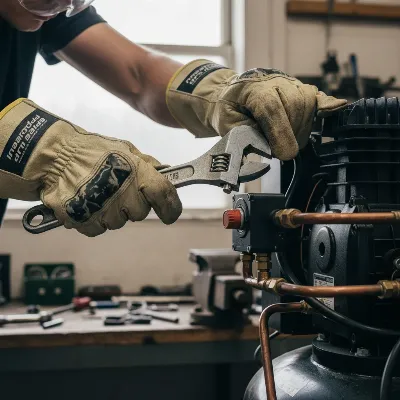 Technician wearing safety gloves and eye protection working on an air compressor, emphasizing safety.
Step-by-Step Guide to Replacing Your Air Compressor Pressure Switch
Replacing a pressure switch involves careful disassembly, precise wiring, and proper reassembly. Follow these steps meticulously to ensure a successful DIY repair.
Preparation
Before unscrewing anything, ensure you’ve covered the fundamental safety steps.
- Disconnect Power and Drain Air Tank: Unplug the compressor from its power source. Then, pull the ring on the safety relief valve or open the tank drain valve to release all compressed air from the tank. Wait until the pressure gauge reads zero.
- Take Photos of Wiring: Crucially, remove the cover of the existing pressure switch. Before disconnecting any wires, take clear, well-lit digital photos of the internal wiring configuration. These photos will be your essential reference guide when connecting the new switch, as wiring can vary significantly between models. Note the colors and terminal labels (e.g., L1, L2 for line power; T1, T2 for motor load; G for ground).
Disassembly
With safety measures in place and wiring documented, you can begin removing the old pressure switch and its associated components.
- Remove the Tank Pressure Gauge: Gently unscrew the pressure gauge from its fitting on the pressure switch manifold.
- Remove the Pressure Switch Tube: If your compressor has a small tube connecting the pressure switch to the check valve (often the unloader tube), carefully unscrew the fittings at both ends and remove the tube.
- Remove the Pressure Regulator Assembly: Some pressure switches are integrated into a larger manifold that includes a pressure regulator. Unscrew and carefully remove the entire regulator assembly from the pressure switch body.
- Disconnect Electrical Wires: Referring to your digital photos, carefully disconnect each wire from its terminal on the pressure switch. Typically, there will be power supply wires (incoming from the wall) and motor load wires (going to the compressor motor). Also, disconnect any ground wires.
- Unscrew the Safety Valve: The safety relief valve is usually screwed directly into the pressure switch manifold. Unscrew it and set it aside.
- Remove the Old Pressure Switch: Finally, unscrew the entire pressure switch assembly from the pipe nipple connected to the air tank. You may need a wrench for this.
Installation of the New Pressure Switch
Now, it’s time to install the replacement part. This process largely mirrors the disassembly, but with crucial steps for ensuring airtight seals and correct electrical connections.
- Apply Thread-Sealing Tape to Tank Pipe: Wrap 2-3 layers of thread-sealing (Teflon) tape clockwise around the male threads of the pipe nipple on the air tank where the pressure switch will connect. This ensures an airtight seal.
- Screw the New Pressure Switch onto the Tank Pipe: Carefully screw the new pressure switch onto the taped pipe nipple. Hand-tighten it first, then use a wrench to snug it down, ensuring it’s oriented correctly to allow for reattachment of other components.
- Connect Wiring: Remove the cover of your new pressure switch. Using your digital photos as a guide, connect the electrical wires to the appropriate terminals. Power supply wires go to “line” terminals (L1/L2), and motor wires go to “load” terminals (T1/T2). Connect the bare copper or green insulated ground wire to the green screw on the metal frame of the switch. Double-check all connections to ensure they are secure and match your reference photos precisely.
- Reinstall Safety Valve: Apply thread-sealing tape to the threads of the safety relief valve and screw it firmly into its port on the new pressure switch.
- Reinstall Pressure Regulator Assembly: Apply thread-sealing tape to the threads of the pressure regulator’s connecting pipe. Screw the pressure regulator assembly firmly into the new pressure switch, aligning the tank gauge fitting upwards.
- Reinstall Pressure Switch Tube: Reconnect the small pressure switch tube to both the check valve and the new pressure switch, tightening the fittings securely.
- Reinstall Tank Pressure Gauge: Screw the tank pressure gauge onto the new pressure switch and tighten it firmly.
Reassembly and Testing
The final steps involve buttoning up the compressor and performing a crucial test to ensure everything is functioning correctly and safely.
- Replace Pressure Switch Cover: Once all wires and components are connected, carefully replace the cover on the new pressure switch, ensuring no wires are pinched.
- Restore Power and Test Functionality: Plug the air compressor back into its electrical outlet. Turn the compressor on and observe its operation. It should build pressure until it reaches the cut-out pressure and then shut off. Once air is used, the pressure should drop to the cut-in pressure, and the motor should restart. Listen for any air leaks (a hissing sound) around the newly installed components. If you detect leaks, turn off the compressor, drain the air, and re-tighten the affected connections.
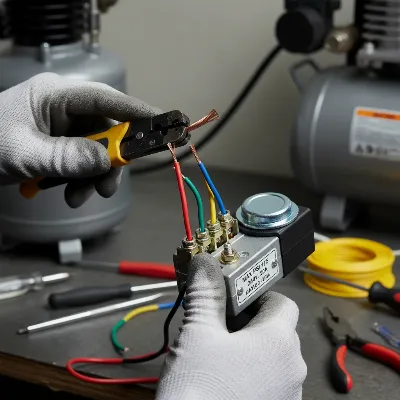 Close-up of a technician connecting wires to a new air compressor pressure switch, emphasizing proper wiring.
Troubleshooting Common Issues After Replacement
Even with careful installation, you might encounter minor hiccups. Knowing how to troubleshoot these common issues can save you time and frustration.
- Compressor Not Turning On:
- Check Power Supply: Ensure the compressor is plugged in and the circuit breaker hasn’t tripped.
- Verify Wiring: Double-check your wiring against your reference photos and the new switch’s diagram. Incorrect “line” and “load” connections are a frequent cause. Ensure all terminals are secure.
- Examine Unloader Valve: A stuck unloader valve might prevent the compressor from starting.
- Compressor Not Turning Off (Continues to Run):
- Check for Air Leaks: The most common reason for a compressor running continuously is an air leak in the tank or plumbing. Even small leaks prevent pressure from building to the cut-out point. Spray soapy water on all connections to identify bubbles.
- Pressure Switch Calibration: While generally factory-set, ensure the new switch is correctly rated for your compressor’s cut-out pressure. If the issue persists, the new switch itself might be faulty.
- Air Leaks Around the New Switch:
- Thread-Sealing Tape: The most likely culprit is insufficient or improperly applied thread-sealing tape on the threaded connections (tank pipe, safety valve, pressure regulator). Turn off the compressor, drain the air, reapply tape, and retighten.
- Damaged Fittings: Inspect fittings for cracks or damage that could prevent a proper seal.
- Wiring Issues (Mismatched Wires):
- Always refer to your initial photos and the new pressure switch’s wiring diagram. The “line” terminals are for incoming power, and “load” terminals are for power going to the motor. Ground wires should connect to the frame. Incorrect wiring can burn out the switch or motor.
If you are unsure at any point during troubleshooting, it is always best to consult a professional or refer to your compressor’s specific service manual.
Maintaining Your Air Compressor for Longevity
Replacing a pressure switch is a significant step in air compressor maintenance, but ongoing care is crucial to extend the life of your equipment and prevent future issues. A proactive maintenance regimen ensures your compressor remains reliable and safe.
- Regular Inspections: Periodically inspect all components, including hoses, fittings, and electrical connections, for signs of wear, damage, or leaks. Look for rust, loose wires, or damaged insulation.
- Drain Moisture from the Tank: Air compressors generate condensation, which collects in the tank. This moisture can lead to rust and degrade the tank’s integrity over time. Regularly open the drain valve at the bottom of the tank (daily for frequent use) to expel accumulated water.
- Check for Leaks: Routinely check for air leaks using a soapy water solution, especially around fittings, valves, and the pressure switch. Even small leaks force your compressor to work harder, reducing efficiency and shortening its lifespan.
- Air Filter Maintenance: Clean or replace the air filter regularly according to the manufacturer’s recommendations. A clogged air filter restricts airflow, causing the compressor to overheat and work less efficiently.
- Oil Level and Quality (for oil-lubricated compressors): If your compressor is oil-lubricated, check the oil level regularly and change it as recommended by the manufacturer. Using the correct type and amount of oil is crucial for lubricating moving parts and preventing wear.
- Follow Manufacturer’s Recommendations: Always consult your compressor’s owner’s manual for specific maintenance schedules and guidelines. These instructions are tailored to your model and are the best source of information for optimal care.
By consistently performing these maintenance tasks, you not only ensure the safe and efficient operation of your air compressor but also significantly extend its useful life, minimizing the need for costly repairs in the future.
Conclusion
Replacing a faulty air compressor pressure switch might seem like a complex repair, but with the right tools, careful attention to safety, and a clear, step-by-step approach, it’s a task well within the capabilities of a dedicated DIY enthusiast. This essential component is key to both the automatic operation and the critical safety features of your air compressor, preventing both under- and over-pressurization. By confidently diagnosing the symptoms, meticulously following the removal and installation procedures, and implementing good maintenance habits, you can restore your compressor to full functionality and extend its lifespan. Don’t let a malfunctioning pressure switch keep your projects grounded—take the initiative and get your air tools back in action. What other air compressor repairs are you ready to tackle next?
Frequently Asked Questions
What causes an air compressor pressure switch to fail?
Air compressor pressure switches can fail due to several factors, including internal electrical contact wear from repeated cycling, accumulation of dirt or moisture, corrosion, or damage to the diaphragm that senses pressure. Electrical surges or continuous operation without proper cut-off can also degrade components over time.
Can I adjust my air compressor pressure switch?
Most air compressor pressure switches come with factory-preset cut-in and cut-out pressures. While some industrial or higher-end models may offer limited adjustment screws for fine-tuning the pressure range, it’s generally not recommended to alter these settings without expert knowledge, as incorrect adjustments can lead to dangerous over-pressurization or inefficient operation.
How do I know what pressure switch to buy?
To ensure compatibility, always purchase a replacement pressure switch that matches your air compressor’s make, model, and specifications. Key factors include voltage (120V or 240V), amperage rating, number of ports, and the cut-in/cut-out pressure settings. Consulting your compressor’s owner’s manual or the manufacturer’s parts list is the most reliable way to find the correct replacement.
What if my compressor runs continuously after replacing the switch?
If your compressor runs continuously after replacing the pressure switch, the most common causes are air leaks in the tank or plumbing system, which prevent pressure from reaching the cut-out point. Other possibilities include incorrect wiring of the new switch, a faulty new switch, or a persistent issue with the unloader valve. Check all connections for leaks and verify wiring carefully.
Is it safe to use an air compressor with a faulty pressure switch?
No, it is not safe to use an Air Compressor with a faulty pressure switch. A malfunctioning switch can cause the compressor to run continuously, leading to dangerous over-pressurization of the tank, which could rupture. It can also prevent the compressor from turning on when needed, leading to operational frustrations. Always replace a faulty pressure switch promptly.