An air compressor is an invaluable tool for countless tasks, from powering pneumatic tools in a workshop to inflating tires or even critical industrial applications. However, a silent thief often undermines their efficiency and shortens their lifespan: air leaks. These seemingly minor issues can escalate into significant energy waste, reduced performance, and increased wear on your equipment. Understanding how to effectively detect and repair these leaks yourself can save you considerable money, extend your compressor’s operational life, and ensure your projects run smoothly. This comprehensive guide will walk you through identifying common leak points, arming you with the necessary tools, and providing step-by-step DIY repair solutions to get your air compressor running at peak efficiency once again.
The Hidden Costs of Air Compressor Leaks
Many air compressor owners underestimate the impact of even small air leaks. These leaks are not just a minor inconvenience; they represent a constant drain on energy and resources. Studies show that 20-30% of compressed air in many systems is wasted due to leaks, translating directly into higher electricity bills and reduced operational efficiency. The compressor has to work harder and run longer cycles to compensate for the lost pressure, leading to increased wear and tear on components, which ultimately shortens the machine’s lifespan and can lead to costly breakdowns.
Air leaks commonly arise from several factors, including the constant vibration inherent in compressor operation, general component wear over time, and loose connections. Seals and gaskets can degrade and crack due to heat and pressure cycles, while flexible hoses are prone to fatigue and micro-fractures from continuous movement and environmental exposure. Corrosion can also create pinholes in tanks or pipes, further contributing to air loss. For expert air compressor reviews on this site.
Preparing for DIY Leak Detection: Tools and Safety
Before embarking on any repair, proper preparation is key. Gathering the right tools and prioritizing safety will ensure a smooth and effective leak detection and repair process.
Essential DIY Tools
For most DIY leak detection and repair tasks, you’ll need a few fundamental items:
- Soap Solution: A mixture of liquid dish soap and water in a spray bottle is the most common and effective DIY leak detector.
- Flashlight: Essential for inspecting hard-to-reach or dimly lit areas.
- Wrench Set: To tighten loose fittings and connections.
- PTFE (Teflon) Tape: For sealing threaded connections.
- Pipe Thread Sealant: An alternative or complement to PTFE tape for a more robust seal on threaded pipe joints.
- Rag or Cloth: For wiping surfaces clean before applying sealants and for cleanup.
- Wire Brush: To clean corroded areas if patching a tank.
- Epoxy (e.g., JB Weld): For temporary repairs on small tank pinholes.
Prioritizing Safety
|
Our Picks for the Best Air Compressor in 2026
As an Amazon Associate I earn from qualifying purchases.
|
||
| Num | Product | Action |
|---|---|---|
| 1 | ECOMAX Air Compressor 6 Gallon 150 PSI Pancake Portable Oil-free Tank with 10 PCS Accessories Kit |

|
| 2 | Quiet Air Compressor, Only 68dB, 5 Gallon Steel Tank, 2.8CFM @ 90PSI, Oil-Free, Electric Air Compressor Perfect for Woodwork Nailing, Garage, Car, Pneumatic Tool, Includes 11 Accessories |
|
| 3 | Craftsman Air Compressors 6 Gallon Portable Pancake Air Compressor,Oil Free Max 150 Psi 1.0HP 2.6 CFM@90PSI Electric Air Compressor Shop Air Compressor, CMXECXA02106410 |
|
| 4 | Airmoto Tire Inflator Portable Air Compressor - Air Pump for Car Tires with Digital Pressure Gauge, LED Light and Auto Shut-Off Function - Cordless Pump for Car, Motorcycle, Bicycle, Ball |
|
| 5 | Tire Inflator Portable Air Compressor, 150PSI Cordless Air Pump for Car Tires with Auto Shut-Off, Portable Tire Pump for Car, Bike, Motorcycle and Balls |
|
| 6 | DEWALT Tire Inflator Portable Air Compressor 20V MAX, Car Air Pump with Automatic Shut Off, LED Light, Tool Only (DCC020IB) |
|
| 7 | California Air Tools CAT-4710W 1.0 HP Quiet and Oil-Free Air Compressor with Wheels, 4.7 Gallon Steel Tank, 75 dBA Noise Level, Lightweight |
|
| 8 | Metabo HPT Pancake Air Compressor, 6-Gallon 165PSI, Portable Air Compressor with 1.0 HP Oil-Free High Efficiency Motor, Lihghtweight, Quick Couplers for Fast Tool Changes, EC711S |
|
| 9 | AC Compressor for 2000-2027 Chevy Silverado/GMC Sierra/Cadillac Escalade (4.8L/5.3L/6.0L V8) | OE Replaces 15036042, 15707611, CO29002C,78363, 78362 | A/C Compressor & Kit |
|
| 10 | CRAFTSMAN Air Compressor, 2 Gallon Portable Air Compressor 1/3HP Max 125 PSI Oil-Free Light Weight with 10 PCS Accessory Kit |
|
Working with compressed air systems requires caution. Always adhere to these safety measures:
- Depressurize the System: Before attempting any repairs, always shut off the compressor and completely drain the air from the tank and lines.
- Unplug the Compressor: Disconnect the power supply to prevent accidental startup.
- Wear Safety Gear: Always wear appropriate personal protective equipment, including safety glasses to protect your eyes from debris or spray, and gloves to protect your hands.
- Work in a Well-Ventilated Area: If using chemical sealants or epoxies, ensure adequate ventilation.
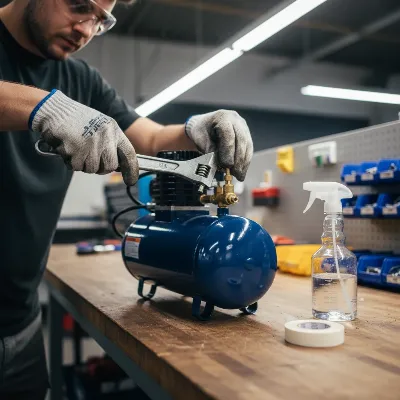 A person wearing safety glasses and gloves, holding a wrench near an air compressor, with a spray bottle and PTFE tape on a workbench
Step-by-Step Methods to Locate Air Leaks
Identifying the exact location of an air leak is the most critical step. Several methods, ranging from simple to more advanced, can help you pinpoint the culprits.
The Auditory Clues: Listening for Hisses
The simplest method for detecting larger leaks is often just listening. In a quiet environment, with the compressor pressurized and no tools actively drawing air, walk around the entire system, paying close attention to any hissing or whistling sounds. These noises are tell-tale signs of escaping air. For larger systems or in naturally noisy settings, this method may be less effective as ambient noise can mask smaller leaks. If you suspect a leak but can’t hear it, you might be able to feel a slight draft of air by passing your hand slowly over suspected areas.
The Visual Test: Soap Solution Application
The soap solution method is arguably the most effective DIY technique for locating small and large leaks alike.
- Prepare the Solution: Mix a generous amount of liquid dish soap with water in a spray bottle. The stronger the soap-to-water ratio, the more visible the bubbles will be.
- Pressurize the System: Ensure your air compressor is fully pressurized to its operating level, but disconnect any air tools to maintain pressure.
- Apply the Solution: Liberally spray the soapy mixture over all suspected leak points. Focus on connections, fittings, hoses, valves, and welds on the tank.
- Identify Bubbles: If there’s an air leak, the escaping air will create distinct bubbles in the soap solution. The larger the leak, the more vigorous the bubbling. Mark the areas where bubbles appear for later repair.
The Pressure Drop Test
This method helps confirm if a leak exists somewhere in your system, even if you can’t immediately pinpoint it visually or audibly.
- Isolate the Compressor: Shut off the air supply to any connected tools or distribution lines.
- Pressurize the System: Let the compressor build up to its maximum cut-off pressure.
- Turn Off the Compressor: Once the compressor stops, switch it off and note the pressure gauge reading.
- Monitor Pressure: Leave the system undisturbed for an extended period (e.g., 30 minutes to an hour). If the pressure gauge shows a noticeable drop, you have a leak somewhere in your system. This test works best when you are sure no tools are using air and all lines are closed.
Advanced Detection Methods
While typically for professional use, it’s worth knowing about advanced leak detection tools:
- Ultrasonic Acoustic Detectors: These devices are highly effective, especially in noisy industrial environments. They detect the high-frequency sound waves produced by escaping air, converting them into an audible signal or a visual reading, allowing for precise leak localization.
- Infrared Cameras: Some leaks can create subtle temperature changes, which can be visualized with specialized infrared cameras.
Pinpointing Common Air Compressor Leakage Points
Air leaks don’t usually appear out of nowhere; they tend to occur at specific vulnerable points in the compressed air system. Knowing these common leakage areas can significantly narrow down your search.
- Fittings and Connections: These are perhaps the most frequent offenders. Every joint, coupling, elbow, tee, or reducer in your air lines, hoses, and quick connectors is a potential leak point. Over time, vibration or improper tightening can loosen them. Threaded connections are particularly notorious for developing leaks.
- Valves: Various valves in your system, such as drain valves, safety relief valves, control valves, and shut-off valves, can develop leaks due to wear, corrosion, or faulty seals. The drain valve on the bottom of the air tank is a common culprit, often leaking slowly.
- Seals and Gaskets: O-rings within quick connectors, pressure switches, or other components, as well as gaskets (like cylinder head gaskets on piston compressors), can degrade and lose their sealing ability.
- Air Tanks: While less common, the air receiver tank itself can develop leaks, especially in older, corroded tanks. Leaks can occur at welds or from small pinholes due to rust.
- Pressure Switches and Gauges: The connections to these components, or the components themselves if damaged, can be sources of air loss.
- Hoses and Tubing: Flexible air hoses are subject to wear, kinking, and abrasion, which can lead to cracks or punctures. Metal tubing can also develop leaks from rust or stress cracks.
- The “Dirty Thirty”: This term refers to the final 30 feet of pipework and hoses leading to pneumatic tools. This section typically contains the highest concentration of potential leak points due to numerous connections, quick couplers, filters, regulators, and lubricators, all subject to frequent manipulation and stress.
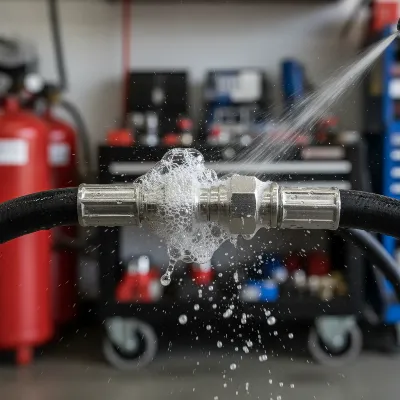 Close-up of an air compressor hose connection with visible bubbles from soap solution indicating a leak
DIY Fixes for Your Air Compressor Leaks
Once you’ve identified the source of a leak, many common issues can be fixed with basic DIY skills and tools.
Tightening Loose Connections
Often, the simplest solution is the most effective. If you find a leak at a fitting or connection point, gently but firmly tighten it with the appropriate wrench. Avoid over-tightening, as this can strip threads or damage components, potentially creating new leaks or worsening existing ones. Work your way around the entire connection, ensuring all bolts and nuts are snug. After tightening, re-apply your soap solution to confirm the leak has been stopped.
Replacing Worn-Out Components
Some leaks stem from components that are simply past their prime.
- Hoses: If an air hose has visible cracks, punctures, or shows signs of severe wear, it’s best to replace the entire hose. Repairing a damaged hose with tape or patches is often a temporary fix that can fail under pressure.
- O-Rings and Gaskets: Small rubber O-rings or flat gaskets, common in quick couplers, drain valves, and between compressor components, can harden, crack, or become compressed over time. Replacing these with new, correctly sized seals is a straightforward and effective fix.
- Faulty Valves: If a drain valve or safety relief valve is visibly corroded, stuck, or continuously leaking even after cleaning, it likely needs to be replaced. These are critical components, so use high-quality replacements.
Sealing Threads and Joints
Threaded pipe joints are notorious for leaks. Proper sealing is essential.
- PTFE (Teflon) Tape: For threaded pipe fittings, unscrew the fitting, clean the threads thoroughly, and wrap 2-3 layers of PTFE tape clockwise around the male threads. Ensure the tape covers all threads without overlapping too much at the ends. Then, re-thread and tighten the fitting.
- Pipe Thread Sealant: As an alternative or in conjunction with PTFE tape for critical connections, apply a liquid pipe thread sealant (also known as pipe dope) to the male threads. This substance cures to create a robust, airtight seal.
Addressing Tank Leaks
Leaks in the air receiver tank itself are more serious. For very small pinholes due to minor corrosion, a temporary DIY fix using a two-part epoxy like JB Weld can be attempted:
- Completely Depressurize and Drain: This is crucial.
- Clean the Area: Wire brush and sand the area around the pinhole to bare metal, then clean with a degreaser.
- Apply Epoxy: Mix the epoxy according to the manufacturer’s instructions and apply it generously over the pinhole, extending a small margin around it.
- Cure Time: Allow ample time for the epoxy to fully cure (usually 24 hours) before repressurizing the tank.
However, for any significant tank damage, large cracks, or extensive corrosion, attempting DIY repairs can be extremely dangerous. Air tanks are pressure vessels, and a failed repair can lead to catastrophic rupture. In such cases, professional welding repair or, more often, complete tank replacement is the only safe solution.
Preventing Future Leaks Through Regular Maintenance
An ounce of prevention is worth a pound of cure, especially when it comes to air compressor leaks. Implementing a routine maintenance schedule can drastically reduce the likelihood of future leaks and prolong your compressor’s life.
- Routine Inspections: Make daily or weekly visual inspections a habit. Check all hoses, fittings, and valves for any visible signs of wear, damage, or looseness. Listen for unusual hissing sounds during operation, especially when the workshop is quiet.
- Timely Component Replacement: Don’t wait for a hose to burst or an O-ring to completely fail. Replace worn hoses, degraded gaskets, and stiff O-rings proactively during routine maintenance.
- Using High-Quality Parts and Proper Installation: When replacing components, invest in high-quality parts. Ensure all fittings are installed correctly, with appropriate thread sealants or PTFE tape, and tightened to the manufacturer’s specifications. Improper installation is a leading cause of leaks.
- Draining Condensate: Regularly drain the condensate (water) from your air receiver tank. Accumulated moisture promotes rust and corrosion, which can lead to tank leaks over time. Many compressors have an automatic drain, but manual draining should still be part of your routine.
- Scheduled Professional Assessments: While many leaks are DIY fixable, consider an annual professional leak detection survey, especially for larger or more complex systems. Professionals use advanced ultrasonic detectors to find even the smallest, most elusive leaks that might be missed during a DIY inspection.
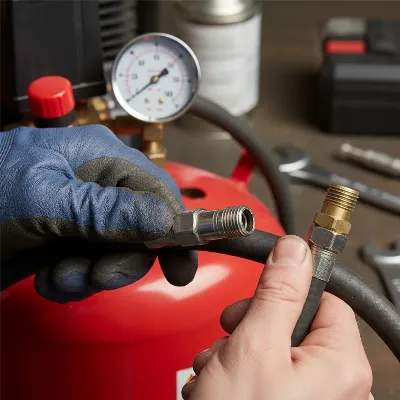 A person inspecting air compressor hoses and connections for maintenance, emphasizing prevention
Conclusion
Addressing air compressor leaks is not merely about fixing a problem; it’s about optimizing performance, conserving energy, and ensuring the longevity of your valuable equipment. By understanding the common causes and locations of leaks, and diligently applying DIY detection methods like the simple yet effective soap solution test, you can pinpoint issues before they escalate. With basic tools and techniques—from tightening connections and replacing worn parts to properly sealing threaded joints—you empower yourself to maintain a healthy, efficient compressed air system. Regular preventive maintenance is your best defense, turning what could be costly energy waste into reliable and economical operation. What steps will you take today to inspect your air compressor for hidden leaks and unlock its full potential?
Frequently Asked Questions
How do I know if my air compressor is leaking if I can’t hear it?
If you can’t hear a leak, perform a pressure drop test by fully pressurizing the tank, turning off the compressor, and observing the pressure gauge over a period (e.g., 30-60 minutes). A noticeable pressure drop indicates a leak. The soap solution test is also highly effective for visually identifying silent leaks.
What are the most common places for air leaks on a compressor?
The most common leak points are typically fittings, connections, quick couplers, air hoses (especially where they connect), valves (like the drain valve or safety valve), and occasionally, the air tank itself at welds or corroded spots. Gaskets and O-rings are also frequent culprits.
Can a small air leak really affect my compressor?
Absolutely. Even a tiny air leak can significantly impact your compressor. It forces the compressor to run longer and more frequently to maintain pressure, leading to increased energy consumption, premature wear on components, higher operating costs, and reduced efficiency for your pneumatic tools.
Is it safe to fix an air compressor tank leak myself?
For very small pinholes caused by minor corrosion, a temporary fix using industrial epoxy might be considered if done meticulously. However, for any significant damage, cracks, or extensive rust on a pressure vessel like an air tank, it is not safe for DIY repair. Professional welding or tank replacement is strongly recommended to prevent catastrophic failure.
How often should I check my air compressor for leaks?
For active users, a quick visual and auditory check should be part of daily or weekly routine maintenance. A more thorough check using the soap solution method is recommended monthly or quarterly, depending on usage frequency and environment, to catch smaller, less obvious leaks.
