Draining moisture from your air compressor tank is a critical maintenance task that prevents rust, improves efficiency, and extends equipment life. This simple DIY process should be performed regularly, ideally after each use or daily for frequent operation, to remove condensed water that naturally accumulates at the bottom of the tank due to the compression of atmospheric air.
Understanding Air Compressor Moisture
Every time your air compressor draws in ambient air, it also pulls in atmospheric moisture. As this air is compressed, its temperature rises, and then cools within the tank. This cooling causes water vapor to condense into liquid, pooling at the bottom. This phenomenon is a natural and inevitable byproduct of the compression process, accumulating regardless of the compressor’s size or type.
Neglecting this accumulated moisture poses significant risks to your entire compressed air system. The most immediate danger is internal corrosion, which can weaken tank walls and lead to structural failure over time. Beyond the tank itself, water can mix with lubricating oil, reducing its effectiveness and increasing friction on moving parts, ultimately shortening the compressor’s lifespan and decreasing its overall efficiency. Contaminated compressed air can travel through air lines to your pneumatic tools, causing rust, reducing their performance, and leading to costly repairs or premature replacement. In colder climates, accumulated water can even freeze, causing blockages and potential system breakdowns.
Essential Tools and Safety Precautions
Before you begin the draining process, gathering a few basic tools and adhering to strict safety protocols are crucial for a smooth and safe operation. You will need:
- Safety gloves and goggles: To protect against splashes of water or dislodged debris.
- A collection container: A bucket or tray large enough to hold the expelled water.
- Optional: Hearing protection: Air escaping from the tank can be loud.
- Optional: Wrench or pliers: If your drain valve is stiff or requires a tool to open.
Safety is paramount when working with pressurized systems. Always follow these precautions:
- Disconnect Power: Turn off and unplug your air compressor from its power source. This prevents any accidental startups during the maintenance process.
- Cool Down: Allow the compressor to cool down if it has been running recently. Draining hot water can be dangerous, and the tank itself might be hot to the touch.
- Ventilation: Work in a well-ventilated area to dissipate any potential fumes or mist from the draining water.
- Read the Manual: Always consult your compressor’s owner’s manual for specific instructions and safety warnings pertaining to your model.
Step-by-Step Guide to Draining Your Air Compressor Tank
Draining your air compressor tank is a straightforward process that anyone can perform. By following these steps, you’ll ensure a thorough and safe removal of accumulated moisture.
Preparing Your Compressor for Drainage
|
Our Picks for the Best Air Compressor in 2026
As an Amazon Associate I earn from qualifying purchases.
|
||
| Num | Product | Action |
|---|---|---|
| 1 | Airmoto Tire Inflator Portable Air Compressor - Air Pump for Car Tires with Digital Pressure Gauge, LED Light and Auto Shut-Off Function - Cordless Pump for Car, Motorcycle, Bicycle, Ball |

|
| 2 | Tire Inflator Portable Air Compressor, 150PSI Cordless Air Pump for Car Tires with Auto Shut-Off, Portable Tire Pump for Car, Bike, Motorcycle and Balls |
|
| 3 | DEWALT Tire Inflator Portable Air Compressor 20V MAX, Car Air Pump with Automatic Shut Off, LED Light, Tool Only (DCC020IB) |
|
| 4 | California Air Tools CAT-4710W 1.0 HP Quiet and Oil-Free Air Compressor with Wheels, 4.7 Gallon Steel Tank, 75 dBA Noise Level, Lightweight |
|
| 5 | Craftsman Air Compressors 6 Gallon Portable Pancake Air Compressor,Oil Free Max 150 Psi 1.0HP 2.6 CFM@90PSI Electric Air Compressor Shop Air Compressor, CMXECXA02106410 |
|
| 6 | Metabo HPT Pancake Air Compressor, 6-Gallon 165PSI, Portable Air Compressor with 1.0 HP Oil-Free High Efficiency Motor, Lihghtweight, Quick Couplers for Fast Tool Changes, EC711S |
|
| 7 | CRAFTSMAN Air Compressor, 2 Gallon Portable Air Compressor 1/3HP Max 125 PSI Oil-Free Light Weight with 10 PCS Accessory Kit |
|
| 8 | ECOMAX Air Compressor 6 Gallon 150 PSI Pancake Portable Oil-free Tank with 10 PCS Accessories Kit |
|
| 9 | AC Compressor for 2000-2027 Chevy Silverado/GMC Sierra/Cadillac Escalade (4.8L/5.3L/6.0L V8) | OE Replaces 15036042, 15707611, CO29002C,78363, 78362 | A/C Compressor & Kit |
|
| 10 | Quiet Air Compressor, Only 68dB, 5 Gallon Steel Tank, 2.8CFM @ 90PSI, Oil-Free, Electric Air Compressor Perfect for Woodwork Nailing, Garage, Car, Pneumatic Tool, Includes 11 Accessories |
|
The first crucial steps involve safely preparing your air compressor for the draining process.
- Turn Off and Unplug: As a primary safety measure, ensure the compressor is completely turned off and disconnected from its power supply. This eliminates any risk of accidental operation during maintenance.
- Depressurize the Tank: Before opening the drain valve, you must release all remaining air pressure from the tank. You can achieve this by either:
- Pulling the safety valve ring: Most compressors have an ASME safety valve with a pull ring. Gently pull this ring to release air until the tank pressure gauge reads zero or near zero PSI. Wear safety glasses during this step, and you can shield the valve with one hand to deflect the air.
- Using air tools: Connect an air tool (like a blow gun) and activate it until the tank is completely empty of air. This is a controlled way to release pressure. It’s recommended to reduce pressure to under 10 PSI before opening the main drain valve.
Locating and Opening the Drain Valve
Once the compressor is depowered and depressurized, you can proceed to locate and open the drain valve.
- Locate the Drain Valve: The drain valve is almost always found at the very bottom of the air compressor tank. It might be a small petcock-style valve, a ball valve, or even a simple plug. Its low position allows gravity to assist in expelling the accumulated water. If you have difficulty locating it, refer to your owner’s manual.
- Position a Container: Place your collection container directly underneath the drain valve. Ensure it’s large enough to catch all the water that will be released. You might need to tilt smaller, portable compressors slightly to direct the water flow more effectively.
- Slowly Open the Drain Valve: With your safety gear on and container in place, carefully and slowly open the drain valve. If it’s a plug, twist it gently; for a lever-type valve, move the lever to the open position. Be prepared for a gush of water, often mixed with rust or sludge. The initial release might be forceful due to any residual pressure. The sound will be a distinct “hissing” as air and water escape.
Complete Drainage and Post-Draining Checks
Allow the water to drain thoroughly and then perform final checks.
- Allow Complete Drainage: Let the water flow out until it stops completely, and only air is escaping. You may notice the water’s color change from rusty brown to clear as the tank empties. For optimal drainage, especially with stationary units, some users find it beneficial to carefully tilt the compressor slightly if safe to do so, ensuring all remaining moisture at the very bottom of the tank runs out.
- Close the Drain Valve: Once only air is escaping or the flow of water has ceased, securely close the drain valve. If it’s a screw-type plug, tighten it firmly (clockwise) but avoid overtightening, which could damage the threads or gasket. If your model has a rubber gasket, ensure it is properly seated.
- Check for Leaks: After closing the valve, repressurize your compressor and listen or use a soapy water solution around the drain valve area to check for any leaks. If you detect a leak, ensure the valve is fully closed and the gasket (if applicable) is correctly positioned.
- Repressurize: Once confident the valve is sealed, you can reconnect the power and repressurize your air compressor for use.
How Often Should You Drain Your Air Compressor?
The frequency of draining your air compressor tank is a critical aspect of its maintenance and can vary based on several factors. A good rule of thumb for most DIY users is to drain the tank after each use or at least once per day if used frequently.
However, several conditions might necessitate more frequent draining:
- Humidity Levels: In high-humidity environments or during summer months, more moisture will condense, requiring daily or even multiple times per day draining.
- Usage Frequency and Duration: Compressors used continuously or for extended periods will accumulate water much faster than those used intermittently. Industrial users might drain multiple times per shift.
- Compressor Type: Smaller piston compressors with manual drains often require more attention than larger industrial units with automatic systems.
- Signs of Excess Moisture: Be vigilant for indicators that your tank needs draining. These include discolored water or rust flakes when draining, reduced airflow from your tools, or a noticeable “sloshing” sound inside the tank when the compressor is moved.
> “Regular moisture removal isn’t just a recommendation; it’s the simplest yet most impactful step a user can take to safeguard their air compressor and pneumatic tools from premature failure.” – Johnathan Vance, Certified Pneumatic Systems Technician
Advanced Moisture Management and Prevention
While manual draining is effective, there are additional measures and upgrades you can implement to minimize moisture buildup and reduce manual effort, especially for frequent users or in humid conditions.
- Automatic Drain Valves: For a more maintenance-free solution, consider installing an automatic tank drain or air compressor condensate drain. These devices open and close on a programmed schedule or when moisture reaches a set level, removing water without any manual intervention. They are ideal for busy shops or continuous-duty applications.
- Air Dryers: For applications requiring exceptionally dry air, such as painting or sensitive machinery, an air dryer is a valuable addition.
- Refrigerated dryers cool compressed air to condense moisture, which is then drained away.
- Desiccant dryers use absorbent materials to remove water vapor, achieving much lower dew points.
- Inline Water Separators/Filters: Installed in the air line, these devices act as moisture traps, capturing liquid water before it reaches your tools and equipment. They are particularly useful downstream from the compressor and should be drained regularly themselves.
- Environmental Control: Storing and operating your air compressor in a cool, dry area can naturally reduce the amount of moisture it draws in and condenses. Avoid placing it in damp basements or highly humid workshops.
By integrating these advanced moisture management solutions, you can significantly enhance the quality of your compressed air and further protect your equipment investment.
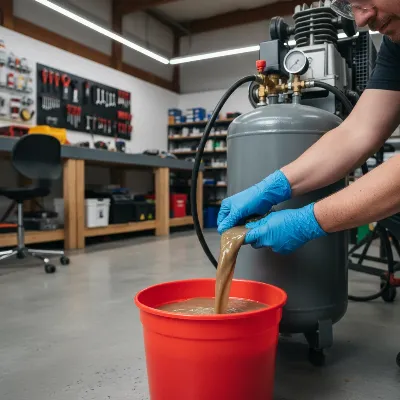 A person wearing safety goggles and gloves slowly opening the drain valve of an air compressor tank to release water into a bucket, emphasizing safety and DIY maintenance.
Conclusion
Draining moisture from your air compressor tank is a simple yet profoundly important DIY maintenance task. By understanding why condensation occurs and diligently following the safety precautions and step-by-step draining process, you actively prevent corrosion, extend the lifespan of your compressor and pneumatic tools, and maintain optimal system efficiency. Regular attention to this detail saves you time, money, and frustration in the long run. Whether you opt for a consistent manual draining routine or upgrade to automatic systems, prioritizing moisture removal is key to a reliable compressed air setup. How will you integrate this vital maintenance into your routine to ensure your air compressor always performs at its best?
Frequently Asked Questions
How often should I drain my air compressor if I only use it occasionally?
Even with occasional use, it’s best practice to drain your air compressor tank after each session. Moisture can still accumulate and cause corrosion over time, even if the compressor isn’t used frequently. A quick drain after use ensures no water sits stagnant in the tank.
What should I do if my drain valve is stuck or broken?
If your drain valve is stuck, try applying a penetrating lubricant and gently tapping the area (avoiding excessive force that could damage the tank). If it’s still stuck or broken, do not force it, as this could cause a dangerous rupture. It’s safest to contact a qualified technician or the manufacturer for repair or replacement of the valve.
Frequently Asked Questions
Why is it important to drain moisture from an air compressor tank?
Draining moisture from an air compressor tank is crucial because condensed water can lead to internal corrosion, reducing the tank's structural integrity and lifespan. It also prevents water from mixing with lubricating oil, which decreases efficiency, and stops contaminated air from damaging pneumatic tools with rust and reduced performance.
How often should I drain my air compressor if I only use it occasionally?
Even with occasional use, it's best practice to drain your air compressor tank after each session. Moisture can still accumulate and cause corrosion over time, even if the compressor isn't used frequently. A quick drain after use ensures no water sits stagnant in the tank, protecting your equipment.
What tools are essential for safely draining an air compressor tank?
Essential tools for safely draining an air compressor tank include safety gloves and goggles to protect against splashes, and a collection container like a bucket or tray for the expelled water. Optional tools are hearing protection and a wrench or pliers if the drain valve is stiff.
What are the risks of not draining an air compressor tank regularly?
Not draining an air compressor tank regularly leads to several risks, including internal corrosion that can cause structural failure, reduced lubrication effectiveness, and damage to pneumatic tools from rust. In colder climates, accumulated water can also freeze, causing blockages and potential system breakdowns.
What should I do if my air compressor's drain valve is stuck?
If your air compressor's drain valve is stuck, try applying a penetrating lubricant and gently tapping the area, avoiding excessive force. If it remains stuck or appears broken, do not force it, as this could cause a dangerous rupture. It is safest to contact a qualified technician or the manufacturer for repair or replacement.
How to Drain Your Air Compressor Tank
This guide outlines the essential steps to safely and effectively drain moisture from your air compressor tank, preventing corrosion and extending its lifespan.
First, ensure the compressor is completely turned off and unplugged from its power source to prevent accidental startups. Then, depressurize the tank by pulling the safety valve ring or using an air tool until the pressure gauge reads zero or near zero PSI, ideally under 10 PSI.
Locate the drain valve, typically found at the very bottom of the tank, and place a collection container underneath it. Slowly and carefully open the drain valve, being prepared for a forceful gush of water, which may be mixed with rust or sludge.
Let the water flow out until it stops completely and only air is escaping. The water's color may change from rusty brown to clear as the tank empties. For optimal drainage, you can carefully tilt smaller compressors if safe to do so.
Once drainage is complete, securely close the drain valve, tightening any screw-type plugs firmly but without overtightening. Repressurize the compressor and check for leaks around the valve area using soapy water before reconnecting power for use.

I’ve always known I should drain my compressor, but I never really understood the ‘why’ until now. The explanation about atmospheric moisture condensing into liquid in the tank really clicked for me. I’ve been doing it after every use now, and I can already tell my old compressor is running a bit smoother. Great advice on extending equipment life!
This was super helpful! I always just drained my tank whenever I remembered, but understanding that it’s an inevitable byproduct of the compression process makes me realize how crucial it is. I’m going to be much more diligent about removing that condensed water. Thanks for the clear explanation!
Good breakdown of the steps. I usually just open the valve and let it rip, but the tip about doing it daily for frequent operation is something I’m going to start implementing. My shop compressor gets a lot of use, and I definitely want to avoid rust buildup. It’s a simple DIY process that makes a big difference.
The information about preventing rust and improving efficiency is spot on. My only minor complaint is that it didn’t really touch on what to do if your drain valve is stuck or corroded, which has been an issue for me in the past. Still, it’s a good reminder about the importance of regular maintenance.