Changing the oil in your gas air compressor safely and effectively is crucial for its longevity and optimal performance, typically required every 3 to 11 months depending on oil type and usage. Neglecting this maintenance can lead to increased wear, reduced efficiency, and costly damage. This guide details the process, ensuring your compressor continues to power projects reliably for years.
Understanding Your Gas Air Compressor’s Oil
Air compressor oil is a specialized lubricant that reduces friction, prevents premature wear, aids in cooling, and seals internal mechanisms. Over time, this oil degrades due to heat, contamination, and oxidation, losing its protective properties.
Regular oil changes are essential for compressor health. The type of oil is also paramount: mineral oils require changes every 3-4 months, while synthetic oils offer superior thermal stability and a longer service life, lasting 10-11 months or 2,000-4,000 operating hours. Always consult your compressor’s owner’s manual for the recommended oil type and viscosity to avoid voiding warranties or causing damage.
The frequency of oil changes depends on several factors, including oil type, operating conditions, and usage. As a general guideline:
- Mineral oil: Every 3 to 4 months.
- Semi-synthetic oil: Every 6 to 8 months.
- Fully synthetic oil: Every 10 to 11 months or every 2,000 to 4,000 operating hours.
- New machines: Change oil after the first 500 hours, then follow the regular schedule.
- Harsh environments: Compressors in dusty, hot, or corrosive conditions may require more frequent changes.
Essential Safety Precautions Before You Start
Safety is paramount when performing maintenance on a gas-powered air compressor. Failing to follow proper safety protocols can lead to serious injury or damage.
Before starting, ensure the compressor is completely powered down by turning off the engine and disconnecting the spark plug wire to prevent accidental startup. Allow the compressor to cool down entirely if it has been running, as components and oil can be extremely hot.
Always adhere to these critical safety steps:
- Depressurize the System: Ensure the pressure gauge reads zero PSI and all air has been bled from the tank.
- Wear Personal Protective Equipment (PPE): Protect your eyes with safety glasses, your ears with hearing protection, and your hands with sturdy gloves.
- Consult the Owner’s Manual: Refer to your manual for precise steps, oil specifications, and torque settings specific to your model.
- Work in a Safe Environment: Choose a well-ventilated, dry, and clutter-free area to prevent fire hazards and ensure good airflow.
- Plan for Proper Disposal: Have a plan for responsibly disposing of used oil and oil filters. Many auto parts stores or municipal waste facilities accept used oil for recycling.
Tools and Supplies You’ll Need
Gathering all necessary tools and supplies beforehand ensures a smoother and more efficient oil change.
- New Compressor Oil: Use the correct type and volume specified in your owner’s manual. Do not use automotive motor oil.
- New Oil Filter (if applicable): Some models require an oil filter replacement during the oil change.
- Drain Pan/Container: A container large enough to hold all the old oil.
- Wrenches: An open-end wrench for the drain plug and an oil filter wrench (if applicable).
- Funnel: To prevent spills when adding new oil.
- Clean Shop Rags: For wiping up spills and cleaning surfaces.
- Optional: A cleaning agent for oil systems, if heavy sludge is suspected (for advanced flushing).
Step-by-Step Guide to Changing Your Air Compressor Oil
Changing the oil in your gas air compressor is a straightforward process when approached systematically and with safety in mind.
Prepare the Compressor
|
Our Picks for the Best Air Compressor in 2026
As an Amazon Associate I earn from qualifying purchases.
|
||
| Num | Product | Action |
|---|---|---|
| 1 | ECOMAX Air Compressor 6 Gallon 150 PSI Pancake Portable Oil-free Tank with 10 PCS Accessories Kit |

|
| 2 | AC Compressor for 2000-2027 Chevy Silverado/GMC Sierra/Cadillac Escalade (4.8L/5.3L/6.0L V8) | OE Replaces 15036042, 15707611, CO29002C,78363, 78362 | A/C Compressor & Kit |
|
| 3 | Craftsman Air Compressors 6 Gallon Portable Pancake Air Compressor,Oil Free Max 150 Psi 1.0HP 2.6 CFM@90PSI Electric Air Compressor Shop Air Compressor, CMXECXA02106410 |
|
| 4 | CRAFTSMAN Air Compressor, 2 Gallon Portable Air Compressor 1/3HP Max 125 PSI Oil-Free Light Weight with 10 PCS Accessory Kit |
|
| 5 | Tire Inflator Portable Air Compressor, 150PSI Cordless Air Pump for Car Tires with Auto Shut-Off, Portable Tire Pump for Car, Bike, Motorcycle and Balls |
|
| 6 | California Air Tools CAT-4710W 1.0 HP Quiet and Oil-Free Air Compressor with Wheels, 4.7 Gallon Steel Tank, 75 dBA Noise Level, Lightweight |
|
| 7 | DEWALT Tire Inflator Portable Air Compressor 20V MAX, Car Air Pump with Automatic Shut Off, LED Light, Tool Only (DCC020IB) |
|
| 8 | Quiet Air Compressor, Only 68dB, 5 Gallon Steel Tank, 2.8CFM @ 90PSI, Oil-Free, Electric Air Compressor Perfect for Woodwork Nailing, Garage, Car, Pneumatic Tool, Includes 11 Accessories |
|
| 9 | Airmoto Tire Inflator Portable Air Compressor - Air Pump for Car Tires with Digital Pressure Gauge, LED Light and Auto Shut-Off Function - Cordless Pump for Car, Motorcycle, Bicycle, Ball |
|
| 10 | Metabo HPT Pancake Air Compressor, 6-Gallon 165PSI, Portable Air Compressor with 1.0 HP Oil-Free High Efficiency Motor, Lihghtweight, Quick Couplers for Fast Tool Changes, EC711S |
|
First, run your compressor for a few minutes to bring the oil up to operating temperature, making it thinner for more complete draining. Next, shut down the engine and disconnect the spark plug wire to disable the ignition system. Ensure the air pressure gauge reads zero PSI, and carefully open any drain or pressure relief valves to completely depressurize the system. Position your drain pan directly beneath the compressor’s oil drain plug(s), then remove the oil fill cap or dipstick to allow air into the system, which helps the oil drain freely.
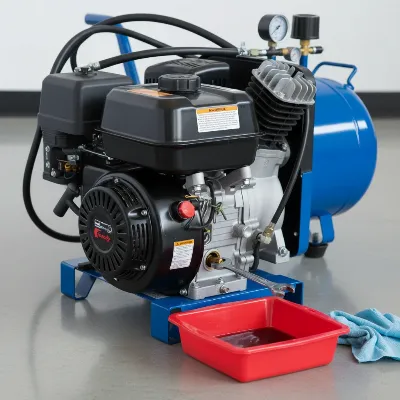 Gas air compressor with a drain pan positioned underneath for an oil change.
Drain the Old Oil
Locate the oil drain plug, usually at the base of the compressor. Carefully remove the plug, allowing the old oil to flow into the drain pan. Allow ample time for all the used oil to drain completely, which may take several minutes. Once draining is complete, securely replace and tighten the drain plug.
Replace the Oil Filter (If Applicable)
If your compressor has an oil filter, carefully remove the old filter using an oil filter wrench, being prepared to catch any residual oil. Clean the filter sealing surface on the compressor, ensuring no dirt or debris falls into the system. Apply a thin layer of new compressor oil to the rubber gasket of the new oil filter to help create a good seal. Screw the new filter into place by hand until snug, then tighten according to manufacturer’s specifications, usually an additional quarter or half turn; do not overtighten.
Add New Oil
Using a clean funnel, carefully pour the new, recommended compressor oil into the designated oil fill port. Refer to your owner’s manual for the precise amount of oil required, avoiding overfilling. Continuously check the oil level using the dipstick, if equipped, adding oil gradually until it reaches the “FULL” mark. Once the correct level is achieved, replace the oil fill cap or dipstick securely.
Final Checks and Startup
Reconnect the spark plug wire to the engine. Start the compressor’s engine and let it run briefly (e.g., 5-10 minutes), inspecting for any leaks around the drain plug or oil filter. Shut down the engine and allow the unit to sit for a few minutes for the oil to settle. Re-check the oil level with the dipstick and add more oil if necessary to reach the “FULL” mark. Finally, ensure all used oil and the old filter are disposed of properly and responsibly.
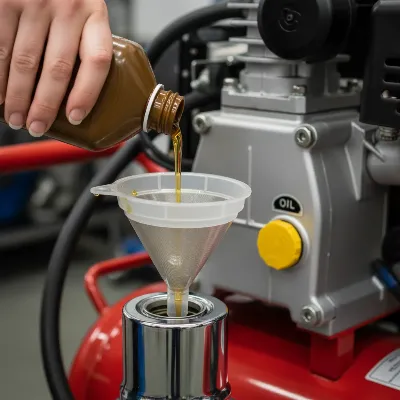 Pouring fresh oil into a gas air compressor using a funnel to prevent spills.
Maintenance Tips for Longevity
Beyond regular oil changes, several other maintenance practices contribute to the safe and long-lasting operation of your gas air compressor. Consistent attention to these details can prevent unexpected breakdowns and costly repairs.
- Regular Oil Level Checks: Routinely check your oil level with the dipstick. Low oil levels can lead to overheating and severe wear.
- Monitor Oil Condition: Periodically inspect the oil’s appearance. If it looks dark, gritty, or unusually thick before the scheduled change interval, it’s a sign that it may need to be replaced sooner.
- Air Filter Maintenance: A clean air filter prevents dirt and debris from entering the compressor and contaminating the oil. Inspect and clean or replace your air filter regularly, especially in dusty environments.
- Check for Leaks and Wear: Regularly inspect hoses, connections, and other components for any signs of leaks, fraying, or damage. Address these issues promptly to maintain optimal pressure and prevent hazards.
- Adhere to Manufacturer’s Manual: Always refer to your compressor’s manual for specific maintenance schedules, troubleshooting, and replacement part information. This ensures you’re following recommendations tailored to your machine.
“Consistent maintenance is the backbone of any reliable air compressor. Ignoring oil changes is like driving a car without ever changing its engine oil – it’s a recipe for disaster.” – Alex Turner, Industrial Equipment Specialist
Conclusion
Performing regular and safe oil changes on your gas air compressor is a fundamental aspect of responsible equipment ownership. By following the detailed steps outlined in this guide and adhering to essential safety precautions, you not only extend the lifespan of your valuable machinery but also ensure its efficient and safe operation. The investment of time and effort in proper maintenance far outweighs the cost and frustration of unexpected repairs or premature replacement. Take control of your compressor’s health today and keep it running smoothly for all your demanding tasks.
Frequently Asked Questions
Can I use regular motor oil in my gas air compressor?
No, it is strongly advised against using regular motor oil in your air compressor. Automotive motor oils contain detergents and other additives designed for internal combustion engines that can cause harmful carbon buildup and foaming in an air compressor, leading to decreased performance and potential damage. Always use compressor-specific oil recommended by the manufacturer.
How often should I check my compressor oil level?
It’s a good practice to check your air compressor’s oil level before each major use or at least weekly if it’s used frequently. This simple check helps ensure that the compressor always has adequate lubrication and can prevent operation with dangerously low oil, which could lead to severe internal damage.
What are the signs that my air compressor oil needs changing?
Key indicators that your air compressor oil needs changing include the oil appearing dark, gritty, or unusually thick. You might also notice your compressor running hotter than normal, an increase in operational noise or vibration, or visible sludge within the oil sight glass.
Frequently Asked Questions
Can I use regular motor oil in my gas air compressor?
No, you should not use regular motor oil in your air compressor. Automotive motor oils contain detergents and additives that can cause harmful carbon buildup and foaming, leading to decreased performance and potential damage. Always use compressor-specific oil recommended by the manufacturer for optimal function.
How often should I check my compressor oil level?
It is a good practice to check your air compressor's oil level before each major use or at least weekly if it is used frequently. This simple check helps ensure the compressor has adequate lubrication, preventing operation with dangerously low oil levels that could lead to severe internal damage.
What are the signs that my air compressor oil needs changing?
Key indicators that your air compressor oil needs changing include the oil appearing dark, gritty, or unusually thick. You might also notice your compressor running hotter than normal, an increase in operational noise or vibration, or visible sludge within the oil sight glass, signaling degradation.
What are the recommended oil change intervals for different oil types?
Oil change intervals vary by type: mineral oil should be changed every 3 to 4 months, semi-synthetic oil every 6 to 8 months, and fully synthetic oil every 10 to 11 months or 2,000 to 4,000 operating hours. New machines often require an initial change after 500 hours.
What safety precautions are essential before changing compressor oil?
Before changing compressor oil, always power down the engine, disconnect the spark plug wire, and allow the unit to cool. Depressurize the system to zero PSI, wear personal protective equipment like safety glasses and gloves, and consult your owner's manual for specific instructions.

The tips on preventing premature wear were solid. I appreciate the detail on why oil degrades over time. My only minor complaint is that I wish there was a quick reference chart for different compressor brands and their specific oil capacities, but overall, it’s a good resource for maintenance.
Great advice on keeping my compressor in top shape. I always forget how often I should be changing the oil, so the reminder about 3-11 months depending on usage was really helpful. I’m using a synthetic oil, so it’s good to know I have a bit more leeway between changes.
I’ve been putting off changing the oil in my gas compressor for a while, and this guide was exactly what I needed. The step-by-step instructions made it super clear, especially the part about safely draining the old oil. My compressor is running so much smoother now, definitely worth the small effort.
This really helped me understand the importance of specialized lubricant for my air compressor. I used to just grab whatever oil was handy, but now I get why a proper air compressor oil is crucial for reducing friction and sealing mechanisms. My old compressor feels like new after the oil change!