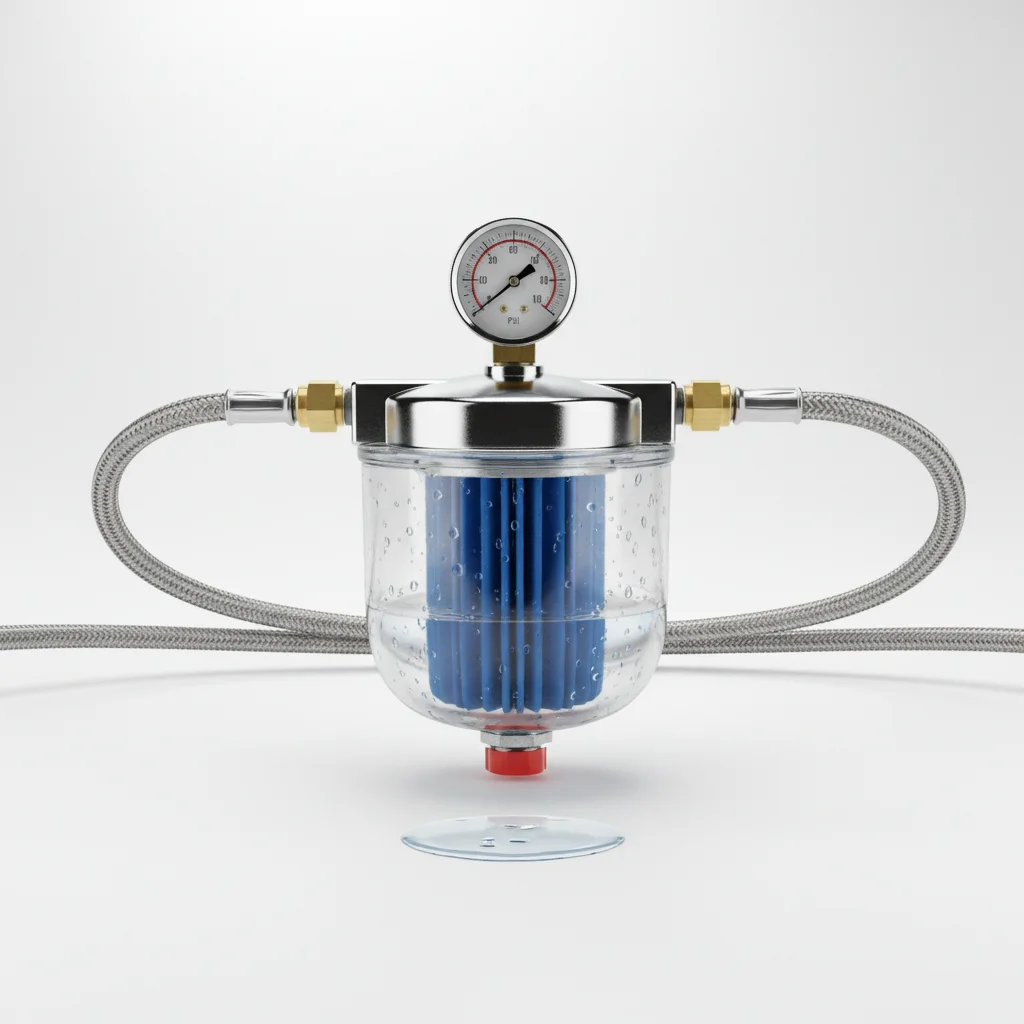
An air compressor water separator is a crucial component for maintaining the longevity and efficiency of your air tools and compressor system. While not strictly mandatory for every single application, its necessity significantly increases with the frequency of use, the humidity of your environment, and the precision required by your air tools. For most users, especially those in humid climates or performing tasks like painting and sandblasting, a water separator is an indispensable investment that prevents costly damage and ensures optimal performance.
Water in compressed air is a common problem, arising from the condensation of atmospheric moisture during the compression process. This moisture, if not removed, can lead to rust and corrosion within the compressor tank and air lines, degrade the performance of air tools, and contaminate finishes in applications like painting. A water separator, also known as a moisture trap or filter, works by forcing the compressed air through a series of baffles or a centrifugal motion, causing water droplets to condense and fall to the bottom of a collection bowl, where they can be manually or automatically drained. For see our air compressor recommendations on this site.
How a Water Separator Protects Your Equipment
The primary function of a water separator is to safeguard your air tools and the internal components of your air compressor from the damaging effects of moisture. Rust and corrosion are the most immediate threats, leading to reduced lifespan and potential failure of expensive equipment. For instance, pneumatic tools with intricate moving parts can seize up or operate inefficiently when exposed to water. Furthermore, water can wash away lubrication, accelerating wear and tear.
Beyond protecting the tools themselves, a water separator also extends the life of your air compressor. By preventing water from accumulating in the tank and lines, it reduces the risk of internal rust, which can weaken the tank’s integrity over time and lead to dangerous failures. This preventative measure is far more cost-effective than replacing damaged tools or an entire compressor system.
Improving Air Tool Performance and Finish Quality
For applications requiring clean, dry air, such as spray painting, plasma cutting, or sandblasting, a water separator is not just beneficial but essential. Even small amounts of moisture in the air stream can ruin a paint job, causing fisheyes, blistering, or an uneven finish. In sandblasting, wet abrasive can clog the nozzle and reduce effectiveness. A water separator ensures that the air delivered to your tools is free from contaminants, allowing for consistent, high-quality results.
Consider the precision required for automotive painting or fine woodworking. The presence of moisture can introduce imperfections that are difficult and time-consuming to correct, ultimately impacting the quality of your work and potentially leading to costly redoes. Investing in a reliable water separator is a small price to pay for professional-grade outcomes.
Types of Water Separators and Their Applications
|
Our Picks for the Best Air Compressor in 2026
As an Amazon Associate I earn from qualifying purchases.
|
||
| Num | Product | Action |
|---|---|---|
| 1 | ECOMAX Air Compressor 6 Gallon 150 PSI Pancake Portable Oil-free Tank with 10 PCS Accessories Kit |

|
| 2 | Craftsman Air Compressors 6 Gallon Portable Pancake Air Compressor,Oil Free Max 150 Psi 1.0HP 2.6 CFM@90PSI Electric Air Compressor Shop Air Compressor, CMXECXA02106410 |
|
| 3 | DEWALT Tire Inflator Portable Air Compressor 20V MAX, Car Air Pump with Automatic Shut Off, LED Light, Tool Only (DCC020IB) |
|
| 4 | AC Compressor for 2000-2027 Chevy Silverado/GMC Sierra/Cadillac Escalade (4.8L/5.3L/6.0L V8) | OE Replaces 15036042, 15707611, CO29002C,78363, 78362 | A/C Compressor & Kit |
|
| 5 | Metabo HPT Pancake Air Compressor, 6-Gallon 165PSI, Portable Air Compressor with 1.0 HP Oil-Free High Efficiency Motor, Lihghtweight, Quick Couplers for Fast Tool Changes, EC711S |
|
| 6 | Quiet Air Compressor, Only 68dB, 5 Gallon Steel Tank, 2.8CFM @ 90PSI, Oil-Free, Electric Air Compressor Perfect for Woodwork Nailing, Garage, Car, Pneumatic Tool, Includes 11 Accessories |
|
| 7 | CRAFTSMAN Air Compressor, 2 Gallon Portable Air Compressor 1/3HP Max 125 PSI Oil-Free Light Weight with 10 PCS Accessory Kit |
|
| 8 | California Air Tools CAT-4710W 1.0 HP Quiet and Oil-Free Air Compressor with Wheels, 4.7 Gallon Steel Tank, 75 dBA Noise Level, Lightweight |
|
| 9 | Airmoto Tire Inflator Portable Air Compressor - Air Pump for Car Tires with Digital Pressure Gauge, LED Light and Auto Shut-Off Function - Cordless Pump for Car, Motorcycle, Bicycle, Ball |
|
| 10 | Tire Inflator Portable Air Compressor, 150PSI Cordless Air Pump for Car Tires with Auto Shut-Off, Portable Tire Pump for Car, Bike, Motorcycle and Balls |
|
There are several types of water separators available, each suited for different needs and budgets. The most common are centrifugal separators, which use a swirling motion to separate water, and coalescing filters, which capture finer water droplets and oil aerosols. For general workshop use, a standard inline water separator is often sufficient. However, for more demanding applications or extremely humid environments, a multi-stage filtration system that includes a coalescing filter might be necessary.
- Centrifugal Separators: Ideal for removing bulk liquid water.
- Coalescing Filters: Excellent for removing finer water droplets and oil aerosols.
- Desiccant Dryers: Used for applications requiring extremely dry air, often in conjunction with separators.
- Refrigerated Dryers: Industrial solutions for large volumes of very dry air.
- Automatic Drains: Enhance convenience by automatically expelling collected water.
When selecting a water separator, consider the CFM (cubic feet per minute) rating of your air compressor and the specific requirements of your air tools. Matching the separator’s capacity to your compressor’s output is crucial for effective moisture removal.
Installation and Maintenance Tips
Installing a water separator is a straightforward process, typically involving mounting it inline with your air compressor’s output, usually after the regulator. It’s recommended to install it as close as possible to the point of use for maximum effectiveness, especially if you have long air lines where condensation can re-form. Ensure all connections are airtight to prevent leaks that could compromise performance.
Regular maintenance is key to the continued effectiveness of your water separator. This primarily involves draining the collected water from the bowl. Depending on your usage and environmental humidity, this might need to be done daily, weekly, or monthly. Many separators come with a manual drain valve, while others feature automatic float drains for convenience. Periodically inspecting the filter element (if applicable) and replacing it according to the manufacturer’s recommendations will also ensure optimal performance.
The Verdict: Is a Water Separator Worth It?
In conclusion, while you might technically operate an air compressor without a water separator for very light, infrequent tasks in dry climates, for anyone serious about protecting their investment in air tools and achieving professional results, a water separator is an absolute necessity. It prevents rust, extends equipment lifespan, and ensures the quality of your work. The cost of a good water separator is minimal compared to the expense of replacing damaged tools or repairing a corroded compressor. Make it a standard part of your air system setup to ensure clean, dry air for all your projects.
