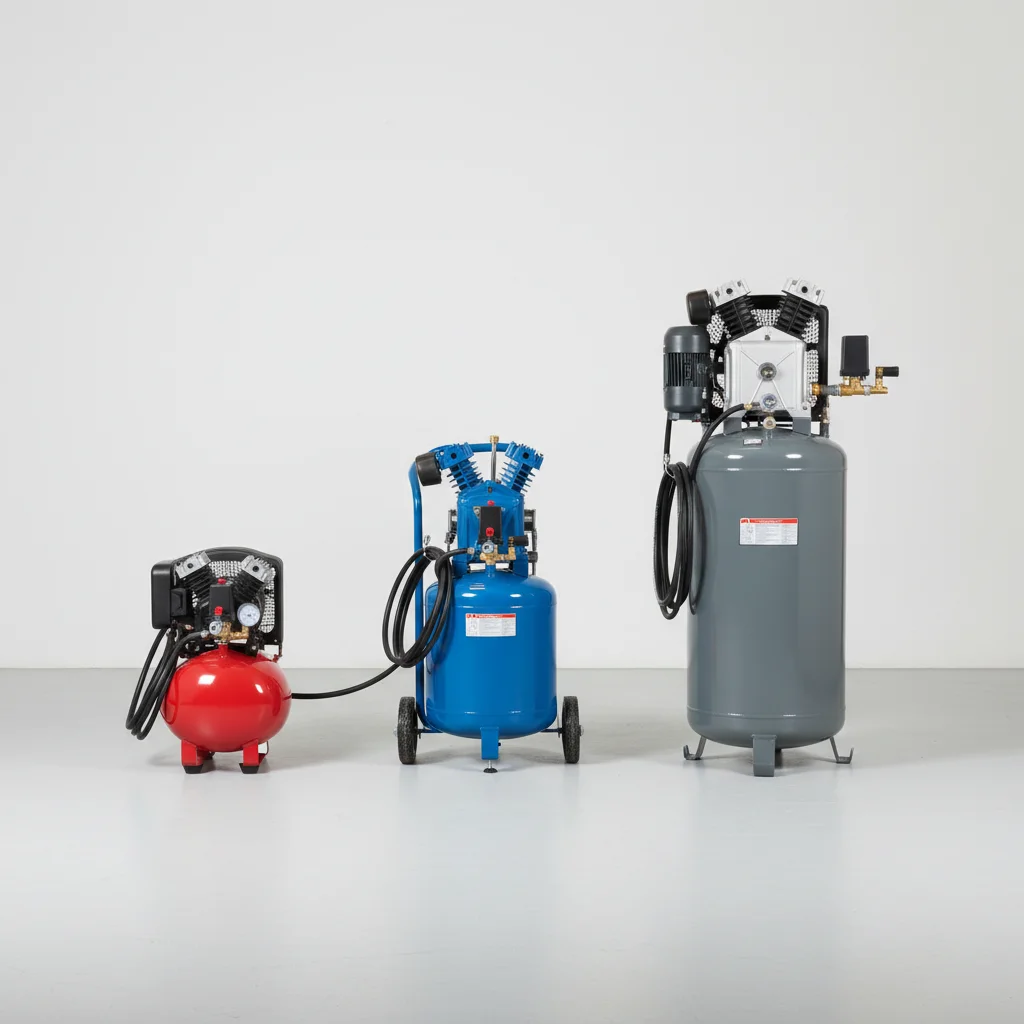
Choosing the right air compressor tank size is crucial for efficient operation and depends heavily on your specific tool usage and project demands. For most DIY enthusiasts and small workshops, a 6-gallon to 20-gallon tank is often sufficient, providing enough reserve air for intermittent tasks like nailing, stapling, and light automotive work. Larger projects or continuous-use tools, such as sandblasters or paint sprayers, will necessitate a significantly larger tank, typically ranging from 30 to 80 gallons or more, to maintain consistent pressure without the compressor cycling excessively.
Understanding Tank Volume and Its Impact
The tank size, measured in gallons, directly influences how long your air tools can run before the compressor motor kicks in to replenish the air supply. A larger tank provides a greater reserve of compressed air, leading to fewer compressor cycles and a more consistent airflow for your tools. This is particularly beneficial for tools that consume a lot of air quickly, like impact wrenches or spray guns. Conversely, a smaller tank will cause the compressor to cycle more frequently, which can be less efficient and potentially shorten the motor’s lifespan if used for demanding applications.
Matching Tank Size to Your Tools and Projects
The type of air tools you plan to use is the primary determinant for the ideal tank size. For intermittent tasks like inflating tires or using a brad nailer, a small portable compressor with a 1-6 gallon tank is usually adequate. For general workshop use, including framing nailers, impact wrenches, and small paint jobs, a 10-30 gallon tank offers a good balance of portability and capacity. Professional applications, such as continuous spray painting, sandblasting, or running multiple tools simultaneously in an auto shop, demand a much larger tank, often 60 gallons or more, to prevent pressure drops and ensure smooth operation.
- For tire inflation and small crafts: 1-6 gallons
- For finish nailing and light automotive: 6-20 gallons
- For framing, impact wrenches, and general shop use: 20-40 gallons
- For continuous spray painting and sandblasting: 60+ gallons
- For multiple tools or industrial applications: 80+ gallons
The Role of CFM and PSI in Tank Sizing
|
Our Picks for the Best Air Compressor in 2026
As an Amazon Associate I earn from qualifying purchases.
|
||
| Num | Product | Action |
|---|---|---|
| 1 | ECOMAX Air Compressor 6 Gallon 150 PSI Pancake Portable Oil-free Tank with 10 PCS Accessories Kit |

|
| 2 | CRAFTSMAN Air Compressor, 2 Gallon Portable Air Compressor 1/3HP Max 125 PSI Oil-Free Light Weight with 10 PCS Accessory Kit |
|
| 3 | DEWALT Tire Inflator Portable Air Compressor 20V MAX, Car Air Pump with Automatic Shut Off, LED Light, Tool Only (DCC020IB) |
|
| 4 | Quiet Air Compressor, Only 68dB, 5 Gallon Steel Tank, 2.8CFM @ 90PSI, Oil-Free, Electric Air Compressor Perfect for Woodwork Nailing, Garage, Car, Pneumatic Tool, Includes 11 Accessories |
|
| 5 | California Air Tools CAT-4710W 1.0 HP Quiet and Oil-Free Air Compressor with Wheels, 4.7 Gallon Steel Tank, 75 dBA Noise Level, Lightweight |
|
| 6 | Tire Inflator Portable Air Compressor, 150PSI Cordless Air Pump for Car Tires with Auto Shut-Off, Portable Tire Pump for Car, Bike, Motorcycle and Balls |
|
| 7 | Craftsman Air Compressors 6 Gallon Portable Pancake Air Compressor,Oil Free Max 150 Psi 1.0HP 2.6 CFM@90PSI Electric Air Compressor Shop Air Compressor, CMXECXA02106410 |
|
| 8 | Metabo HPT Pancake Air Compressor, 6-Gallon 165PSI, Portable Air Compressor with 1.0 HP Oil-Free High Efficiency Motor, Lihghtweight, Quick Couplers for Fast Tool Changes, EC711S |
|
| 9 | Airmoto Tire Inflator Portable Air Compressor - Air Pump for Car Tires with Digital Pressure Gauge, LED Light and Auto Shut-Off Function - Cordless Pump for Car, Motorcycle, Bicycle, Ball |
|
| 10 | AC Compressor for 2000-2027 Chevy Silverado/GMC Sierra/Cadillac Escalade (4.8L/5.3L/6.0L V8) | OE Replaces 15036042, 15707611, CO29002C,78363, 78362 | A/C Compressor & Kit |
|
While tank size is important, it works in conjunction with the compressor’s Cubic Feet per Minute (CFM) and Pounds per Square Inch (PSI) output. CFM indicates the volume of air the compressor can deliver at a given pressure, which is critical for powering air tools. A tool’s CFM requirement should always be less than the compressor’s CFM output. PSI refers to the maximum pressure the tank can hold. A larger tank can store more air at a given PSI, but if the CFM is too low for your tools, the tank will deplete quickly regardless of its size. Therefore, consider both CFM and tank size together to ensure your compressor can meet the demands of your air tools.
Considerations for Portability and Space
Beyond performance, practical considerations like portability and available space play a significant role in choosing an air compressor tank size. Smaller tanks (1-10 gallons) are typically highly portable, making them ideal for job sites or tasks requiring movement. Medium-sized tanks (10-30 gallons) offer a compromise, often with wheels for easier relocation. Larger tanks (60+ gallons) are usually stationary units, requiring dedicated space in a garage or workshop. Before purchasing, measure your available space and consider how often you’ll need to move the compressor.
Optimizing Tank Size for Longevity and Efficiency
Selecting an appropriately sized tank not only ensures your tools perform optimally but also contributes to the longevity and efficiency of your air compressor. A tank that is too small for your applications will cause the motor to cycle on and off too frequently, leading to increased wear and tear and higher energy consumption. Conversely, an oversized tank for light-duty tasks might be an unnecessary expense and take up valuable space. Aim for a tank size that allows the compressor to run for a reasonable duration before cycling, providing a consistent air supply without overworking the motor.
