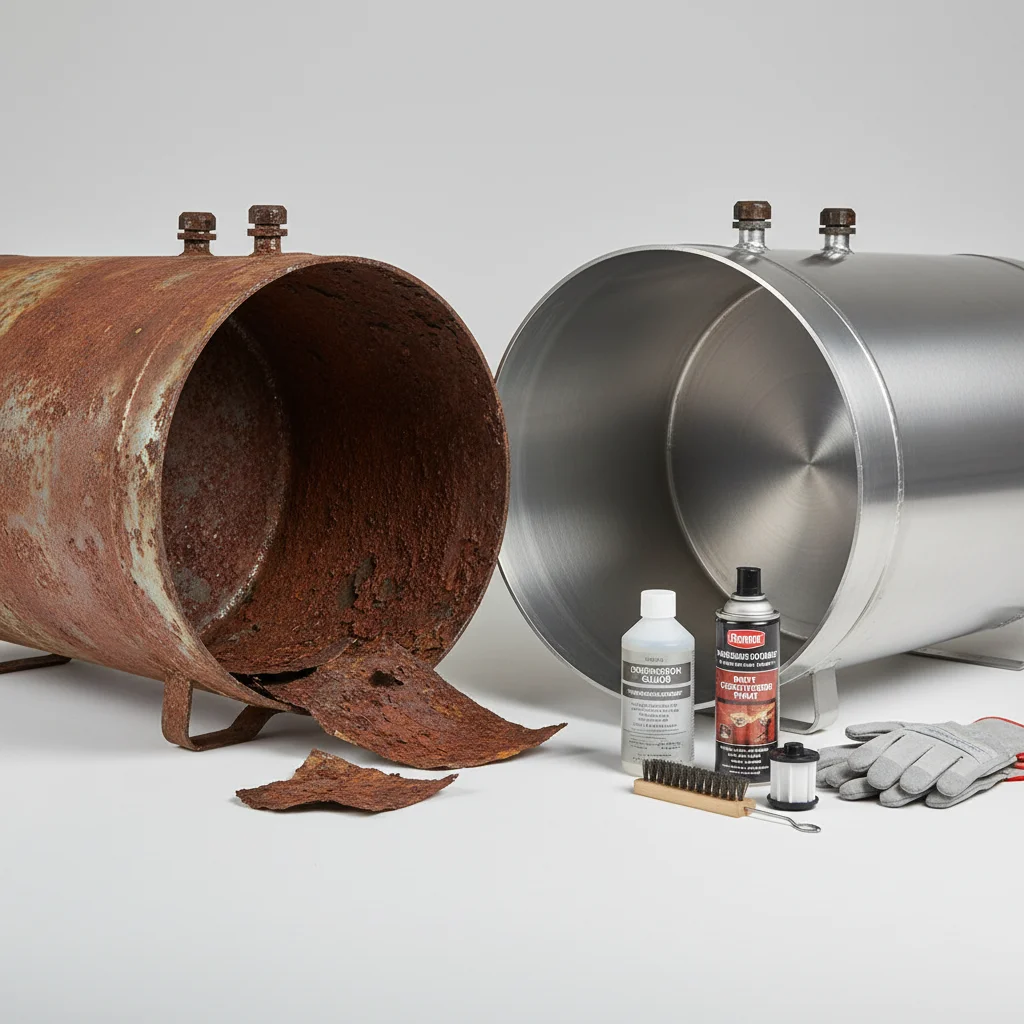
Preventing and removing air compressor tank rust is crucial for the longevity and safety of your unit. The most effective way to prevent rust is to regularly drain moisture from the tank, ideally after every use, and to apply a rust-inhibiting coating internally. If rust has already formed, it can often be removed using a combination of mechanical abrasion and chemical treatments, followed by a protective sealant.
Understanding Air Compressor Tank Rust
Air compressor tanks are susceptible to rust because compressed air contains moisture. As the air cools inside the tank, this moisture condenses, creating an environment ripe for corrosion. Over time, this rust can weaken the tank walls, leading to leaks or, in severe cases, catastrophic failure. Regular inspection and maintenance are key to mitigating these risks.
Preventing Rust in Your Air Compressor Tank
The best defense against rust is a proactive approach. Draining the tank daily is the single most important step. Many compressors have a drain valve at the bottom for this purpose. Additionally, consider installing an air dryer in your system to reduce the amount of moisture entering the tank. For long-term storage, ensure the tank is completely dry and consider adding a desiccant packet or a small amount of rust inhibitor.
- Drain moisture daily from the tank’s drain valve.
- Install an inline air dryer to reduce humidity.
- Apply an internal rust-inhibiting coating.
- Store the compressor in a dry environment.
- Regularly inspect the tank for early signs of corrosion.
Methods for Removing Existing Tank Rust
|
Our Picks for the Best Air Compressor in 2026
As an Amazon Associate I earn from qualifying purchases.
|
||
| Num | Product | Action |
|---|---|---|
| 1 | Metabo HPT Pancake Air Compressor, 6-Gallon 165PSI, Portable Air Compressor with 1.0 HP Oil-Free High Efficiency Motor, Lihghtweight, Quick Couplers for Fast Tool Changes, EC711S |

|
| 2 | DEWALT Tire Inflator Portable Air Compressor 20V MAX, Car Air Pump with Automatic Shut Off, LED Light, Tool Only (DCC020IB) |
|
| 3 | AC Compressor for 2000-2027 Chevy Silverado/GMC Sierra/Cadillac Escalade (4.8L/5.3L/6.0L V8) | OE Replaces 15036042, 15707611, CO29002C,78363, 78362 | A/C Compressor & Kit |
|
| 4 | CRAFTSMAN Air Compressor, 2 Gallon Portable Air Compressor 1/3HP Max 125 PSI Oil-Free Light Weight with 10 PCS Accessory Kit |
|
| 5 | ECOMAX Air Compressor 6 Gallon 150 PSI Pancake Portable Oil-free Tank with 10 PCS Accessories Kit |
|
| 6 | California Air Tools CAT-4710W 1.0 HP Quiet and Oil-Free Air Compressor with Wheels, 4.7 Gallon Steel Tank, 75 dBA Noise Level, Lightweight |
|
| 7 | Tire Inflator Portable Air Compressor, 150PSI Cordless Air Pump for Car Tires with Auto Shut-Off, Portable Tire Pump for Car, Bike, Motorcycle and Balls |
|
| 8 | Quiet Air Compressor, Only 68dB, 5 Gallon Steel Tank, 2.8CFM @ 90PSI, Oil-Free, Electric Air Compressor Perfect for Woodwork Nailing, Garage, Car, Pneumatic Tool, Includes 11 Accessories |
|
| 9 | Craftsman Air Compressors 6 Gallon Portable Pancake Air Compressor,Oil Free Max 150 Psi 1.0HP 2.6 CFM@90PSI Electric Air Compressor Shop Air Compressor, CMXECXA02106410 |
|
| 10 | Airmoto Tire Inflator Portable Air Compressor - Air Pump for Car Tires with Digital Pressure Gauge, LED Light and Auto Shut-Off Function - Cordless Pump for Car, Motorcycle, Bicycle, Ball |
|
If you discover rust, prompt action can prevent further damage. For light surface rust, a wire brush attachment on a drill can be effective for external areas. Internally, specialized rust removers designed for metal tanks can be used. Always follow the manufacturer’s instructions carefully when using chemical treatments, ensuring proper ventilation and safety gear. For severe internal rust, professional cleaning or tank replacement may be necessary.
One common DIY method for internal rust involves introducing a solution of rust remover and small abrasive media (like nuts or bolts) into the tank, then gently rotating it to agitate the mixture. After thorough rinsing, the tank must be completely dried before reassembly or applying a new protective coating.
Applying Protective Coatings and Sealants
After rust removal, applying a protective coating is essential to prevent recurrence. Epoxy-based tank liners are a popular choice, offering excellent chemical resistance and durability. These coatings create a barrier between the metal and moisture, significantly extending the tank’s lifespan. Ensure the tank is perfectly clean and dry before application for optimal adhesion and performance.
Regular Maintenance Schedule for Rust Prevention
Establishing a consistent maintenance schedule is vital. Beyond daily draining, inspect your tank’s exterior for any signs of rust or damage monthly. Check the pressure relief valve and gauges to ensure they are functioning correctly. Annually, consider a more thorough internal inspection if possible, especially for older units or those used in high-humidity environments. Early detection of rust can save you significant repair costs and ensure safe operation.
