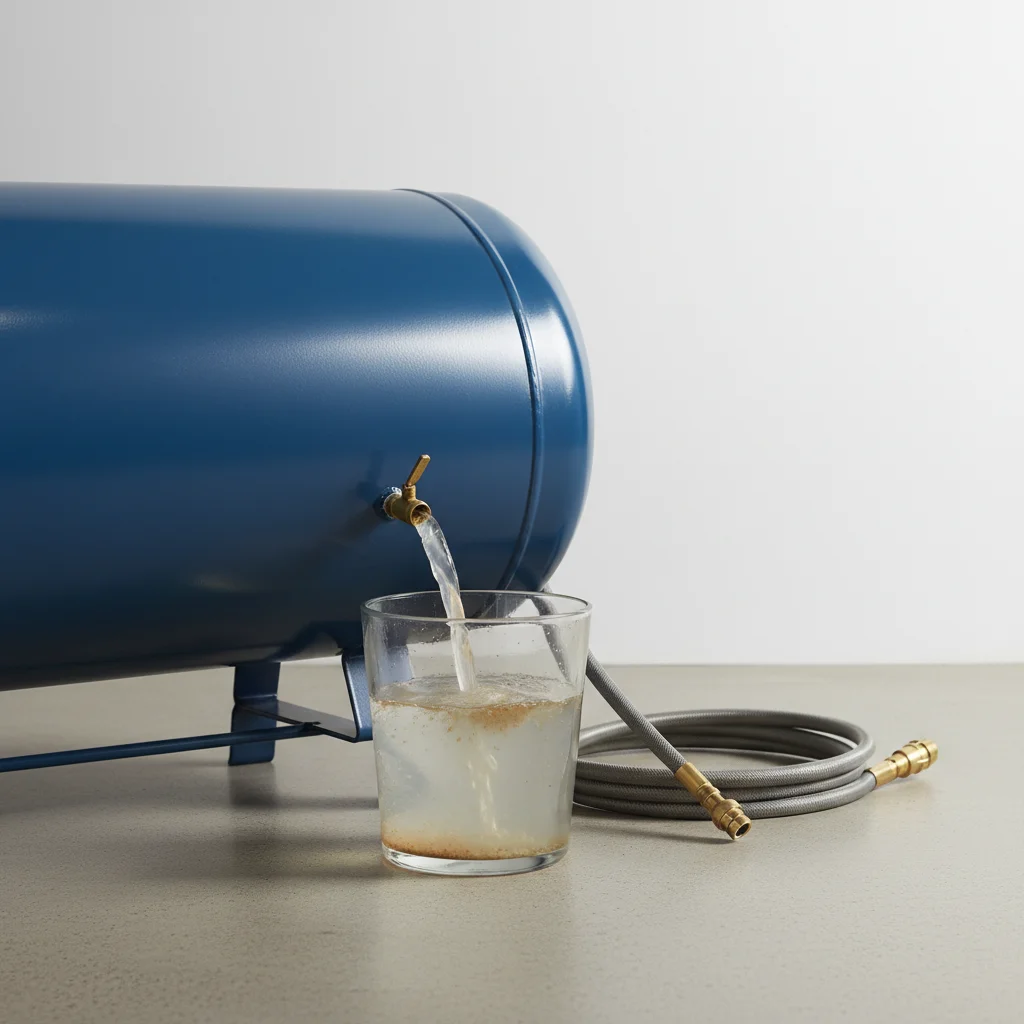
Regularly draining your air compressor tank is crucial for its longevity and performance. You should aim to drain your air compressor tank at least once a week, and even daily if you live in a high-humidity environment or use your compressor frequently. This simple maintenance step prevents rust, extends the life of your compressor, and ensures the quality of the compressed air.
Why is Draining Your Air Compressor Tank So Important?
When an air compressor operates, it draws in ambient air, which always contains some level of moisture. As this air is compressed, the moisture condenses into liquid water inside the tank. If left undrained, this water accumulates at the bottom of the tank, leading to several problems. The most significant issue is internal rust and corrosion, which can weaken the tank’s structural integrity over time and potentially lead to dangerous failures.
Beyond structural damage, accumulated water can also be carried into your air tools and pneumatic equipment, causing rust, reduced efficiency, and premature wear. This is especially problematic for applications like spray painting or sandblasting, where moisture can ruin the finish or clog equipment.
Factors Influencing Draining Frequency
The ideal frequency for draining your air compressor tank depends on several factors. High humidity levels in your environment will lead to more rapid water accumulation, necessitating more frequent draining. Similarly, the more often and longer you use your compressor, the more air it processes, and thus, the more moisture will condense in the tank. Larger tanks might seem to hold more water, but they still require regular draining to prevent significant buildup.
Consider the type of work you’re doing as well. If you’re using air tools for precision work or painting, even small amounts of moisture can be detrimental, making daily draining a wise practice. For occasional, light use in a dry climate, weekly draining might suffice.
The Simple Steps to Drain Your Compressor Tank
|
Our Picks for the Best Air Compressor in 2026
As an Amazon Associate I earn from qualifying purchases.
|
||
| Num | Product | Action |
|---|---|---|
| 1 | CRAFTSMAN Air Compressor, 2 Gallon Portable Air Compressor 1/3HP Max 125 PSI Oil-Free Light Weight with 10 PCS Accessory Kit |

|
| 2 | Airmoto Tire Inflator Portable Air Compressor - Air Pump for Car Tires with Digital Pressure Gauge, LED Light and Auto Shut-Off Function - Cordless Pump for Car, Motorcycle, Bicycle, Ball |
|
| 3 | Craftsman Air Compressors 6 Gallon Portable Pancake Air Compressor,Oil Free Max 150 Psi 1.0HP 2.6 CFM@90PSI Electric Air Compressor Shop Air Compressor, CMXECXA02106410 |
|
| 4 | California Air Tools CAT-4710W 1.0 HP Quiet and Oil-Free Air Compressor with Wheels, 4.7 Gallon Steel Tank, 75 dBA Noise Level, Lightweight |
|
| 5 | AC Compressor for 2000-2027 Chevy Silverado/GMC Sierra/Cadillac Escalade (4.8L/5.3L/6.0L V8) | OE Replaces 15036042, 15707611, CO29002C,78363, 78362 | A/C Compressor & Kit |
|
| 6 | Quiet Air Compressor, Only 68dB, 5 Gallon Steel Tank, 2.8CFM @ 90PSI, Oil-Free, Electric Air Compressor Perfect for Woodwork Nailing, Garage, Car, Pneumatic Tool, Includes 11 Accessories |
|
| 7 | DEWALT Tire Inflator Portable Air Compressor 20V MAX, Car Air Pump with Automatic Shut Off, LED Light, Tool Only (DCC020IB) |
|
| 8 | ECOMAX Air Compressor 6 Gallon 150 PSI Pancake Portable Oil-free Tank with 10 PCS Accessories Kit |
|
| 9 | Metabo HPT Pancake Air Compressor, 6-Gallon 165PSI, Portable Air Compressor with 1.0 HP Oil-Free High Efficiency Motor, Lihghtweight, Quick Couplers for Fast Tool Changes, EC711S |
|
| 10 | Tire Inflator Portable Air Compressor, 150PSI Cordless Air Pump for Car Tires with Auto Shut-Off, Portable Tire Pump for Car, Bike, Motorcycle and Balls |
|
Draining your air compressor tank is a straightforward process that takes only a few minutes. First, ensure the compressor is turned off and unplugged from its power source to prevent accidental startup. Next, slowly open the drain valve, typically located at the very bottom of the air tank. You’ll hear a hiss as air and water are expelled. Allow all the water to drain completely until only air comes out. Once drained, close the valve tightly. Always wear appropriate safety gear, such as eye protection, during this process.
- Turn off and unplug the compressor.
- Locate the drain valve at the bottom of the tank.
- Slowly open the valve to release air and water.
- Allow all moisture to drain until only air escapes.
- Close the drain valve securely.
Automating Tank Draining for Convenience
For those who use their air compressors extensively or simply want to minimize manual maintenance, automatic drain valves are an excellent investment. These devices can be programmed to open and close at set intervals, ensuring that your tank is regularly purged of moisture without requiring your constant attention. This can be particularly beneficial in commercial settings or for large industrial compressors where manual draining might be impractical or easily overlooked.
While automatic drains offer convenience, it’s still a good practice to manually check your tank periodically to ensure the automatic system is functioning correctly and no clogs are preventing proper drainage.Investing in a quality automatic drain can significantly extend the life of your compressor and reduce maintenance headaches.
Beyond Draining: Other Moisture Prevention Tips
While draining is paramount, other measures can further reduce moisture in your compressed air system. Installing an air dryer, such as a refrigerated or desiccant dryer, downstream from your compressor can remove a significant amount of moisture before it reaches your tools. Additionally, using an inline air filter with a water separator can catch any remaining moisture and particulates.These accessories are particularly valuable for applications requiring exceptionally dry and clean air.

This was a good reminder about the importance of regular maintenance. I usually drain my tank weekly, but sometimes I forget. The point about extending the life of the compressor is a big motivator for me. I wish there was a quick tip on how to make the drain valve easier to access on some models, as mine is a bit of a pain.
I’ve always been pretty good about draining my compressor, but I never realized just how critical it was until I read this. The explanation about moisture condensing and causing rust really hit home. I’m definitely going to be more diligent about draining it daily now, especially since I live in a humid area. Great advice for keeping my tools running smoothly.
Super helpful! I’ve been using my air compressor for years for various DIY projects, but I honestly didn’t pay enough attention to draining it. The part about potential dangerous failures due to weakened tank integrity really opened my eyes. I’m setting a reminder to drain it every time I use it now. Thanks for the clear explanation!
I appreciate the info on preventing rust and ensuring air quality. I’ve had issues with water getting into my air lines before, which was a real headache. While the advice is solid, I was hoping for a bit more detail on different types of drain valves or perhaps a troubleshooting section for stubborn ones. Still, it’s a good basic guide.