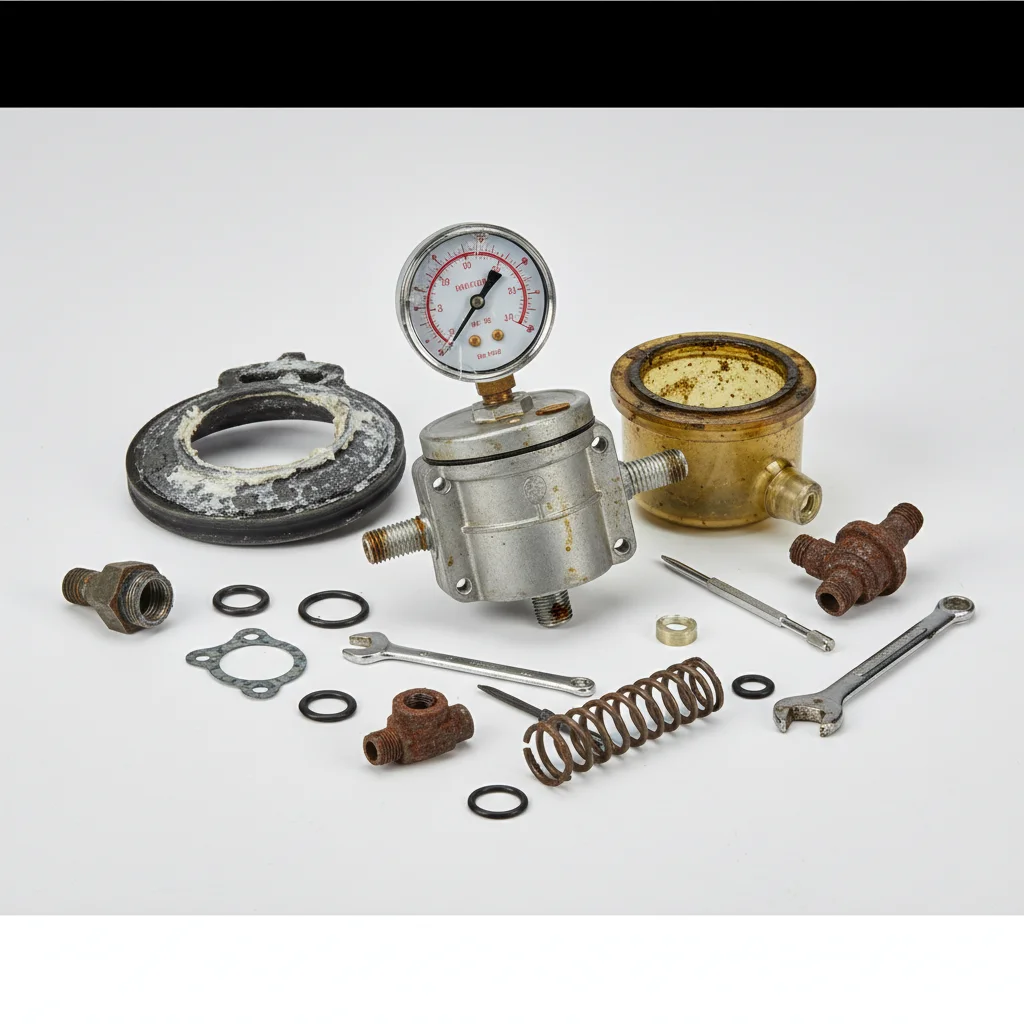
Air compressor regulator problems can significantly hinder your tools’ performance and productivity. The most common issues include inconsistent pressure output, complete loss of pressure, or a regulator that is stuck in one position. Addressing these problems promptly is crucial for maintaining efficient operation and extending the lifespan of your air tools.
Understanding Your Air Compressor Regulator
The air compressor regulator is a vital component that controls the air pressure delivered to your tools. It takes the high-pressure air from the tank and reduces it to a usable, consistent output pressure. A diaphragm, spring, and adjustment knob work in conjunction to achieve this. When you turn the knob, you compress or decompress the spring, which in turn adjusts the diaphragm’s position, controlling the flow of air. Understanding this basic mechanism is the first step in diagnosing any issues.
Common Regulator Problems and Their Symptoms
Several issues can arise with an air compressor regulator. One frequent problem is a fluctuating or inconsistent pressure output, which can manifest as tools losing power intermittently. Another common symptom is a complete failure to regulate pressure, meaning the output pressure remains at tank pressure or drops to zero. Leaks around the regulator body or adjustment knob are also indicators of a problem, often accompanied by a noticeable hissing sound. Sometimes, the regulator might simply feel stiff or impossible to adjust, indicating internal seizing or damage.
Troubleshooting Inconsistent Pressure Output
|
Our Picks for the Best Air Compressor in 2026
As an Amazon Associate I earn from qualifying purchases.
|
||
| Num | Product | Action |
|---|---|---|
| 1 | Airmoto Tire Inflator Portable Air Compressor - Air Pump for Car Tires with Digital Pressure Gauge, LED Light and Auto Shut-Off Function - Cordless Pump for Car, Motorcycle, Bicycle, Ball |

|
| 2 | Quiet Air Compressor, Only 68dB, 5 Gallon Steel Tank, 2.8CFM @ 90PSI, Oil-Free, Electric Air Compressor Perfect for Woodwork Nailing, Garage, Car, Pneumatic Tool, Includes 11 Accessories |
|
| 3 | AC Compressor for 2000-2027 Chevy Silverado/GMC Sierra/Cadillac Escalade (4.8L/5.3L/6.0L V8) | OE Replaces 15036042, 15707611, CO29002C,78363, 78362 | A/C Compressor & Kit |
|
| 4 | Craftsman Air Compressors 6 Gallon Portable Pancake Air Compressor,Oil Free Max 150 Psi 1.0HP 2.6 CFM@90PSI Electric Air Compressor Shop Air Compressor, CMXECXA02106410 |
|
| 5 | California Air Tools CAT-4710W 1.0 HP Quiet and Oil-Free Air Compressor with Wheels, 4.7 Gallon Steel Tank, 75 dBA Noise Level, Lightweight |
|
| 6 | DEWALT Tire Inflator Portable Air Compressor 20V MAX, Car Air Pump with Automatic Shut Off, LED Light, Tool Only (DCC020IB) |
|
| 7 | ECOMAX Air Compressor 6 Gallon 150 PSI Pancake Portable Oil-free Tank with 10 PCS Accessories Kit |
|
| 8 | Metabo HPT Pancake Air Compressor, 6-Gallon 165PSI, Portable Air Compressor with 1.0 HP Oil-Free High Efficiency Motor, Lihghtweight, Quick Couplers for Fast Tool Changes, EC711S |
|
| 9 | Tire Inflator Portable Air Compressor, 150PSI Cordless Air Pump for Car Tires with Auto Shut-Off, Portable Tire Pump for Car, Bike, Motorcycle and Balls |
|
| 10 | CRAFTSMAN Air Compressor, 2 Gallon Portable Air Compressor 1/3HP Max 125 PSI Oil-Free Light Weight with 10 PCS Accessory Kit |
|
If your regulator is delivering inconsistent pressure, start by checking for air leaks. Apply a soapy water solution around the regulator body, fittings, and the adjustment knob. Bubbles indicate a leak that needs to be sealed, often by tightening connections or replacing O-rings. Next, inspect the diaphragm for tears or hardening, as a compromised diaphragm cannot properly sense and adjust pressure. Finally, check the spring for any signs of corrosion or fatigue; a weak spring won’t provide adequate resistance for accurate pressure control. Replacing these internal components is often a straightforward fix.
- Check for air leaks with soapy water.
- Inspect the diaphragm for damage or hardening.
- Examine the spring for corrosion or fatigue.
- Ensure all connections are tight and secure.
- Consider a full regulator replacement if internal parts are severely damaged.
Addressing Complete Loss of Pressure
A complete loss of pressure from the regulator often points to a more significant internal failure. The most likely culprits are a completely ruptured diaphragm or a stuck valve seat. If the diaphragm is torn, air will bypass the regulating mechanism entirely. A stuck valve seat, often due to debris or corrosion, can prevent air from flowing through the regulator at all. In these cases, disassembling the regulator (if it’s a serviceable model) to clean or replace the affected parts is necessary. If the regulator is old or heavily corroded, a full replacement is often the most reliable solution.
When to Replace Your Air Compressor Regulator
While many regulator problems can be fixed with simple repairs or part replacements, there are times when a full replacement is the most cost-effective and reliable option. If your regulator is old, heavily corroded, or has sustained significant physical damage, attempting repairs might be futile. Similarly, if you’ve replaced multiple internal components and the issue persists, it’s a strong indicator that the entire unit needs to be swapped out. Investing in a new, high-quality regulator will ensure consistent performance and prevent future headaches. Always ensure the new regulator matches the CFM and pressure requirements of your air compressor and tools.
