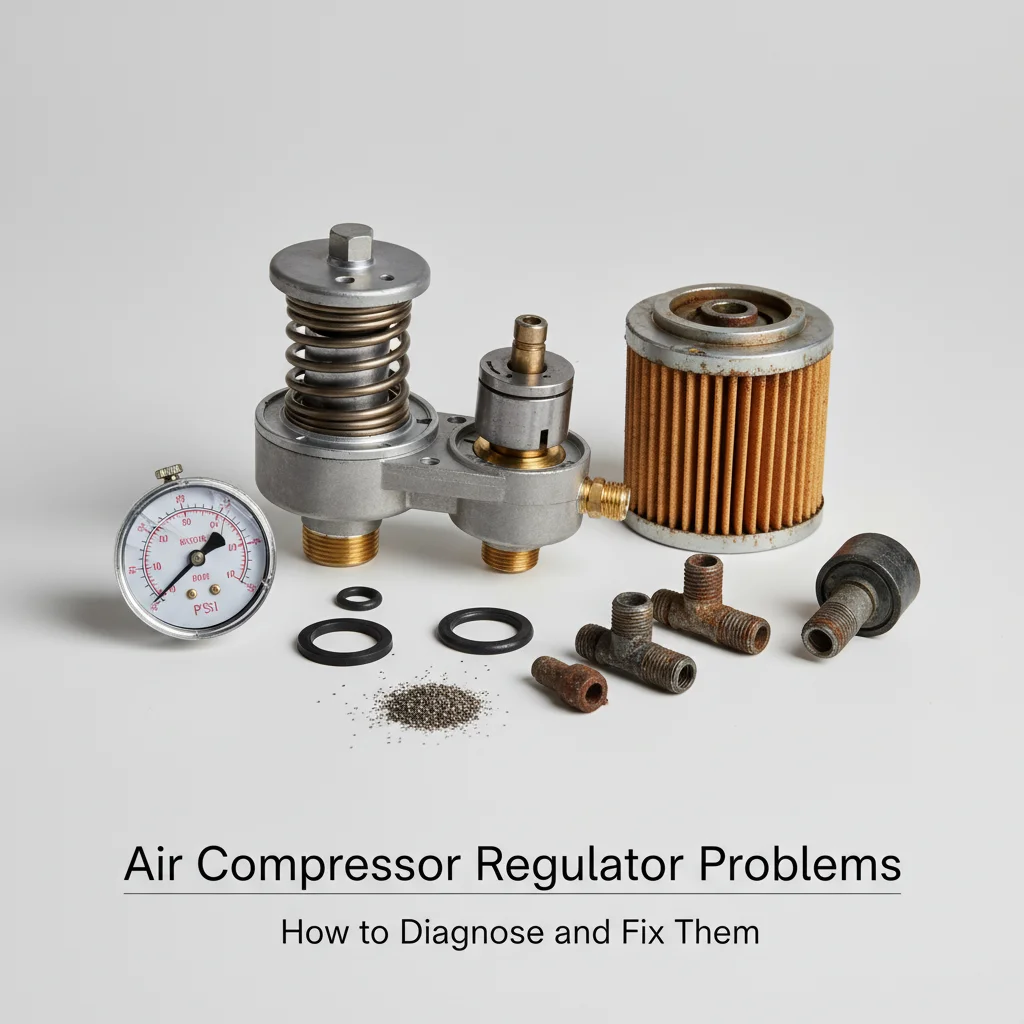
Air compressor regulator problems can significantly impact the performance of your tools and projects. Identifying and resolving these issues promptly is crucial for maintaining consistent air pressure and extending the lifespan of your equipment. Common problems include inconsistent pressure, complete loss of pressure, or air leaks around the regulator itself. This guide will walk you through the diagnostic steps and provide practical solutions to get your air compressor back to optimal working condition.
Understanding Your Air Compressor Regulator
The air compressor regulator is a vital component that controls the output air pressure from your tank to your tools. It typically consists of a diaphragm, spring, and adjustment knob. When you turn the knob, you compress or decompress the spring, which in turn applies pressure to the diaphragm, opening or closing a valve to regulate the airflow. A properly functioning regulator ensures that your pneumatic tools receive the precise amount of pressure they need, preventing damage to the tools and improving work efficiency. For complete air compressor library on this site.
Diagnosing Inconsistent Air Pressure
One of the most frustrating air compressor regulator problems is inconsistent air pressure. This can manifest as pressure fluctuations during use, or the gauge showing a different reading than what your tools are actually receiving. Begin by checking the regulator’s adjustment knob to ensure it hasn’t vibrated loose or been accidentally moved. Next, inspect the air lines and connections for any visible damage or loose fittings that could be causing pressure drops. A faulty gauge on the regulator itself can also give misleading readings, so consider testing with a known accurate external gauge if available.
Troubleshooting Complete Loss of Pressure
|
Our Picks for the Best Air Compressor in 2026
As an Amazon Associate I earn from qualifying purchases.
|
||
| Num | Product | Action |
|---|---|---|
| 1 | Metabo HPT Pancake Air Compressor, 6-Gallon 165PSI, Portable Air Compressor with 1.0 HP Oil-Free High Efficiency Motor, Lihghtweight, Quick Couplers for Fast Tool Changes, EC711S |

|
| 2 | Tire Inflator Portable Air Compressor, 150PSI Cordless Air Pump for Car Tires with Auto Shut-Off, Portable Tire Pump for Car, Bike, Motorcycle and Balls |
|
| 3 | Craftsman Air Compressors 6 Gallon Portable Pancake Air Compressor,Oil Free Max 150 Psi 1.0HP 2.6 CFM@90PSI Electric Air Compressor Shop Air Compressor, CMXECXA02106410 |
|
| 4 | DEWALT Tire Inflator Portable Air Compressor 20V MAX, Car Air Pump with Automatic Shut Off, LED Light, Tool Only (DCC020IB) |
|
| 5 | CRAFTSMAN Air Compressor, 2 Gallon Portable Air Compressor 1/3HP Max 125 PSI Oil-Free Light Weight with 10 PCS Accessory Kit |
|
| 6 | California Air Tools CAT-4710W 1.0 HP Quiet and Oil-Free Air Compressor with Wheels, 4.7 Gallon Steel Tank, 75 dBA Noise Level, Lightweight |
|
| 7 | ECOMAX Air Compressor 6 Gallon 150 PSI Pancake Portable Oil-free Tank with 10 PCS Accessories Kit |
|
| 8 | AC Compressor for 2000-2027 Chevy Silverado/GMC Sierra/Cadillac Escalade (4.8L/5.3L/6.0L V8) | OE Replaces 15036042, 15707611, CO29002C,78363, 78362 | A/C Compressor & Kit |
|
| 9 | Airmoto Tire Inflator Portable Air Compressor - Air Pump for Car Tires with Digital Pressure Gauge, LED Light and Auto Shut-Off Function - Cordless Pump for Car, Motorcycle, Bicycle, Ball |
|
| 10 | Quiet Air Compressor, Only 68dB, 5 Gallon Steel Tank, 2.8CFM @ 90PSI, Oil-Free, Electric Air Compressor Perfect for Woodwork Nailing, Garage, Car, Pneumatic Tool, Includes 11 Accessories |
|
If your air compressor regulator shows a complete loss of pressure, even when the tank is full, the issue is likely more severe. First, confirm that the main shut-off valve from the tank to the regulator is fully open. A common culprit for zero output pressure is a stuck or damaged diaphragm within the regulator. Over time, diaphragms can become brittle, crack, or accumulate debris, preventing them from sealing properly. In some cases, a simple cleaning might resolve the issue, but often, a replacement diaphragm or a new regulator assembly is necessary.
Addressing Air Leaks Around the Regulator
Air leaks around the regulator are not only wasteful but can also cause your compressor to cycle more frequently, leading to increased wear and tear. To pinpoint a leak, apply a soapy water solution to all connections and the body of the regulator. Bubbles will indicate the exact location of the leak. Common leak points include the inlet and outlet fittings, the gauge connection, and the seam where the two halves of the regulator body meet. Tightening fittings can often resolve minor leaks, but if the leak persists from the regulator body, internal seals may be compromised, requiring a rebuild kit or replacement.
- Inspect all connections for tightness.
- Check the regulator diaphragm for cracks or debris.
- Verify the accuracy of the pressure gauge.
- Clean internal components of the regulator.
- Consider a full regulator replacement if issues persist.
When to Replace Your Air Compressor Regulator
While many air compressor regulator problems can be fixed with minor adjustments or replacement parts, there comes a point when a full replacement is the most cost-effective and reliable solution. If your regulator is old, heavily corroded, or has multiple persistent issues after attempted repairs, investing in a new unit is advisable. A new regulator will ensure consistent performance, prevent air loss, and protect your pneumatic tools from improper pressure. Always choose a regulator that matches or exceeds the specifications of your air compressor for optimal compatibility and longevity.For high-quality replacement parts and new regulators, consider browsing our recommended selection.Proper maintenance, including regular draining of the tank and occasional inspection of the regulator, can help prevent many common problems and extend the life of your air compressor system.

My air compressor was losing pressure completely, and I was hoping this guide would have a quick fix. It did help me understand the components like the spring and valve better, but my issue seems more complex than what was covered. Still, it’s a good starting point for basic troubleshooting. I might need to call a professional after all.
Good info on diagnosing air leaks. I had a slow leak around the adjustment knob on my regulator, and I thought I’d have to buy a whole new unit. Turns out it was just a loose fitting that needed a bit of sealant. Saved me some money and a trip to the hardware store. Would have liked a bit more detail on specific brands, but still very helpful.
This guide was a lifesaver! I was getting really inconsistent pressure with my old regulator, making my impact wrench almost useless. Following the steps here, I found a tiny tear in the diaphragm that I never would have noticed otherwise. Replaced it, and now everything’s running smoothly. Thanks for the clear breakdown!
Excellent guide for anyone dealing with regulator issues. I appreciated the explanation of how the diaphragm works and how it affects air flow. My old regulator was just shot, but knowing what to look for made me confident in buying a new one. My nail gun is finally getting consistent pressure again.