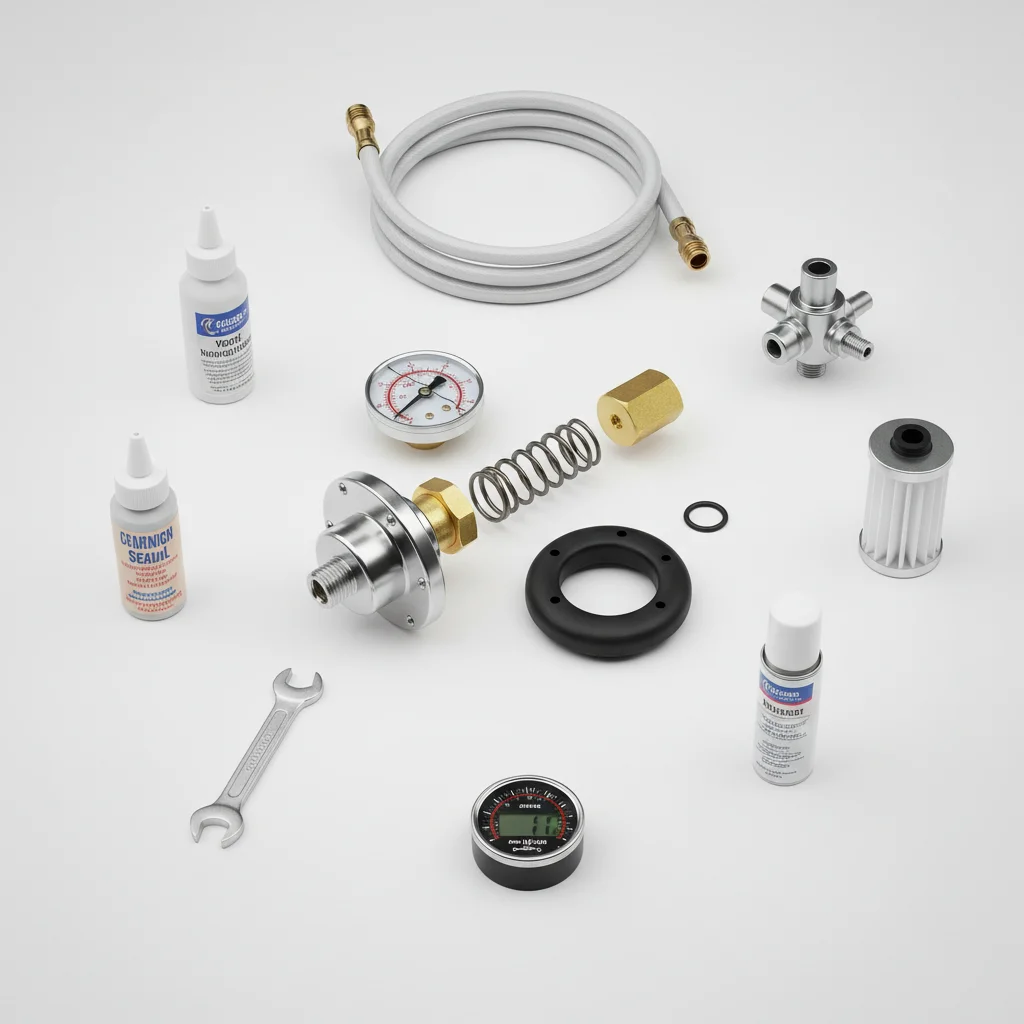
Air compressor regulator problems can significantly impact the performance and longevity of your equipment. Addressing these issues promptly is crucial for maintaining consistent air pressure and preventing damage to your tools. This guide will walk you through 7 common regulator problems and their effective fixes, ensuring your air compressor operates at its peak efficiency.
Understanding Your Air Compressor Regulator
The regulator is a vital component of your air compressor system, responsible for controlling the output air pressure to your tools. It takes the high-pressure air from the tank and reduces it to a usable, consistent pressure. A malfunctioning regulator can lead to inconsistent tool operation, reduced efficiency, and even damage to sensitive equipment. Regular inspection and maintenance are key to preventing many common issues. For air compressor buying guides on this site.
Common Regulator Problems and Their Solutions
1. Pressure Not Adjusting
If your regulator knob turns but the pressure gauge doesn’t change, the internal diaphragm or spring might be stuck or damaged. First, try turning the knob fully counter-clockwise, then slowly clockwise to see if it frees up. If not, the regulator may need to be disassembled and cleaned, or the diaphragm replaced. Always depressurize the tank before attempting any internal work.
2. Air Leaking from Regulator
Leaks are a common issue. Check all connections for tightness. If the leak is coming directly from the regulator body, it could be a worn O-ring or a cracked housing. A simple soapy water test can pinpoint the exact location of the leak. For O-rings, replacement is straightforward. For a cracked housing, the entire regulator will need to be replaced.
3. Inconsistent Output Pressure
Fluctuating output pressure can be caused by a dirty or worn valve seat within the regulator. Over time, debris can accumulate, preventing the valve from seating properly. Disassembling and cleaning the internal components, especially the valve and seat, often resolves this. If wear is significant, replacement of the valve assembly might be necessary.
4. Regulator Stuck Open (Full Pressure)
|
Our Picks for the Best Air Compressor in 2026
As an Amazon Associate I earn from qualifying purchases.
|
||
| Num | Product | Action |
|---|---|---|
| 1 | Tire Inflator Portable Air Compressor, 150PSI Cordless Air Pump for Car Tires with Auto Shut-Off, Portable Tire Pump for Car, Bike, Motorcycle and Balls |

|
| 2 | Craftsman Air Compressors 6 Gallon Portable Pancake Air Compressor,Oil Free Max 150 Psi 1.0HP 2.6 CFM@90PSI Electric Air Compressor Shop Air Compressor, CMXECXA02106410 |
|
| 3 | Metabo HPT Pancake Air Compressor, 6-Gallon 165PSI, Portable Air Compressor with 1.0 HP Oil-Free High Efficiency Motor, Lihghtweight, Quick Couplers for Fast Tool Changes, EC711S |
|
| 4 | AC Compressor for 2000-2027 Chevy Silverado/GMC Sierra/Cadillac Escalade (4.8L/5.3L/6.0L V8) | OE Replaces 15036042, 15707611, CO29002C,78363, 78362 | A/C Compressor & Kit |
|
| 5 | CRAFTSMAN Air Compressor, 2 Gallon Portable Air Compressor 1/3HP Max 125 PSI Oil-Free Light Weight with 10 PCS Accessory Kit |
|
| 6 | California Air Tools CAT-4710W 1.0 HP Quiet and Oil-Free Air Compressor with Wheels, 4.7 Gallon Steel Tank, 75 dBA Noise Level, Lightweight |
|
| 7 | ECOMAX Air Compressor 6 Gallon 150 PSI Pancake Portable Oil-free Tank with 10 PCS Accessories Kit |
|
| 8 | DEWALT Tire Inflator Portable Air Compressor 20V MAX, Car Air Pump with Automatic Shut Off, LED Light, Tool Only (DCC020IB) |
|
| 9 | Airmoto Tire Inflator Portable Air Compressor - Air Pump for Car Tires with Digital Pressure Gauge, LED Light and Auto Shut-Off Function - Cordless Pump for Car, Motorcycle, Bicycle, Ball |
|
| 10 | Quiet Air Compressor, Only 68dB, 5 Gallon Steel Tank, 2.8CFM @ 90PSI, Oil-Free, Electric Air Compressor Perfect for Woodwork Nailing, Garage, Car, Pneumatic Tool, Includes 11 Accessories |
|
When the regulator is stuck open, it delivers full tank pressure to your tools, which can be dangerous and damaging. This is often due to a broken or seized spring, or a heavily contaminated diaphragm. Immediate action is required: shut off the compressor and depressurize the system. Inspection will likely reveal a need for spring replacement or a thorough cleaning of the diaphragm and associated passages.
5. Regulator Stuck Closed (No Pressure)
Conversely, if no air is passing through the regulator, it might be stuck closed. This could be due to a completely seized spring, a blocked inlet port, or a severely damaged diaphragm. Check for any visible obstructions in the inlet. If none are present, internal inspection and cleaning or replacement of the spring/diaphragm will be required. Ensure the main air valve from the tank is open.
6. Pressure Creep
Pressure creep occurs when the output pressure slowly rises above the set point even when no air is being used. This indicates a minor leak past the regulator’s internal valve, often due to a small piece of debris on the valve seat or a slightly worn seat. Cleaning the valve seat thoroughly can often fix this. If the problem persists, the valve seat itself may be damaged and require replacement.
7. Regulator Freezing
In colder environments, moisture in the air line can freeze within the regulator, causing it to malfunction. This is more common with compressors that lack proper moisture separation. To prevent this, ensure your air compressor has an effective water trap and consider using an air line dryer. If freezing occurs, gently warm the regulator (without direct flame) to thaw it, then address the moisture issue.
- Regularly drain your air compressor tank to remove moisture.
- Install an inline air filter to prevent debris from entering the regulator.
- Inspect O-rings and seals for wear and tear during routine maintenance.
- Always depressurize the system before attempting any regulator repairs.
- Use thread sealant on all connections to prevent leaks.
Conclusion
Addressing air compressor regulator problems promptly is essential for the safe and efficient operation of your pneumatic tools. By understanding these common issues and their solutions, you can extend the life of your equipment and ensure consistent performance. Regular maintenance and careful attention to your regulator’s function will save you time and money in the long run.
