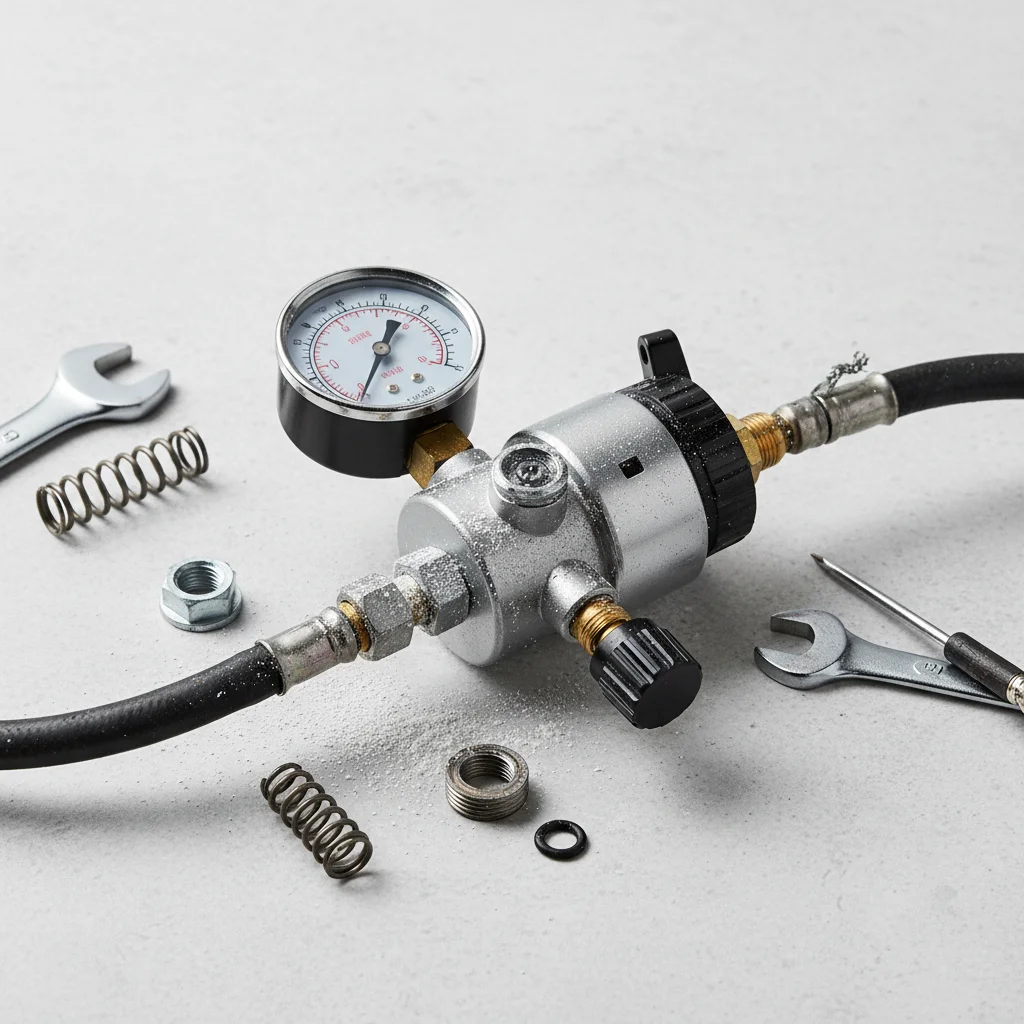
When your air compressor regulator isn’t working, it can halt your projects and lead to frustration. The most common reasons for a malfunctioning regulator include a clogged filter, a damaged diaphragm, or a faulty adjustment knob. Identifying the specific issue is the first step to a quick and effective repair, often saving you the cost of a full replacement.
Common Symptoms of a Faulty Regulator
A regulator that isn’t functioning correctly will exhibit several tell-tale signs. You might notice inconsistent air pressure at your tools, even when the compressor tank pressure is stable. Another common symptom is the inability to adjust the output pressure, meaning the knob turns but the gauge reading doesn’t change. Sometimes, you might even hear a constant air leak around the regulator itself, indicating an internal seal failure.
Ignoring these symptoms can lead to poor tool performance, wasted energy, and potential damage to your pneumatic equipment. Addressing the issue promptly ensures your workflow remains smooth and efficient.
Step-by-Step Troubleshooting for Regulator Issues
Before you consider replacing your regulator, perform a systematic troubleshooting process. First, ensure the air supply to the regulator is open and the compressor is building pressure correctly. Next, check the air filter connected to the regulator; a clogged filter can severely restrict airflow and mimic regulator failure. If the filter is clean, proceed to inspect the adjustment knob for any physical damage or looseness.
If these initial checks don’t resolve the issue, you may need to disassemble the regulator to inspect internal components. Always depressurize the system completely before attempting any internal repairs.
- Depressurize the air compressor tank.
- Remove the regulator from the air line.
- Carefully disassemble the regulator housing.
- Inspect the diaphragm for tears or hardening.
- Check the spring and adjustment mechanism for corrosion or damage.
Replacing a Damaged Diaphragm or O-Rings
|
Our Picks for the Best Air Compressor in 2026
As an Amazon Associate I earn from qualifying purchases.
|
||
| Num | Product | Action |
|---|---|---|
| 1 | Tire Inflator Portable Air Compressor, 150PSI Cordless Air Pump for Car Tires with Auto Shut-Off, Portable Tire Pump for Car, Bike, Motorcycle and Balls |

|
| 2 | California Air Tools CAT-4710W 1.0 HP Quiet and Oil-Free Air Compressor with Wheels, 4.7 Gallon Steel Tank, 75 dBA Noise Level, Lightweight |
|
| 3 | Airmoto Tire Inflator Portable Air Compressor - Air Pump for Car Tires with Digital Pressure Gauge, LED Light and Auto Shut-Off Function - Cordless Pump for Car, Motorcycle, Bicycle, Ball |
|
| 4 | DEWALT Tire Inflator Portable Air Compressor 20V MAX, Car Air Pump with Automatic Shut Off, LED Light, Tool Only (DCC020IB) |
|
| 5 | Quiet Air Compressor, Only 68dB, 5 Gallon Steel Tank, 2.8CFM @ 90PSI, Oil-Free, Electric Air Compressor Perfect for Woodwork Nailing, Garage, Car, Pneumatic Tool, Includes 11 Accessories |
|
| 6 | Craftsman Air Compressors 6 Gallon Portable Pancake Air Compressor,Oil Free Max 150 Psi 1.0HP 2.6 CFM@90PSI Electric Air Compressor Shop Air Compressor, CMXECXA02106410 |
|
| 7 | CRAFTSMAN Air Compressor, 2 Gallon Portable Air Compressor 1/3HP Max 125 PSI Oil-Free Light Weight with 10 PCS Accessory Kit |
|
| 8 | Metabo HPT Pancake Air Compressor, 6-Gallon 165PSI, Portable Air Compressor with 1.0 HP Oil-Free High Efficiency Motor, Lihghtweight, Quick Couplers for Fast Tool Changes, EC711S |
|
| 9 | ECOMAX Air Compressor 6 Gallon 150 PSI Pancake Portable Oil-free Tank with 10 PCS Accessories Kit |
|
| 10 | AC Compressor for 2000-2027 Chevy Silverado/GMC Sierra/Cadillac Escalade (4.8L/5.3L/6.0L V8) | OE Replaces 15036042, 15707611, CO29002C,78363, 78362 | A/C Compressor & Kit |
|
The diaphragm is a critical component within the regulator, responsible for sensing and adjusting pressure. Over time, it can become brittle, crack, or tear, leading to pressure inconsistencies. Similarly, O-rings and seals can degrade, causing air leaks. If your inspection reveals a damaged diaphragm or worn O-rings, these are often replaceable parts. Many manufacturers offer repair kits specifically for their regulators, which include new diaphragms, springs, and seals.
When replacing these components, ensure you use parts specifically designed for your regulator model. Incorrect parts can lead to further malfunctions or safety hazards. Reassemble the regulator carefully, ensuring all seals are properly seated before testing.
Addressing a Clogged Air Filter
A frequently overlooked cause of regulator problems is a clogged air filter. The filter’s job is to prevent debris and moisture from entering the regulator and your pneumatic tools. If this filter becomes saturated with contaminants, it will restrict airflow, making it seem as though the regulator isn’t adjusting pressure correctly. Regularly inspecting and cleaning or replacing your air filter is a simple maintenance task that can prevent many regulator-related headaches.
Depending on your filter type, you might be able to clean it with compressed air or warm, soapy water. However, many filters are designed for replacement once they become too dirty. Refer to your compressor’s manual for specific filter maintenance recommendations.
When to Consider a Full Regulator Replacement
While many regulator issues can be resolved with simple repairs or part replacements, there are instances when a full regulator replacement is the most practical solution. If the regulator housing is cracked, the adjustment mechanism is severely stripped, or internal components are extensively corroded beyond repair, a new unit is warranted. Additionally, if your regulator is very old and parts are no longer available, replacement becomes necessary.
Investing in a quality replacement regulator ensures reliable performance and extends the life of your air tools. Look for regulators with clear gauges, durable construction, and a good warranty.Always match the new regulator’s specifications (e.g., maximum pressure, flow rate) to your compressor and tool requirements.
