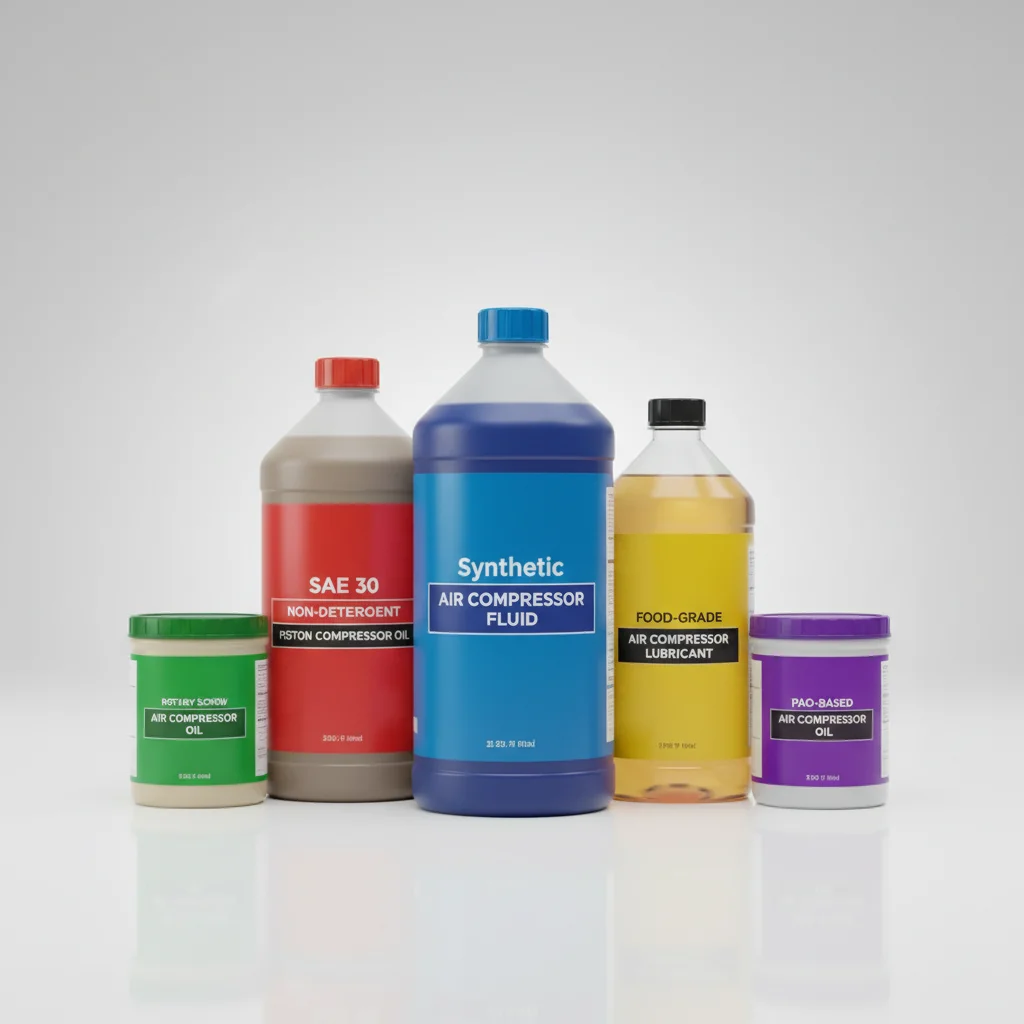
Choosing the correct air compressor oil is crucial for the longevity and performance of your unit. The right oil ensures proper lubrication, heat dissipation, and prevents wear on internal components. There are primarily three main types of air compressor oils: synthetic, semi-synthetic, and conventional (mineral) oil, each with distinct advantages and ideal applications.
Understanding Conventional (Mineral) Air Compressor Oil
Conventional mineral oil is derived from petroleum and is the most basic type of lubricant for air compressors. It’s generally more affordable and suitable for lighter-duty, intermittent use, or older compressor models that were designed for this type of oil. While it provides adequate lubrication, mineral oil can break down faster under high heat and pressure, leading to sludge buildup and more frequent oil changes. It’s often recommended for piston-driven compressors in less demanding environments.
Benefits of Synthetic Air Compressor Oil
Synthetic air compressor oil is engineered from chemically modified petroleum components or other raw materials, offering superior performance characteristics. It excels in extreme temperatures, providing better viscosity stability and reduced friction. This leads to less wear, lower operating temperatures, and extended oil change intervals, sometimes up to four times longer than mineral oil. Synthetic oil is ideal for heavy-duty applications, continuous operation, and rotary screw compressors, where its resistance to oxidation and carbon buildup significantly improves efficiency and lifespan.
The Middle Ground: Semi-Synthetic Air Compressor Oil
|
Our Picks for the Best Air Compressor in 2026
As an Amazon Associate I earn from qualifying purchases.
|
||
| Num | Product | Action |
|---|---|---|
| 1 | AC Compressor for 2000-2027 Chevy Silverado/GMC Sierra/Cadillac Escalade (4.8L/5.3L/6.0L V8) | OE Replaces 15036042, 15707611, CO29002C,78363, 78362 | A/C Compressor & Kit |

|
| 2 | Airmoto Tire Inflator Portable Air Compressor - Air Pump for Car Tires with Digital Pressure Gauge, LED Light and Auto Shut-Off Function - Cordless Pump for Car, Motorcycle, Bicycle, Ball |
|
| 3 | Tire Inflator Portable Air Compressor, 150PSI Cordless Air Pump for Car Tires with Auto Shut-Off, Portable Tire Pump for Car, Bike, Motorcycle and Balls |
|
| 4 | Quiet Air Compressor, Only 68dB, 5 Gallon Steel Tank, 2.8CFM @ 90PSI, Oil-Free, Electric Air Compressor Perfect for Woodwork Nailing, Garage, Car, Pneumatic Tool, Includes 11 Accessories |
|
| 5 | ECOMAX Air Compressor 6 Gallon 150 PSI Pancake Portable Oil-free Tank with 10 PCS Accessories Kit |
|
| 6 | California Air Tools CAT-4710W 1.0 HP Quiet and Oil-Free Air Compressor with Wheels, 4.7 Gallon Steel Tank, 75 dBA Noise Level, Lightweight |
|
| 7 | DEWALT Tire Inflator Portable Air Compressor 20V MAX, Car Air Pump with Automatic Shut Off, LED Light, Tool Only (DCC020IB) |
|
| 8 | Metabo HPT Pancake Air Compressor, 6-Gallon 165PSI, Portable Air Compressor with 1.0 HP Oil-Free High Efficiency Motor, Lihghtweight, Quick Couplers for Fast Tool Changes, EC711S |
|
| 9 | CRAFTSMAN Air Compressor, 2 Gallon Portable Air Compressor 1/3HP Max 125 PSI Oil-Free Light Weight with 10 PCS Accessory Kit |
|
| 10 | Craftsman Air Compressors 6 Gallon Portable Pancake Air Compressor,Oil Free Max 150 Psi 1.0HP 2.6 CFM@90PSI Electric Air Compressor Shop Air Compressor, CMXECXA02106410 |
|
Semi-synthetic oil, also known as a synthetic blend, combines mineral oil with synthetic base stocks. This blend offers a balance between the cost-effectiveness of mineral oil and the enhanced performance of synthetic oil. It provides better thermal stability and wear protection than conventional oil, making it a good choice for compressors that experience moderate use or those transitioning from mineral to synthetic oil. Semi-synthetic oils can extend drain intervals compared to mineral oils, but not as much as full synthetics.
Factors to Consider When Choosing Your Oil
When selecting the best oil for your air compressor, several factors should guide your decision:
- Compressor Type: Piston (reciprocating) compressors often use different oils than rotary screw compressors. Always check your manufacturer’s recommendations.
- Operating Environment: High ambient temperatures or dusty conditions may necessitate a more robust synthetic oil.
- Duty Cycle: Intermittent use might be fine with mineral oil, while continuous operation demands synthetic for optimal protection.
- Manufacturer Specifications: Always consult your air compressor’s owner’s manual. Using the wrong type of oil can void warranties and cause significant damage.
- Viscosity Grade: Ensure the oil’s viscosity (e.g., ISO 32, ISO 46, SAE 30) matches the compressor’s requirements for proper flow and lubrication at operating temperatures.
Why Proper Oil Selection Matters for Longevity
Using the correct oil type and maintaining regular oil changes are critical for the longevity and efficiency of your air compressor. Incorrect oil can lead to increased friction, overheating, premature wear of components like pistons, valves, and bearings, and the formation of harmful deposits. These issues can drastically reduce the compressor’s lifespan and lead to costly repairs. Investing in the right oil is a small cost compared to the potential expenses of compressor failure.
