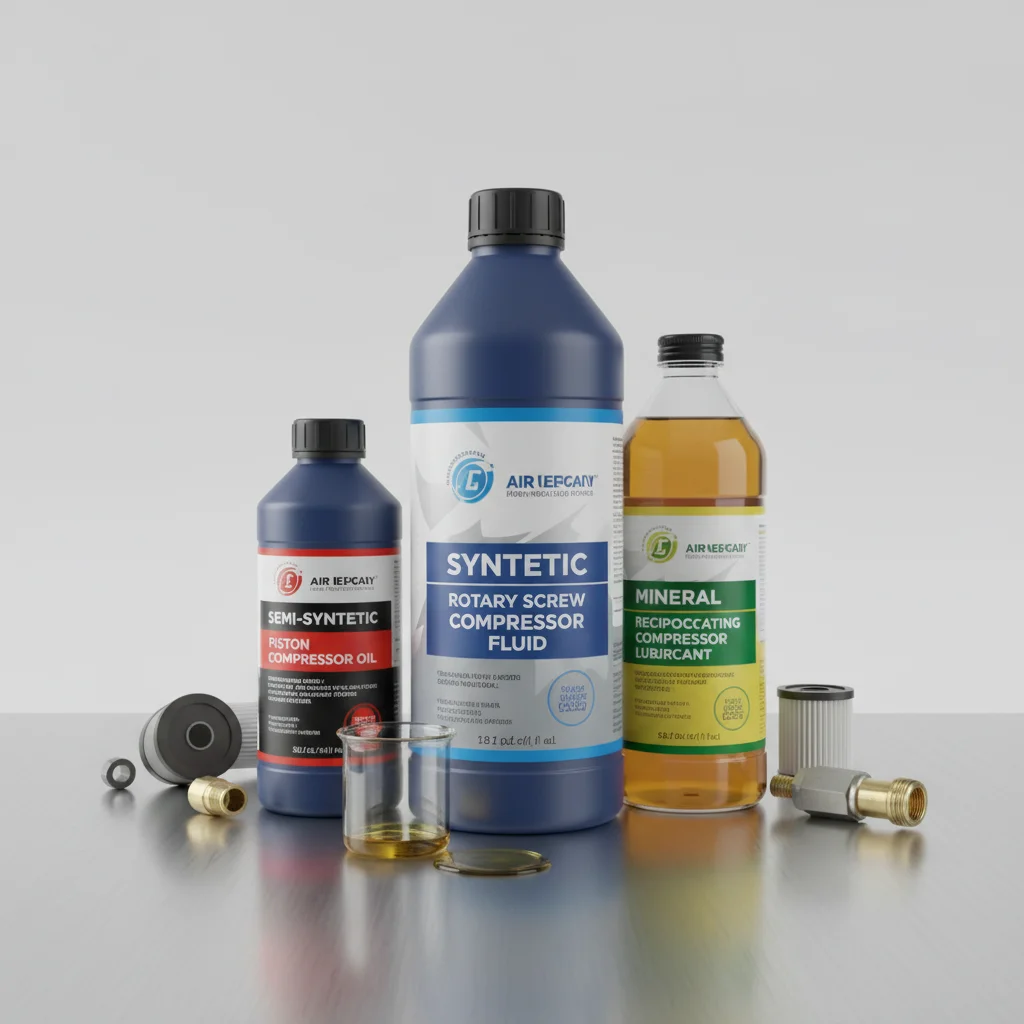
Choosing the correct air compressor oil type is crucial for the longevity and efficient operation of your unit. There are primarily two main types of oil used in air compressors: synthetic and conventional (mineral) oil. Synthetic oils are generally recommended for their superior performance, especially in extreme temperatures and for extended service intervals, offering up to 50% longer life compared to mineral oils.
Understanding Conventional (Mineral) Air Compressor Oil
Conventional air compressor oil, also known as mineral oil, is derived from petroleum. It is a more traditional and often more affordable option. Mineral oils are suitable for many standard air compressors, particularly those used in less demanding environments or for intermittent use. They provide adequate lubrication and protection against wear and tear under normal operating conditions. However, they tend to break down faster under high heat and can lead to more carbon buildup over time, requiring more frequent oil changes.
The Advantages of Synthetic Air Compressor Oil
Synthetic air compressor oil is engineered for superior performance and protection. It is chemically formulated to resist thermal breakdown, oxidation, and sludge formation much better than mineral oils. This makes synthetic oil ideal for compressors operating in extreme temperatures, high humidity, or continuous duty cycles. Benefits include extended drain intervals, reduced wear on internal components, improved energy efficiency, and better cold-start performance. While the initial cost is higher, the long-term savings from reduced maintenance and extended compressor life often outweigh the expense.
- Extended oil change intervals (up to 8,000 hours for some synthetics)
- Superior thermal stability and oxidation resistance
- Reduced carbon and varnish buildup
- Improved lubrication in extreme temperatures
- Better energy efficiency and lower operating costs
When to Use Specific Oil Viscosities
|
Our Picks for the Best Air Compressor in 2026
As an Amazon Associate I earn from qualifying purchases.
|
||
| Num | Product | Action |
|---|---|---|
| 1 | Craftsman Air Compressors 6 Gallon Portable Pancake Air Compressor,Oil Free Max 150 Psi 1.0HP 2.6 CFM@90PSI Electric Air Compressor Shop Air Compressor, CMXECXA02106410 |

|
| 2 | California Air Tools CAT-4710W 1.0 HP Quiet and Oil-Free Air Compressor with Wheels, 4.7 Gallon Steel Tank, 75 dBA Noise Level, Lightweight |
|
| 3 | CRAFTSMAN Air Compressor, 2 Gallon Portable Air Compressor 1/3HP Max 125 PSI Oil-Free Light Weight with 10 PCS Accessory Kit |
|
| 4 | Airmoto Tire Inflator Portable Air Compressor - Air Pump for Car Tires with Digital Pressure Gauge, LED Light and Auto Shut-Off Function - Cordless Pump for Car, Motorcycle, Bicycle, Ball |
|
| 5 | DEWALT Tire Inflator Portable Air Compressor 20V MAX, Car Air Pump with Automatic Shut Off, LED Light, Tool Only (DCC020IB) |
|
| 6 | AC Compressor for 2000-2027 Chevy Silverado/GMC Sierra/Cadillac Escalade (4.8L/5.3L/6.0L V8) | OE Replaces 15036042, 15707611, CO29002C,78363, 78362 | A/C Compressor & Kit |
|
| 7 | ECOMAX Air Compressor 6 Gallon 150 PSI Pancake Portable Oil-free Tank with 10 PCS Accessories Kit |
|
| 8 | Tire Inflator Portable Air Compressor, 150PSI Cordless Air Pump for Car Tires with Auto Shut-Off, Portable Tire Pump for Car, Bike, Motorcycle and Balls |
|
| 9 | Metabo HPT Pancake Air Compressor, 6-Gallon 165PSI, Portable Air Compressor with 1.0 HP Oil-Free High Efficiency Motor, Lihghtweight, Quick Couplers for Fast Tool Changes, EC711S |
|
| 10 | Quiet Air Compressor, Only 68dB, 5 Gallon Steel Tank, 2.8CFM @ 90PSI, Oil-Free, Electric Air Compressor Perfect for Woodwork Nailing, Garage, Car, Pneumatic Tool, Includes 11 Accessories |
|
The viscosity of air compressor oil is also a critical factor, typically indicated by an SAE (Society of Automotive Engineers) rating, such as SAE 30 or 10W-30. The manufacturer’s manual will specify the recommended viscosity for your particular compressor model and operating environment. For instance, a single-weight oil like SAE 30 is common for many piston compressors, while multi-viscosity oils like 10W-30 might be recommended for broader temperature ranges. Always consult your compressor’s manual before selecting an oil to ensure compatibility and optimal performance. Using the wrong viscosity can lead to inadequate lubrication, increased wear, and potential damage to the compressor.
The Importance of Non-Detergent Oil
It is crucial to use non-detergent oil in most air compressors. Unlike automotive engine oils that contain detergents to clean and suspend contaminants, detergent oils in an air compressor can cause foaming, which reduces lubrication effectiveness. Detergents can also strip away protective coatings and lead to premature wear of internal components. Always look for oils specifically labeled for air compressor use, which are formulated without detergents to ensure proper operation and prevent damage.
Mixing Oil Types: A Cautionary Note
Mixing different types of air compressor oil, such as synthetic and mineral, is generally not recommended. While some synthetic oils may be compatible with mineral oils, mixing them can dilute the superior properties of the synthetic oil and potentially lead to unforeseen chemical reactions or performance issues. It’s always best to stick to one type of oil and, if switching, ensure the system is thoroughly drained and flushed according to the manufacturer’s guidelines. For optimal performance and to maintain your compressor’s warranty, always adhere to the manufacturer’s specific oil recommendations.
