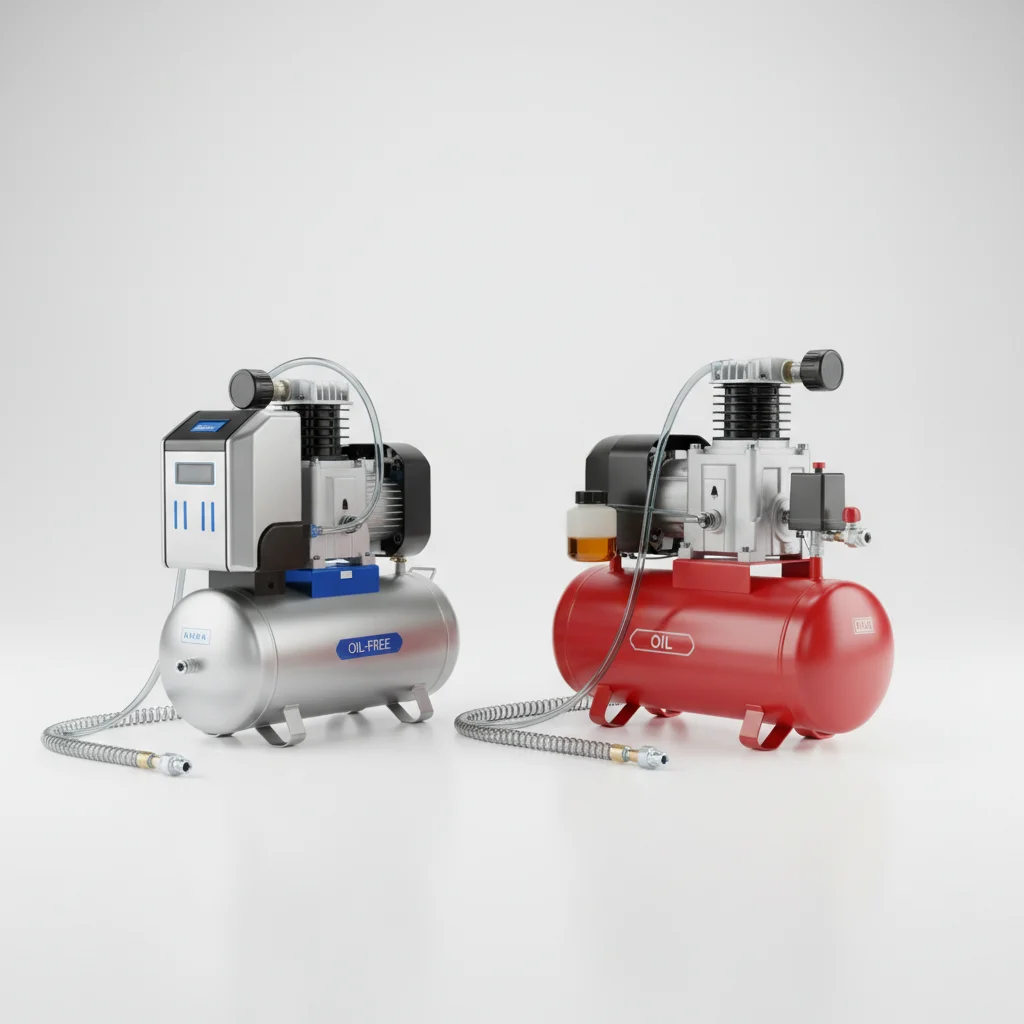
Choosing between an oil-free and an oiled air compressor depends heavily on your specific application, maintenance preferences, and budget. For most DIY enthusiasts and light-duty users, an oil-free compressor offers significant advantages in terms of lower maintenance and cleaner air output. However, for heavy-duty, continuous industrial applications, an oiled compressor typically provides superior durability and quieter operation.
Understanding Oil-Free Air Compressors
Oil-free air compressors utilize permanently lubricated components, often made from materials like Teflon, to reduce friction. This design eliminates the need for oil changes and prevents oil from contaminating the compressed air. They are generally lighter, more portable, and require less maintenance than their oiled counterparts. The primary benefit is the delivery of clean, oil-free air, which is crucial for applications such as painting, woodworking, and medical devices where even trace amounts of oil can cause problems. However, this design often results in louder operation and a shorter lifespan compared to oiled models, as the lack of oil lubrication can lead to faster wear on internal parts.
The Benefits of Oiled Air Compressors
Oiled air compressors, also known as lubricated compressors, use oil to lubricate the pump’s moving parts, reducing friction and heat. This lubrication significantly extends the life of the compressor and allows it to operate more quietly and efficiently, especially under continuous, heavy loads. They are the workhorses of industrial settings, auto shops, and construction sites where durability and sustained performance are paramount. While they require regular oil changes and filter replacements, the trade-off is often a more robust machine capable of handling demanding tasks for many years. The main drawback is the potential for oil carryover into the air stream, necessitating additional filtration for sensitive applications.
Key Differences in Performance and Maintenance
|
Our Picks for the Best Air Compressor in 2026
As an Amazon Associate I earn from qualifying purchases.
|
||
| Num | Product | Action |
|---|---|---|
| 1 | Quiet Air Compressor, Only 68dB, 5 Gallon Steel Tank, 2.8CFM @ 90PSI, Oil-Free, Electric Air Compressor Perfect for Woodwork Nailing, Garage, Car, Pneumatic Tool, Includes 11 Accessories |

|
| 2 | Craftsman Air Compressors 6 Gallon Portable Pancake Air Compressor,Oil Free Max 150 Psi 1.0HP 2.6 CFM@90PSI Electric Air Compressor Shop Air Compressor, CMXECXA02106410 |
|
| 3 | Metabo HPT Pancake Air Compressor, 6-Gallon 165PSI, Portable Air Compressor with 1.0 HP Oil-Free High Efficiency Motor, Lihghtweight, Quick Couplers for Fast Tool Changes, EC711S |
|
| 4 | ECOMAX Air Compressor 6 Gallon 150 PSI Pancake Portable Oil-free Tank with 10 PCS Accessories Kit |
|
| 5 | DEWALT Tire Inflator Portable Air Compressor 20V MAX, Car Air Pump with Automatic Shut Off, LED Light, Tool Only (DCC020IB) |
|
| 6 | CRAFTSMAN Air Compressor, 2 Gallon Portable Air Compressor 1/3HP Max 125 PSI Oil-Free Light Weight with 10 PCS Accessory Kit |
|
| 7 | Tire Inflator Portable Air Compressor, 150PSI Cordless Air Pump for Car Tires with Auto Shut-Off, Portable Tire Pump for Car, Bike, Motorcycle and Balls |
|
| 8 | California Air Tools CAT-4710W 1.0 HP Quiet and Oil-Free Air Compressor with Wheels, 4.7 Gallon Steel Tank, 75 dBA Noise Level, Lightweight |
|
| 9 | AC Compressor for 2000-2027 Chevy Silverado/GMC Sierra/Cadillac Escalade (4.8L/5.3L/6.0L V8) | OE Replaces 15036042, 15707611, CO29002C,78363, 78362 | A/C Compressor & Kit |
|
| 10 | Airmoto Tire Inflator Portable Air Compressor - Air Pump for Car Tires with Digital Pressure Gauge, LED Light and Auto Shut-Off Function - Cordless Pump for Car, Motorcycle, Bicycle, Ball |
|
The performance and maintenance requirements diverge significantly between these two types. Oil-free compressors excel in situations where portability and minimal upkeep are priorities. They are ideal for intermittent use and applications where air purity is critical. Maintenance typically involves draining the tank and occasionally checking air filters. Oiled compressors, on the other hand, are built for endurance. Their oil-lubricated pumps can run for longer periods without overheating, making them suitable for continuous operation. Regular maintenance for oiled compressors includes checking and changing the oil, replacing oil filters, and draining the tank. While more involved, this maintenance ensures a longer operational life and consistent performance under heavy loads.
Applications Best Suited for Each Type
Consider your primary use case when making your decision. For home garages, DIY projects, inflation tasks, and small workshops, an oil-free compressor is often the more practical choice due to its ease of use and lower maintenance. They are perfect for powering nail guns, airbrushes, and small impact wrenches.Conversely, if you’re running a professional auto body shop, a large manufacturing facility, or frequently using high-demand tools like sandblasters or industrial grinders, an oiled compressor is almost always the superior option. Their ability to deliver consistent, high-volume air for extended periods makes them indispensable in these environments. They are also preferred for applications requiring quieter operation over long durations.
Cost and Longevity Considerations
Initial cost can vary, but generally, oil-free compressors tend to be less expensive upfront, especially for smaller models. However, their lifespan is often shorter than well-maintained oiled compressors. The internal components of oil-free units, while designed for low friction, can wear out faster without the constant lubrication of oil. Oiled compressors, despite a potentially higher initial investment and ongoing maintenance costs (oil, filters), often provide a much longer service life, making them a more cost-effective choice in the long run for heavy users. When evaluating total cost of ownership, factor in both the purchase price and the expected maintenance and replacement cycles.
- Oil-Free: Lower initial cost, minimal maintenance, cleaner air, louder operation, shorter lifespan.
- Oiled: Higher initial cost, regular maintenance, quieter operation, longer lifespan, potential for oil in air.
- Applications: Oil-free for DIY, light tasks; Oiled for industrial, heavy-duty, continuous use.
- Air Purity: Oil-free is superior for sensitive applications like painting.
- Durability: Oiled compressors generally offer greater durability and longevity.
