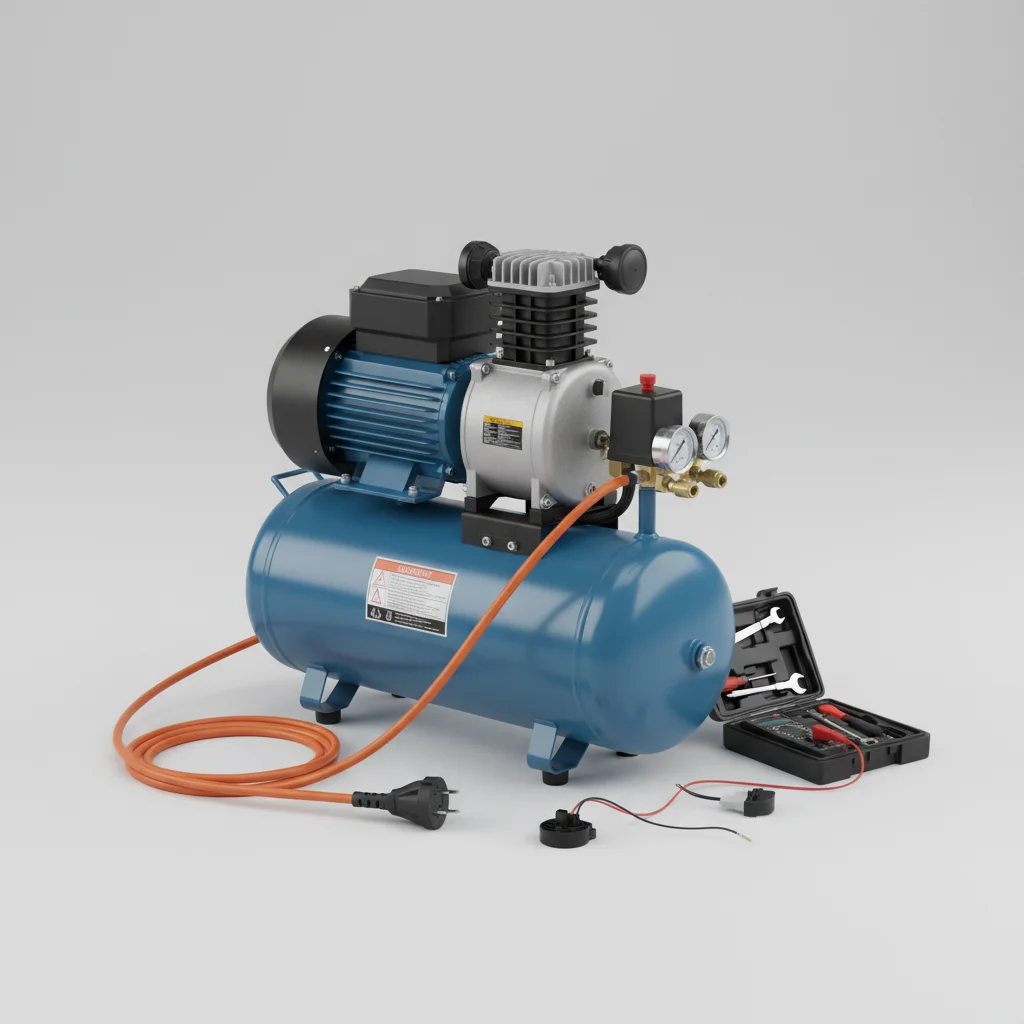
When your air compressor fails to turn on, it can halt your projects. There are seven common reasons why an air compressor might not start, ranging from simple power issues to more complex motor problems. Understanding these potential causes and their solutions can help you quickly diagnose and fix the issue, getting your compressor back in operation.
Power Supply Problems
The most straightforward reason an air compressor won’t turn on is a lack of power. Check if the compressor is properly plugged into a functional outlet. Inspect the power cord for any visible damage, fraying, or cuts. A tripped circuit breaker or a blown fuse in your electrical panel can also cut off power to the compressor. Resetting the breaker or replacing a fuse is often a quick fix. Ensure the outlet itself is receiving power by testing it with another device. For best air compressor roundups on this site.
Pressure Switch Malfunction
The pressure switch is a critical component that controls when the compressor motor starts and stops based on tank pressure. If the pressure switch is faulty, it might not signal the motor to start. Common issues include a clogged unloader valve, which prevents the release of air pressure, or internal electrical contacts that are worn or corroded. You can often hear a hiss from the unloader valve when the compressor shuts off; if this sound is absent, it could indicate a problem.
Motor Overload Protection
Air compressors are equipped with thermal overload protectors to prevent the motor from overheating. If the motor has been running for an extended period, or if it’s struggling due to low voltage or a mechanical issue, the overload protector will trip, shutting down the compressor. Allow the motor to cool down for at least 30 minutes, then press the reset button, usually a small red or black button located on the motor housing. Repeated tripping indicates a deeper problem that needs investigation.
Low Voltage or Capacitor Issues
|
Our Picks for the Best Air Compressor in 2026
As an Amazon Associate I earn from qualifying purchases.
|
||
| Num | Product | Action |
|---|---|---|
| 1 | Airmoto Tire Inflator Portable Air Compressor - Air Pump for Car Tires with Digital Pressure Gauge, LED Light and Auto Shut-Off Function - Cordless Pump for Car, Motorcycle, Bicycle, Ball |

|
| 2 | DEWALT Tire Inflator Portable Air Compressor 20V MAX, Car Air Pump with Automatic Shut Off, LED Light, Tool Only (DCC020IB) |
|
| 3 | ECOMAX Air Compressor 6 Gallon 150 PSI Pancake Portable Oil-free Tank with 10 PCS Accessories Kit |
|
| 4 | Quiet Air Compressor, Only 68dB, 5 Gallon Steel Tank, 2.8CFM @ 90PSI, Oil-Free, Electric Air Compressor Perfect for Woodwork Nailing, Garage, Car, Pneumatic Tool, Includes 11 Accessories |
|
| 5 | Craftsman Air Compressors 6 Gallon Portable Pancake Air Compressor,Oil Free Max 150 Psi 1.0HP 2.6 CFM@90PSI Electric Air Compressor Shop Air Compressor, CMXECXA02106410 |
|
| 6 | Tire Inflator Portable Air Compressor, 150PSI Cordless Air Pump for Car Tires with Auto Shut-Off, Portable Tire Pump for Car, Bike, Motorcycle and Balls |
|
| 7 | CRAFTSMAN Air Compressor, 2 Gallon Portable Air Compressor 1/3HP Max 125 PSI Oil-Free Light Weight with 10 PCS Accessory Kit |
|
| 8 | California Air Tools CAT-4710W 1.0 HP Quiet and Oil-Free Air Compressor with Wheels, 4.7 Gallon Steel Tank, 75 dBA Noise Level, Lightweight |
|
| 9 | Metabo HPT Pancake Air Compressor, 6-Gallon 165PSI, Portable Air Compressor with 1.0 HP Oil-Free High Efficiency Motor, Lihghtweight, Quick Couplers for Fast Tool Changes, EC711S |
|
| 10 | AC Compressor for 2000-2027 Chevy Silverado/GMC Sierra/Cadillac Escalade (4.8L/5.3L/6.0L V8) | OE Replaces 15036042, 15707611, CO29002C,78363, 78362 | A/C Compressor & Kit |
|
Insufficient voltage supplied to the compressor can prevent the motor from starting or cause it to hum without turning. This can be due to using an extension cord that is too long or too thin (under-gauged) for the compressor’s power requirements. Additionally, many air compressors use a start capacitor to give the motor an initial boost. If this capacitor is faulty or has failed, the motor will not be able to overcome its initial inertia. A bulging or leaking capacitor is a clear sign of failure and requires replacement.
Faulty Check Valve
The check valve prevents compressed air from flowing back into the pump when the motor is off. If this valve is stuck open or leaking, air pressure can build up in the line between the pump and the tank, making it difficult for the motor to start against the existing pressure. You might hear a continuous hiss from the check valve area even when the compressor is off. Replacing a faulty check valve is a relatively straightforward repair.
Mechanical Issues with the Pump
Internal mechanical problems within the compressor pump can also prevent the motor from turning. This could include seized bearings, a broken connecting rod, or issues with the piston. These are more serious problems that often require professional repair or replacement of the pump. Before assuming a major mechanical failure, ensure all other potential causes have been ruled out.
Troubleshooting Steps to Get Your Compressor Running
- Verify the power cord is securely plugged in and undamaged.
- Check and reset the circuit breaker or replace any blown fuses.
- Allow the motor to cool down and press the thermal overload reset button.
- Listen for a hiss from the unloader valve when the compressor stops; if absent, inspect the pressure switch.
- Ensure you are using an appropriately gauged extension cord, if any.
