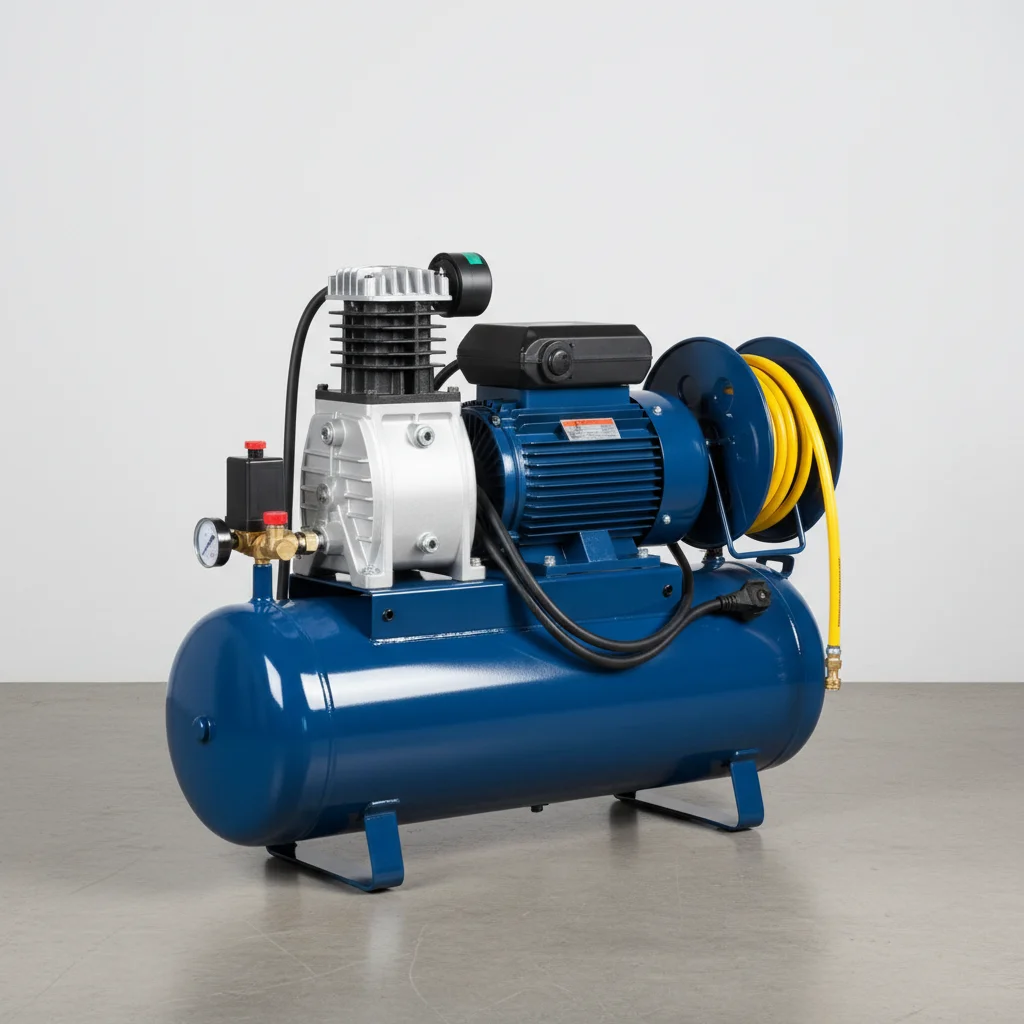
Determining the right air compressor horsepower (HP) is crucial for efficient operation and depends entirely on the tools you plan to use. Generally, most DIY enthusiasts and small workshop owners will find that an air compressor with 1.5 to 3 HP is sufficient for common tasks like operating nail guns, impact wrenches, and paint sprayers. For more demanding applications, such as sandblasting or heavy-duty automotive work, you might need 5 HP or more.
Understanding Horsepower and CFM
While horsepower indicates the raw power of the motor, the more critical metric for tool compatibility is Cubic Feet per Minute (CFM). CFM measures the volume of air an compressor can deliver at a specific pressure (PSI). A higher HP generally translates to a higher CFM output, but it’s the CFM that directly dictates whether your air tools will operate effectively. Always check the CFM requirements of your most demanding air tool and ensure your compressor can meet or exceed it at the required PSI. For best air compressor roundups on this site.
For example, a typical framing nailer might require 2.2 CFM at 90 PSI, while a dual-action sander could demand 6-8 CFM at 90 PSI. Matching these requirements is key to avoiding tool underperformance and potential damage to your compressor.
Matching HP to Common Air Tools
Different air tools have varying power demands. Here’s a general guide to help you match your compressor’s HP to common applications:
- 1-2 HP: Ideal for light-duty tasks like inflating tires, operating brad nailers, staplers, and small airbrushes. These are often found in portable units.
- 2-4 HP: Suitable for most DIY and home workshop tasks, including framing nailers, impact wrenches, small grinders, and paint sprayers. This range offers a good balance of power and portability.
- 5-7.5 HP: Designed for more demanding applications such as sandblasting, larger impact wrenches, and continuous use with high-CFM tools. Often found in stationary garage or shop compressors.
- 7.5+ HP: Reserved for heavy industrial applications, large automotive shops, and continuous, high-volume air delivery systems.
Always consult the manufacturer’s specifications for both your air tools and the compressor to ensure proper compatibility.
Factors Beyond Horsepower
|
Our Picks for the Best Air Compressor in 2026
As an Amazon Associate I earn from qualifying purchases.
|
||
| Num | Product | Action |
|---|---|---|
| 1 | ECOMAX Air Compressor 6 Gallon 150 PSI Pancake Portable Oil-free Tank with 10 PCS Accessories Kit |

|
| 2 | Airmoto Tire Inflator Portable Air Compressor - Air Pump for Car Tires with Digital Pressure Gauge, LED Light and Auto Shut-Off Function - Cordless Pump for Car, Motorcycle, Bicycle, Ball |
|
| 3 | Quiet Air Compressor, Only 68dB, 5 Gallon Steel Tank, 2.8CFM @ 90PSI, Oil-Free, Electric Air Compressor Perfect for Woodwork Nailing, Garage, Car, Pneumatic Tool, Includes 11 Accessories |
|
| 4 | California Air Tools CAT-4710W 1.0 HP Quiet and Oil-Free Air Compressor with Wheels, 4.7 Gallon Steel Tank, 75 dBA Noise Level, Lightweight |
|
| 5 | CRAFTSMAN Air Compressor, 2 Gallon Portable Air Compressor 1/3HP Max 125 PSI Oil-Free Light Weight with 10 PCS Accessory Kit |
|
| 6 | Metabo HPT Pancake Air Compressor, 6-Gallon 165PSI, Portable Air Compressor with 1.0 HP Oil-Free High Efficiency Motor, Lihghtweight, Quick Couplers for Fast Tool Changes, EC711S |
|
| 7 | AC Compressor for 2000-2027 Chevy Silverado/GMC Sierra/Cadillac Escalade (4.8L/5.3L/6.0L V8) | OE Replaces 15036042, 15707611, CO29002C,78363, 78362 | A/C Compressor & Kit |
|
| 8 | Tire Inflator Portable Air Compressor, 150PSI Cordless Air Pump for Car Tires with Auto Shut-Off, Portable Tire Pump for Car, Bike, Motorcycle and Balls |
|
| 9 | DEWALT Tire Inflator Portable Air Compressor 20V MAX, Car Air Pump with Automatic Shut Off, LED Light, Tool Only (DCC020IB) |
|
| 10 | Craftsman Air Compressors 6 Gallon Portable Pancake Air Compressor,Oil Free Max 150 Psi 1.0HP 2.6 CFM@90PSI Electric Air Compressor Shop Air Compressor, CMXECXA02106410 |
|
Beyond raw horsepower, several other factors influence an air compressor’s performance and suitability for your needs. Tank size, for instance, determines how much compressed air can be stored, affecting how long a tool can run before the compressor cycles on again. A larger tank can compensate for slightly lower CFM on intermittent tasks, providing a buffer of air.
Duty cycle is another important consideration, especially for professional use. It indicates the percentage of time a compressor can run within a given period without overheating. For continuous operation, look for compressors with a higher duty cycle or those designed for industrial use.
Single-Stage vs. Two-Stage Compressors
The number of compression stages also impacts performance. Single-stage compressors compress air once, while two-stage compressors compress it twice, resulting in higher pressure and often greater efficiency for demanding applications. For most home users, a single-stage compressor is sufficient, but for heavy-duty or commercial use, a two-stage unit is often preferred for its sustained power and longevity.
Making the Right Choice for Your Projects
Choosing the correct air compressor horsepower is a balance between your specific tool requirements, budget, and available space. Start by listing all the air tools you intend to use and their CFM/PSI demands. Then, select a compressor that meets the highest of these requirements, factoring in a little extra capacity for future needs. Don’t solely focus on HP; prioritize CFM at the working pressure your tools need. Investing in a compressor that is slightly overpowered for your current needs can save you money and frustration in the long run by providing versatility and preventing premature wear.

The advice about checking CFM requirements for heavy-duty automotive work was good, but I found it a little light on specific examples for those higher HP compressors. I do a lot of sandblasting and was hoping for more guidance on what CFM I’d actually need for that. Still, a decent overview for beginners.
This really clarified why my old compressor struggled with my bigger air tools. I always focused on the HP number, but understanding that CFM is the critical metric for tool compatibility made all the difference. Now I know what to look for when I upgrade for my next DIY project.
I’ve always been confused about air compressor specs, but the breakdown of horsepower vs. CFM here was super helpful. I was about to buy a 5 HP unit for my home garage, but after reading this, I realized a 3 HP model with good CFM would be more than enough for my impact wrench and tire inflator. Saved me some money and space!
Great info on matching the compressor to your tools. I mainly use mine for a nail gun and a small paint sprayer, and the recommendation for 1.5 to 3 HP is spot on. My current 2 HP unit handles those tasks perfectly. I just wish there were a few more brand recommendations for those HP ranges.