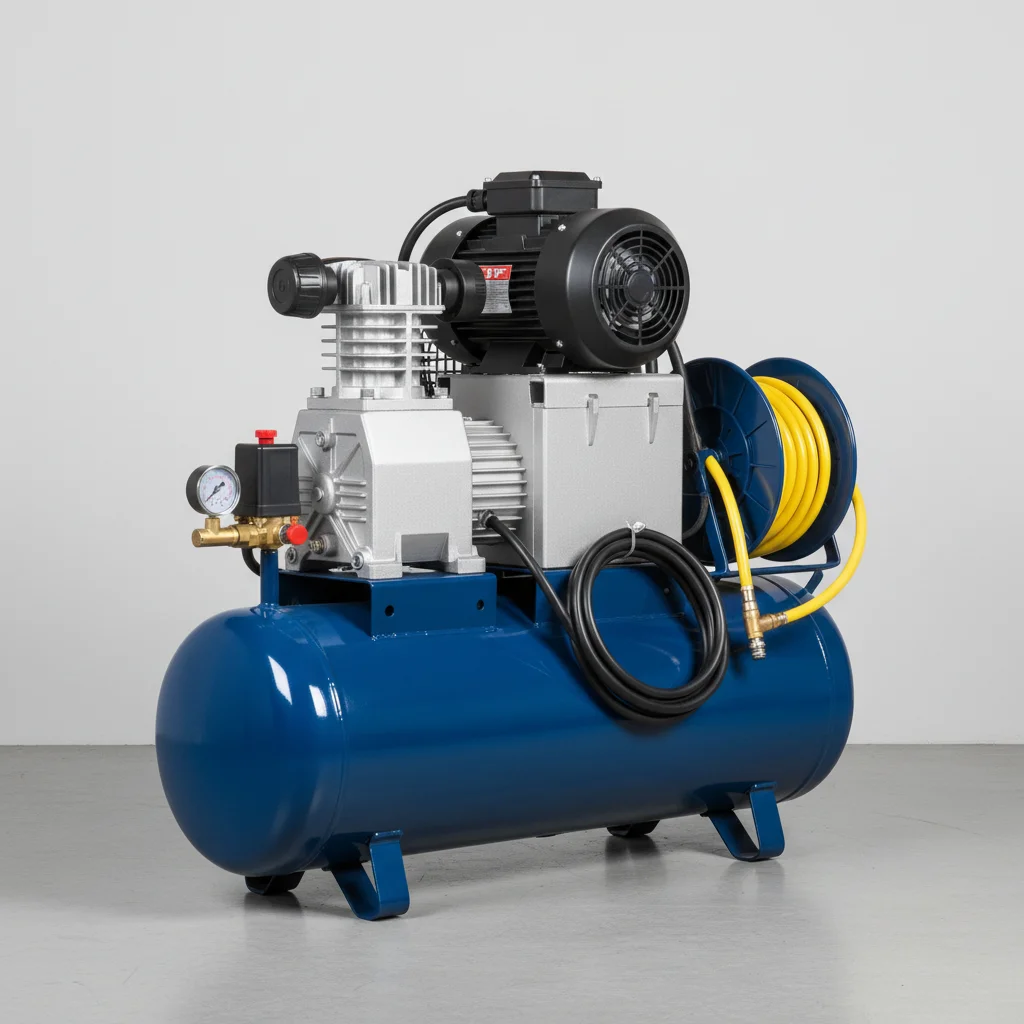
Determining the right air compressor horsepower (HP) is crucial for efficient operation and depends entirely on the tools you plan to use. For most DIY enthusiasts and small workshops, a 1.5 to 2 HP compressor is sufficient, while professional applications often require 5 HP or more to sustain high-demand tools.
Understanding Horsepower and CFM
Horsepower in an air compressor directly relates to its ability to generate compressed air, but it’s not the only factor. More importantly, horsepower influences the compressor’s Cubic Feet per Minute (CFM) output. CFM measures the volume of air a compressor can deliver at a specific pressure (PSI). A higher HP generally translates to a higher CFM, which is essential for tools that consume a lot of air continuously, such as sanders or impact wrenches. Always match the compressor’s CFM to the combined CFM requirements of your most demanding tools. For see our air compressor recommendations on this site.
Matching HP to Common Tools
Different air tools have varying air consumption rates. For example, a simple brad nailer might only need 0.5-1 CFM at 90 PSI, easily handled by a 1-2 HP compressor. However, a paint sprayer could demand 8-12 CFM at 40-60 PSI, necessitating a 3-5 HP unit. Air grinders and sanders are even more air-hungry, often requiring 10-20 CFM at 90 PSI, which typically calls for a 5 HP or greater compressor. Always check the manufacturer’s specifications for your tools to ensure compatibility.
Single-Stage vs. Two-Stage Compressors and HP
|
Our Picks for the Best Air Compressor in 2026
As an Amazon Associate I earn from qualifying purchases.
|
||
| Num | Product | Action |
|---|---|---|
| 1 | Craftsman Air Compressors 6 Gallon Portable Pancake Air Compressor,Oil Free Max 150 Psi 1.0HP 2.6 CFM@90PSI Electric Air Compressor Shop Air Compressor, CMXECXA02106410 |

|
| 2 | California Air Tools CAT-4710W 1.0 HP Quiet and Oil-Free Air Compressor with Wheels, 4.7 Gallon Steel Tank, 75 dBA Noise Level, Lightweight |
|
| 3 | CRAFTSMAN Air Compressor, 2 Gallon Portable Air Compressor 1/3HP Max 125 PSI Oil-Free Light Weight with 10 PCS Accessory Kit |
|
| 4 | Metabo HPT Pancake Air Compressor, 6-Gallon 165PSI, Portable Air Compressor with 1.0 HP Oil-Free High Efficiency Motor, Lihghtweight, Quick Couplers for Fast Tool Changes, EC711S |
|
| 5 | Tire Inflator Portable Air Compressor, 150PSI Cordless Air Pump for Car Tires with Auto Shut-Off, Portable Tire Pump for Car, Bike, Motorcycle and Balls |
|
| 6 | AC Compressor for 2000-2027 Chevy Silverado/GMC Sierra/Cadillac Escalade (4.8L/5.3L/6.0L V8) | OE Replaces 15036042, 15707611, CO29002C,78363, 78362 | A/C Compressor & Kit |
|
| 7 | DEWALT Tire Inflator Portable Air Compressor 20V MAX, Car Air Pump with Automatic Shut Off, LED Light, Tool Only (DCC020IB) |
|
| 8 | Quiet Air Compressor, Only 68dB, 5 Gallon Steel Tank, 2.8CFM @ 90PSI, Oil-Free, Electric Air Compressor Perfect for Woodwork Nailing, Garage, Car, Pneumatic Tool, Includes 11 Accessories |
|
| 9 | ECOMAX Air Compressor 6 Gallon 150 PSI Pancake Portable Oil-free Tank with 10 PCS Accessories Kit |
|
| 10 | Airmoto Tire Inflator Portable Air Compressor - Air Pump for Car Tires with Digital Pressure Gauge, LED Light and Auto Shut-Off Function - Cordless Pump for Car, Motorcycle, Bicycle, Ball |
|
The type of compressor also impacts how horsepower translates to performance. Single-stage compressors compress air once, while two-stage compressors compress air twice, leading to higher pressures and often greater efficiency for a given horsepower. For applications requiring sustained high pressure and volume, such as automotive repair shops or industrial settings, a two-stage compressor with 5 HP or more is usually the preferred choice. For intermittent use and lower CFM demands, a single-stage unit with 1.5-3 HP is often adequate and more cost-effective.
- Consider the highest CFM tool you will operate.
- Factor in the duty cycle: continuous use requires more HP.
- Evaluate your power supply: 120V vs. 240V.
- Account for future tool purchases and potential upgrades.
- Choose a compressor with a slightly higher HP/CFM than your minimum needs.
The Role of Tank Size and HP
While horsepower dictates how quickly air is generated, tank size determines how much compressed air can be stored. A larger tank can provide a buffer for tools with intermittent high air demands, allowing a lower HP compressor to keep up without constantly running. However, a large tank with insufficient HP will take a long time to fill. Conversely, a high HP compressor with a small tank will cycle frequently. For optimal performance, balance tank size with horsepower to match your application’s specific needs. For example, a 60-gallon tank paired with a 5 HP motor is a common setup for demanding workshop tasks.
For reliable performance in a home garage, a 2-3 HP compressor with a 20-30 gallon tank is a versatile choice, capable of handling most DIY projects from tire inflation to light painting.For more intensive professional use, consider a 5 HP, 60-gallon two-stage compressor to ensure consistent air delivery for heavy-duty tools.
