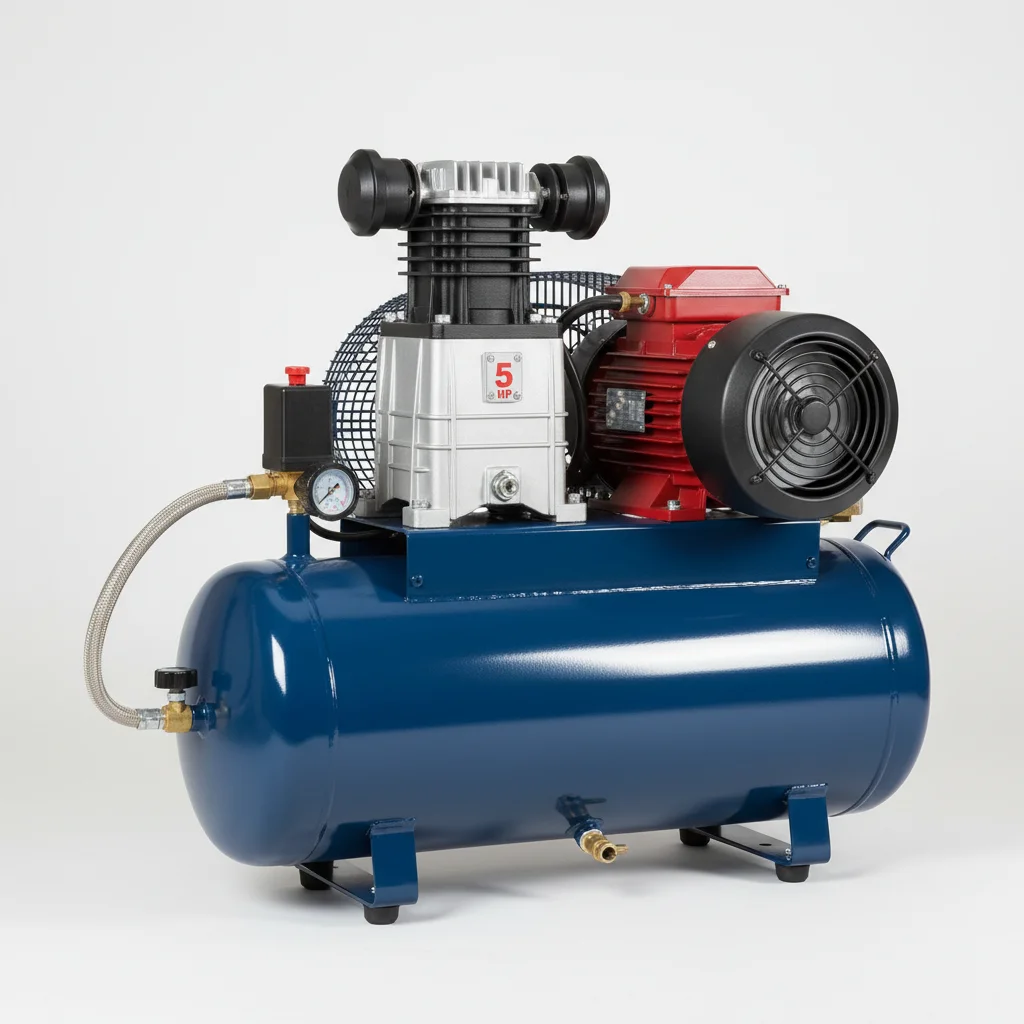
Determining the right air compressor horsepower (HP) is crucial for efficient operation and depends entirely on the tools you plan to use. For most DIY enthusiasts and small workshops, a 1.5 to 2 HP compressor is sufficient, while professional applications like auto body shops or industrial settings often require 5 HP or more. Understanding the demands of your air tools, measured in CFM (cubic feet per minute) and PSI (pounds per square inch), will guide you to the appropriate horsepower rating.
Understanding Horsepower and Air Compressor Performance
Horsepower in an air compressor directly correlates to its ability to generate and sustain airflow. A higher HP generally means the compressor can produce more CFM at a given PSI, allowing it to power more demanding tools or multiple tools simultaneously without significant pressure drops. However, it’s not the only factor; tank size and pump design also play critical roles in overall performance and recovery time. For browse all air compressor articles on this site.
For intermittent use with tools like brad nailers or tire inflators, a lower HP compressor with a smaller tank might suffice. Continuous-use tools such as sanders, grinders, or impact wrenches require a compressor with higher HP and a larger tank to maintain consistent pressure and prevent the motor from overworking.
Matching HP to Common Air Tools
Different air tools have varying air consumption rates, which directly influence the required compressor horsepower. For example, a simple blow gun might only need 1-2 CFM at 90 PSI, easily handled by a 1.5 HP unit. A framing nailer, on the other hand, might demand 2-4 CFM at 90 PSI, making a 2 HP compressor a better fit. More intensive tools like a 1/2-inch impact wrench can consume 4-6 CFM at 90 PSI, often necessitating a 3 HP or higher compressor.
- Brad Nailers & Staplers: 1-2 CFM @ 90 PSI (1.5 HP recommended)
- Tire Inflators & Blow Guns: 1-2 CFM @ 90 PSI (1.5 HP recommended)
- Framing Nailers & Roofing Nailers: 2-4 CFM @ 90 PSI (2-3 HP recommended)
- Impact Wrenches (1/2-inch): 4-6 CFM @ 90 PSI (3-5 HP recommended)
- Die Grinders & Sanders: 6-10 CFM @ 90 PSI (5 HP+ recommended)
Considerations for Workshop Size and Usage
|
Our Picks for the Best Air Compressor in 2026
As an Amazon Associate I earn from qualifying purchases.
|
||
| Num | Product | Action |
|---|---|---|
| 1 | Quiet Air Compressor, Only 68dB, 5 Gallon Steel Tank, 2.8CFM @ 90PSI, Oil-Free, Electric Air Compressor Perfect for Woodwork Nailing, Garage, Car, Pneumatic Tool, Includes 11 Accessories |

|
| 2 | California Air Tools CAT-4710W 1.0 HP Quiet and Oil-Free Air Compressor with Wheels, 4.7 Gallon Steel Tank, 75 dBA Noise Level, Lightweight |
|
| 3 | Craftsman Air Compressors 6 Gallon Portable Pancake Air Compressor,Oil Free Max 150 Psi 1.0HP 2.6 CFM@90PSI Electric Air Compressor Shop Air Compressor, CMXECXA02106410 |
|
| 4 | Airmoto Tire Inflator Portable Air Compressor - Air Pump for Car Tires with Digital Pressure Gauge, LED Light and Auto Shut-Off Function - Cordless Pump for Car, Motorcycle, Bicycle, Ball |
|
| 5 | ECOMAX Air Compressor 6 Gallon 150 PSI Pancake Portable Oil-free Tank with 10 PCS Accessories Kit |
|
| 6 | DEWALT Tire Inflator Portable Air Compressor 20V MAX, Car Air Pump with Automatic Shut Off, LED Light, Tool Only (DCC020IB) |
|
| 7 | AC Compressor for 2000-2027 Chevy Silverado/GMC Sierra/Cadillac Escalade (4.8L/5.3L/6.0L V8) | OE Replaces 15036042, 15707611, CO29002C,78363, 78362 | A/C Compressor & Kit |
|
| 8 | CRAFTSMAN Air Compressor, 2 Gallon Portable Air Compressor 1/3HP Max 125 PSI Oil-Free Light Weight with 10 PCS Accessory Kit |
|
| 9 | Tire Inflator Portable Air Compressor, 150PSI Cordless Air Pump for Car Tires with Auto Shut-Off, Portable Tire Pump for Car, Bike, Motorcycle and Balls |
|
| 10 | Metabo HPT Pancake Air Compressor, 6-Gallon 165PSI, Portable Air Compressor with 1.0 HP Oil-Free High Efficiency Motor, Lihghtweight, Quick Couplers for Fast Tool Changes, EC711S |
|
The size of your workshop and the frequency of use are also important factors. A small home garage where an air compressor is used occasionally for light tasks can get by with a smaller, less powerful unit. However, a professional auto shop or a woodworking studio with multiple users and continuous operation will require a robust compressor with significant horsepower and tank capacity to prevent downtime and ensure consistent tool performance. Always factor in potential future tool purchases and increased usage when making your decision.
Single-Stage vs. Two-Stage Compressors and HP
The type of compressor, whether single-stage or two-stage, also impacts how horsepower translates to performance. Single-stage compressors compress air once, typically reaching up to 125-135 PSI. Two-stage compressors compress air twice, achieving higher pressures, often up to 175 PSI, and are generally more efficient for high-demand applications. While a 5 HP single-stage compressor might be suitable for some tasks, a 5 HP two-stage compressor will deliver more sustained airflow at higher pressures, making it ideal for heavy-duty industrial use.
Electrical Requirements and Compressor Horsepower
It’s crucial to consider the electrical requirements when selecting an air compressor based on horsepower. Higher HP compressors, especially those 3 HP and above, often require a 240-volt circuit, whereas smaller units typically run on standard 120-volt outlets. Ensure your electrical infrastructure can support the compressor you choose to avoid tripping breakers or damaging the unit. Always consult an electrician if you are unsure about your workshop’s electrical capacity.
