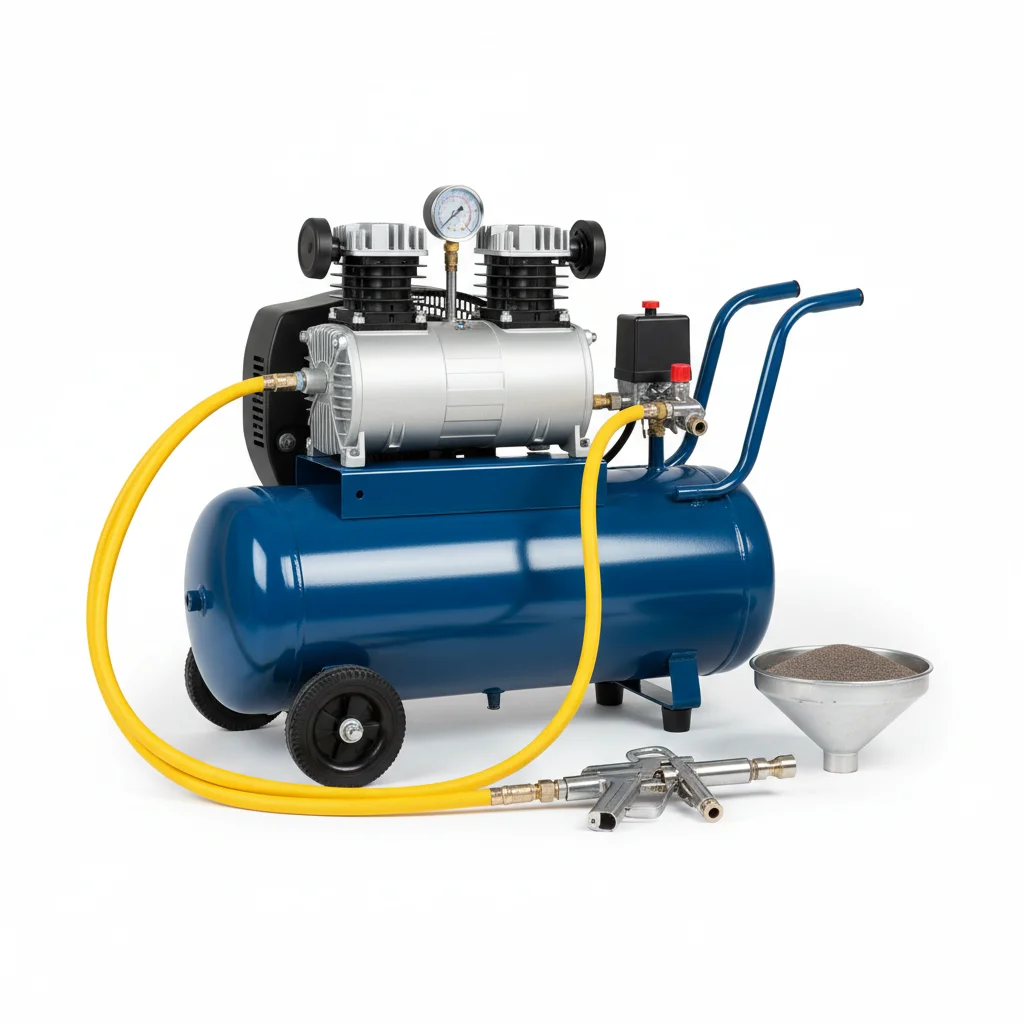
For effective sandblasting, an air compressor typically requires a sustained pressure of 90-120 PSI and a CFM (cubic feet per minute) output of at least 10-20 CFM, depending on the nozzle size and abrasive material used. Smaller projects might get by with less, but for consistent, efficient work, these are the minimums to aim for.
Understanding PSI and CFM for Sandblasting
PSI (Pounds per Square Inch) dictates the force with which the abrasive material is propelled, while CFM measures the volume of air the compressor can deliver. Both are critical for sandblasting. A higher PSI can remove tougher coatings, but without sufficient CFM, the pressure will drop quickly, leading to inconsistent blasting and slower work. It’s a delicate balance; too much pressure can damage delicate surfaces, while too little will be ineffective. For more air compressor guides on this site.
When selecting an air compressor, always check the continuous CFM rating, not just the peak. Sandblasting is a continuous-demand application, so the compressor needs to maintain its output without constantly cycling. This is where many smaller compressors fall short.
Matching Compressor to Sandblasting Nozzle Size
The size of your sandblasting nozzle directly impacts the CFM requirements. A larger nozzle allows more air to pass through, demanding a higher CFM from your compressor. For example, a 1/8-inch nozzle might require around 10-12 CFM, while a 1/4-inch nozzle could demand 20-25 CFM or more. Always consult the specifications of your sandblasting gun and nozzle to determine the precise CFM needed.
Using a compressor with insufficient CFM for your nozzle will result in a weak blast, slow material removal, and potential clogging. It’s better to have a compressor that slightly exceeds your CFM needs than one that falls short.
Types of Abrasives and Their Impact on Compressor Needs
|
Our Picks for the Best Air Compressor in 2026
As an Amazon Associate I earn from qualifying purchases.
|
||
| Num | Product | Action |
|---|---|---|
| 1 | Metabo HPT Pancake Air Compressor, 6-Gallon 165PSI, Portable Air Compressor with 1.0 HP Oil-Free High Efficiency Motor, Lihghtweight, Quick Couplers for Fast Tool Changes, EC711S |

|
| 2 | CRAFTSMAN Air Compressor, 2 Gallon Portable Air Compressor 1/3HP Max 125 PSI Oil-Free Light Weight with 10 PCS Accessory Kit |
|
| 3 | DEWALT Tire Inflator Portable Air Compressor 20V MAX, Car Air Pump with Automatic Shut Off, LED Light, Tool Only (DCC020IB) |
|
| 4 | Tire Inflator Portable Air Compressor, 150PSI Cordless Air Pump for Car Tires with Auto Shut-Off, Portable Tire Pump for Car, Bike, Motorcycle and Balls |
|
| 5 | California Air Tools CAT-4710W 1.0 HP Quiet and Oil-Free Air Compressor with Wheels, 4.7 Gallon Steel Tank, 75 dBA Noise Level, Lightweight |
|
| 6 | Craftsman Air Compressors 6 Gallon Portable Pancake Air Compressor,Oil Free Max 150 Psi 1.0HP 2.6 CFM@90PSI Electric Air Compressor Shop Air Compressor, CMXECXA02106410 |
|
| 7 | Airmoto Tire Inflator Portable Air Compressor - Air Pump for Car Tires with Digital Pressure Gauge, LED Light and Auto Shut-Off Function - Cordless Pump for Car, Motorcycle, Bicycle, Ball |
|
| 8 | Quiet Air Compressor, Only 68dB, 5 Gallon Steel Tank, 2.8CFM @ 90PSI, Oil-Free, Electric Air Compressor Perfect for Woodwork Nailing, Garage, Car, Pneumatic Tool, Includes 11 Accessories |
|
| 9 | AC Compressor for 2000-2027 Chevy Silverado/GMC Sierra/Cadillac Escalade (4.8L/5.3L/6.0L V8) | OE Replaces 15036042, 15707611, CO29002C,78363, 78362 | A/C Compressor & Kit |
|
| 10 | ECOMAX Air Compressor 6 Gallon 150 PSI Pancake Portable Oil-free Tank with 10 PCS Accessories Kit |
|
Different abrasive materials, such as silica sand, garnet, glass beads, or walnut shells, have varying densities and require different pressures for optimal performance. Heavier abrasives like garnet often benefit from higher PSI to achieve effective impact and cleaning. Lighter abrasives, like walnut shells, might require lower PSI to prevent damage to the substrate.
Consider the material you are blasting and the type of finish you desire. For delicate surfaces or paint stripping, lower pressures and finer abrasives are often preferred. For heavy rust removal or preparing surfaces for coating, higher pressures and more aggressive abrasives are typically used.
Essential Features for a Sandblasting Air Compressor
When choosing an air compressor for sandblasting, several features are paramount. A large air tank (60 gallons or more) helps maintain consistent pressure and reduces compressor cycling. A two-stage compressor is often recommended for its ability to deliver higher CFM at sustained pressures. Additionally, an efficient air dryer is crucial to prevent moisture from contaminating your abrasive and clogging your equipment.
- Minimum 90-120 PSI continuous output
- At least 10-20 CFM at 90 PSI (check nozzle specs)
- Large tank capacity (60+ gallons recommended)
- Two-stage pump for sustained performance
- Integrated air dryer or external moisture separator
Maintenance Tips for Sandblasting Compressors
Regular maintenance is vital for any air compressor, especially when used for demanding tasks like sandblasting. This includes draining the tank daily to remove condensation, checking and changing the oil according to manufacturer recommendations, and inspecting air filters for clogs. Moisture is the enemy of sandblasting, so ensure your air dryer is functioning correctly and consider adding an inline moisture trap.
Proper maintenance not only extends the life of your compressor but also ensures consistent performance, preventing costly downtime and inefficient blasting. Always refer to your compressor’s owner’s manual for specific maintenance schedules and procedures.
