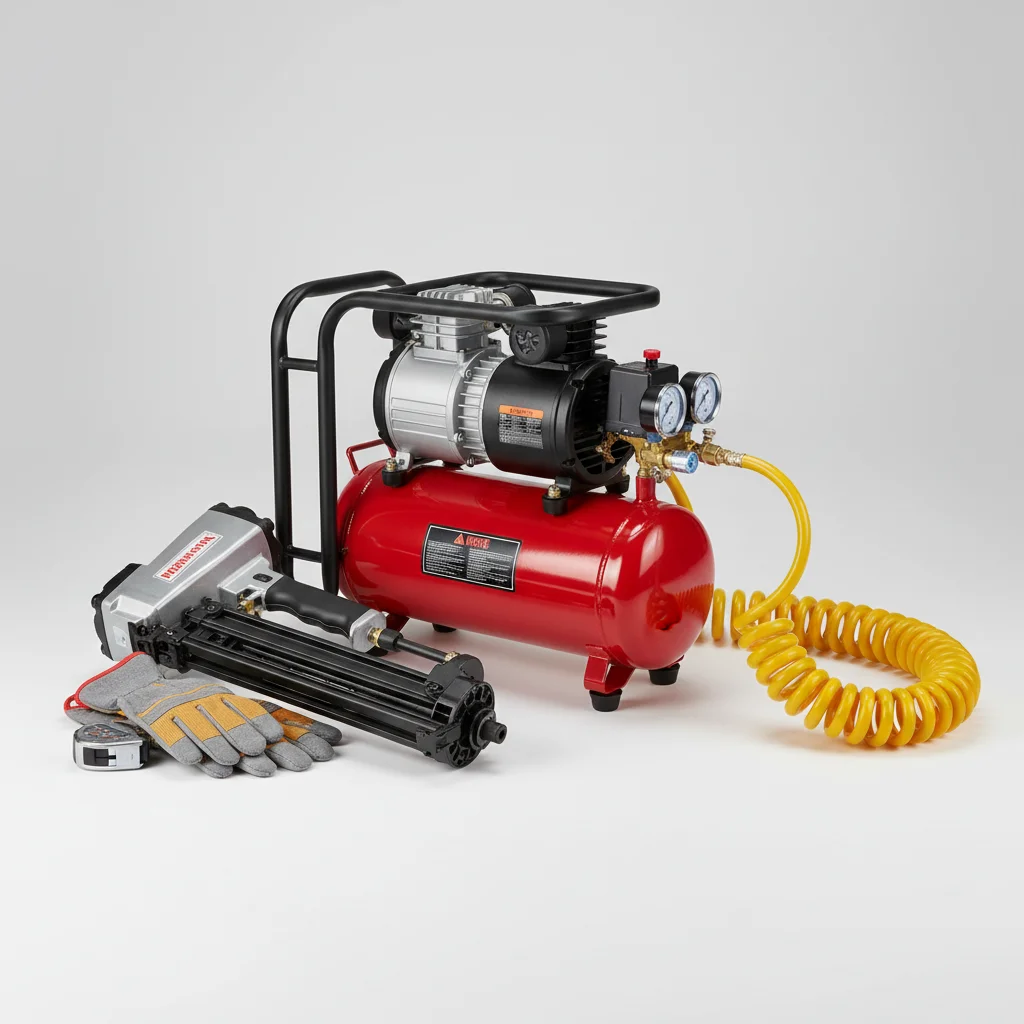
For roofing nailers, you typically need an air compressor that can deliver between 100 and 120 PSI. This pressure range ensures consistent and powerful nail driving, crucial for securing shingles and other roofing materials effectively. While some nailers might operate at slightly lower pressures, maintaining at least 100 PSI is a good baseline for reliable performance and to prevent misfires or under-driven nails.
Understanding PSI Requirements for Roofing
Roofing nailers, whether coil or strip fed, require a specific air pressure to function optimally. The PSI (pounds per square inch) dictates the force with which the nail is driven. Too low a PSI, and nails won’t seat properly, leading to loose shingles. Too high, and you risk damaging the roofing material or the nailer itself. Always consult your specific roofing nailer’s manual for its recommended operating pressure range, but generally, 100-120 PSI is the sweet spot for most professional and DIY roofing projects.
Key Features to Look for in a Roofing Compressor
Beyond PSI, several other factors are important when choosing an air compressor for roofing. CFM (cubic feet per minute) is critical; a roofing nailer typically requires around 2.2 CFM at 90 PSI. Ensure your compressor can meet or exceed this. Portability is also a major consideration, as you’ll likely be moving the compressor around a job site. A lightweight, compact design with a durable roll cage is highly beneficial. Tank size can vary, but a 4-6 gallon tank is often sufficient for continuous operation without constant cycling.
- Minimum 100 PSI output for consistent nail driving.
- At least 2.2 CFM at 90 PSI to keep up with demand.
- Portable design with a sturdy handle and roll cage.
- Tank size of 4-6 gallons for sustained use.
- Reliable motor for consistent performance on the job site.
Choosing the Right Compressor Size
|
Our Picks for the Best Air Compressor in 2026
As an Amazon Associate I earn from qualifying purchases.
|
||
| Num | Product | Action |
|---|---|---|
| 1 | Tire Inflator Portable Air Compressor, 150PSI Cordless Air Pump for Car Tires with Auto Shut-Off, Portable Tire Pump for Car, Bike, Motorcycle and Balls |

|
| 2 | Craftsman Air Compressors 6 Gallon Portable Pancake Air Compressor,Oil Free Max 150 Psi 1.0HP 2.6 CFM@90PSI Electric Air Compressor Shop Air Compressor, CMXECXA02106410 |
|
| 3 | Quiet Air Compressor, Only 68dB, 5 Gallon Steel Tank, 2.8CFM @ 90PSI, Oil-Free, Electric Air Compressor Perfect for Woodwork Nailing, Garage, Car, Pneumatic Tool, Includes 11 Accessories |
|
| 4 | AC Compressor for 2000-2027 Chevy Silverado/GMC Sierra/Cadillac Escalade (4.8L/5.3L/6.0L V8) | OE Replaces 15036042, 15707611, CO29002C,78363, 78362 | A/C Compressor & Kit |
|
| 5 | California Air Tools CAT-4710W 1.0 HP Quiet and Oil-Free Air Compressor with Wheels, 4.7 Gallon Steel Tank, 75 dBA Noise Level, Lightweight |
|
| 6 | CRAFTSMAN Air Compressor, 2 Gallon Portable Air Compressor 1/3HP Max 125 PSI Oil-Free Light Weight with 10 PCS Accessory Kit |
|
| 7 | DEWALT Tire Inflator Portable Air Compressor 20V MAX, Car Air Pump with Automatic Shut Off, LED Light, Tool Only (DCC020IB) |
|
| 8 | Airmoto Tire Inflator Portable Air Compressor - Air Pump for Car Tires with Digital Pressure Gauge, LED Light and Auto Shut-Off Function - Cordless Pump for Car, Motorcycle, Bicycle, Ball |
|
| 9 | Metabo HPT Pancake Air Compressor, 6-Gallon 165PSI, Portable Air Compressor with 1.0 HP Oil-Free High Efficiency Motor, Lihghtweight, Quick Couplers for Fast Tool Changes, EC711S |
|
| 10 | ECOMAX Air Compressor 6 Gallon 150 PSI Pancake Portable Oil-free Tank with 10 PCS Accessories Kit |
|
The size of your air compressor, in terms of both tank capacity and motor power, directly impacts its suitability for roofing. A smaller pancake or hot dog style compressor (2-6 gallons) is often adequate for single-nailer operation on smaller jobs or repairs. For larger projects or when running multiple nailers simultaneously, a larger twin-stack or wheelbarrow style compressor (6-10 gallons or more) with a higher CFM rating will be necessary to prevent pressure drops and maintain productivity. Consider the scale of your typical roofing projects when making your selection.
Maintenance Tips for Roofing Compressors
Proper maintenance is crucial for the longevity and reliable performance of your air compressor, especially when used in demanding roofing environments. Regularly drain the moisture from the air tank to prevent rust and corrosion. Check and clean the air filter frequently, as roofing sites can be dusty. Inspect hoses and fittings for leaks or damage before each use. Following these simple maintenance steps will ensure your compressor is always ready for the next roofing job.
Safety Considerations on the Roof
Working with air compressors and power tools on a roof requires strict adherence to safety protocols. Always wear appropriate personal protective equipment (PPE), including safety glasses, hearing protection, and work gloves. Ensure all air hoses are in good condition and properly connected to prevent accidental disconnections. Be mindful of hose routing to avoid tripping hazards. Never operate a damaged compressor or one that is showing signs of malfunction. Prioritizing safety will protect both you and your equipment.
