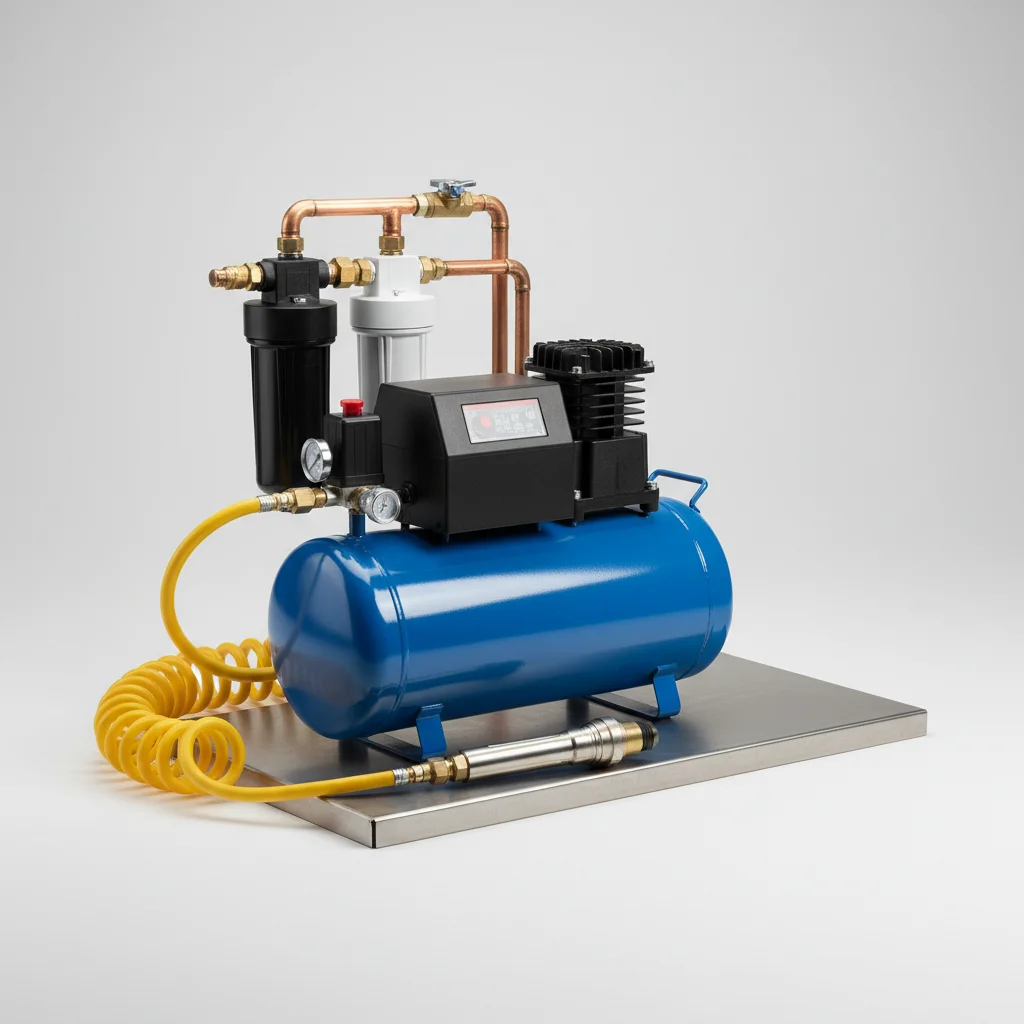
Choosing the right air compressor for your plasma cutter is crucial for optimal performance and clean cuts. For most hobbyist and light-duty plasma cutters, a compressor delivering at least 5 CFM at 90 PSI is generally sufficient. However, industrial-grade plasma cutters can demand significantly more, often requiring 10-20 CFM at 100-120 PSI. Understanding your plasma cutter’s specific air requirements, typically found in its manual, is the first step to selecting the correct compressor.
Understanding Plasma Cutter Air Requirements
Plasma cutters rely on a steady supply of clean, dry compressed air to create the plasma arc. The two most critical specifications are Cubic Feet per Minute (CFM) and Pounds per Square Inch (PSI). CFM dictates the volume of air the compressor can deliver, directly impacting how long your plasma cutter can operate continuously without interruption. PSI, on the other hand, refers to the pressure at which the air is delivered, which is essential for piercing and maintaining a stable arc. Always check your plasma cutter’s manual for its exact CFM and PSI requirements, as these can vary widely between models and manufacturers.
Factors Influencing Compressor Size
Several factors beyond just the plasma cutter’s specifications should influence your air compressor choice. The thickness of the material you plan to cut will affect the required air pressure and volume. Thicker materials generally demand higher CFM and PSI. Your duty cycle, or how long you plan to cut continuously, is also important. A compressor with a larger tank and higher CFM output will be better suited for extended cutting sessions, preventing the compressor from constantly cycling on and off, which can lead to overheating and premature wear. Finally, consider the quality of the air. Plasma cutters are sensitive to moisture and oil, so an integrated air dryer and filter system are highly recommended.
Types of Air Compressors for Plasma Cutting
|
Our Picks for the Best Air Compressor in 2026
As an Amazon Associate I earn from qualifying purchases.
|
||
| Num | Product | Action |
|---|---|---|
| 1 | Quiet Air Compressor, Only 68dB, 5 Gallon Steel Tank, 2.8CFM @ 90PSI, Oil-Free, Electric Air Compressor Perfect for Woodwork Nailing, Garage, Car, Pneumatic Tool, Includes 11 Accessories |

|
| 2 | Tire Inflator Portable Air Compressor, 150PSI Cordless Air Pump for Car Tires with Auto Shut-Off, Portable Tire Pump for Car, Bike, Motorcycle and Balls |
|
| 3 | AC Compressor for 2000-2027 Chevy Silverado/GMC Sierra/Cadillac Escalade (4.8L/5.3L/6.0L V8) | OE Replaces 15036042, 15707611, CO29002C,78363, 78362 | A/C Compressor & Kit |
|
| 4 | DEWALT Tire Inflator Portable Air Compressor 20V MAX, Car Air Pump with Automatic Shut Off, LED Light, Tool Only (DCC020IB) |
|
| 5 | California Air Tools CAT-4710W 1.0 HP Quiet and Oil-Free Air Compressor with Wheels, 4.7 Gallon Steel Tank, 75 dBA Noise Level, Lightweight |
|
| 6 | ECOMAX Air Compressor 6 Gallon 150 PSI Pancake Portable Oil-free Tank with 10 PCS Accessories Kit |
|
| 7 | Craftsman Air Compressors 6 Gallon Portable Pancake Air Compressor,Oil Free Max 150 Psi 1.0HP 2.6 CFM@90PSI Electric Air Compressor Shop Air Compressor, CMXECXA02106410 |
|
| 8 | Airmoto Tire Inflator Portable Air Compressor - Air Pump for Car Tires with Digital Pressure Gauge, LED Light and Auto Shut-Off Function - Cordless Pump for Car, Motorcycle, Bicycle, Ball |
|
| 9 | CRAFTSMAN Air Compressor, 2 Gallon Portable Air Compressor 1/3HP Max 125 PSI Oil-Free Light Weight with 10 PCS Accessory Kit |
|
| 10 | Metabo HPT Pancake Air Compressor, 6-Gallon 165PSI, Portable Air Compressor with 1.0 HP Oil-Free High Efficiency Motor, Lihghtweight, Quick Couplers for Fast Tool Changes, EC711S |
|
When selecting an air compressor for plasma cutting, you’ll primarily encounter piston-driven (reciprocating) compressors. These are common and come in various sizes. For smaller, portable plasma cutters, a 20-30 gallon tank with a 5-7 CFM output at 90 PSI might suffice. For more demanding applications or larger plasma cutters, a 60-80 gallon tank with 10-15 CFM at 100-120 PSI is often necessary. Two-stage compressors are generally preferred for their ability to deliver higher pressure and more consistent airflow, which is beneficial for plasma cutting. Oil-free compressors can be a good option to minimize oil contamination, but often have a shorter lifespan than oiled models.
- Check plasma cutter manual for exact CFM and PSI.
- Consider material thickness and cutting duty cycle.
- Prioritize clean, dry air with filters and dryers.
- Match compressor tank size to usage frequency.
- Evaluate single-stage vs. two-stage compressor benefits.
Essential Air Treatment for Plasma Cutters
Moisture and oil in your compressed air can severely degrade plasma cutting performance and damage your equipment. Water can cause erratic arcs, poor cut quality, and even premature failure of consumables. Oil can contaminate the workpiece and lead to poor adhesion of coatings. Therefore, investing in proper air treatment is non-negotiable. This typically includes a high-quality air filter to remove particulates and a desiccant or refrigerated air dryer to eliminate moisture. Some compressors come with integrated dryers, but for serious plasma cutting, an external, dedicated dryer is often a worthwhile investment.
Maintenance and Longevity Tips
Regular maintenance of your air compressor is vital, especially when used with a plasma cutter. Drain the air tank daily to remove accumulated moisture, which prevents rust and extends tank life. Regularly check and replace air filters to ensure a clean air supply. For oiled compressors, monitor and change the oil according to the manufacturer’s recommendations. Keeping the compressor in a clean, well-ventilated area will also help prevent overheating and ensure efficient operation. Proper maintenance not only extends the life of your compressor but also ensures consistent, high-quality performance from your plasma cutter.
