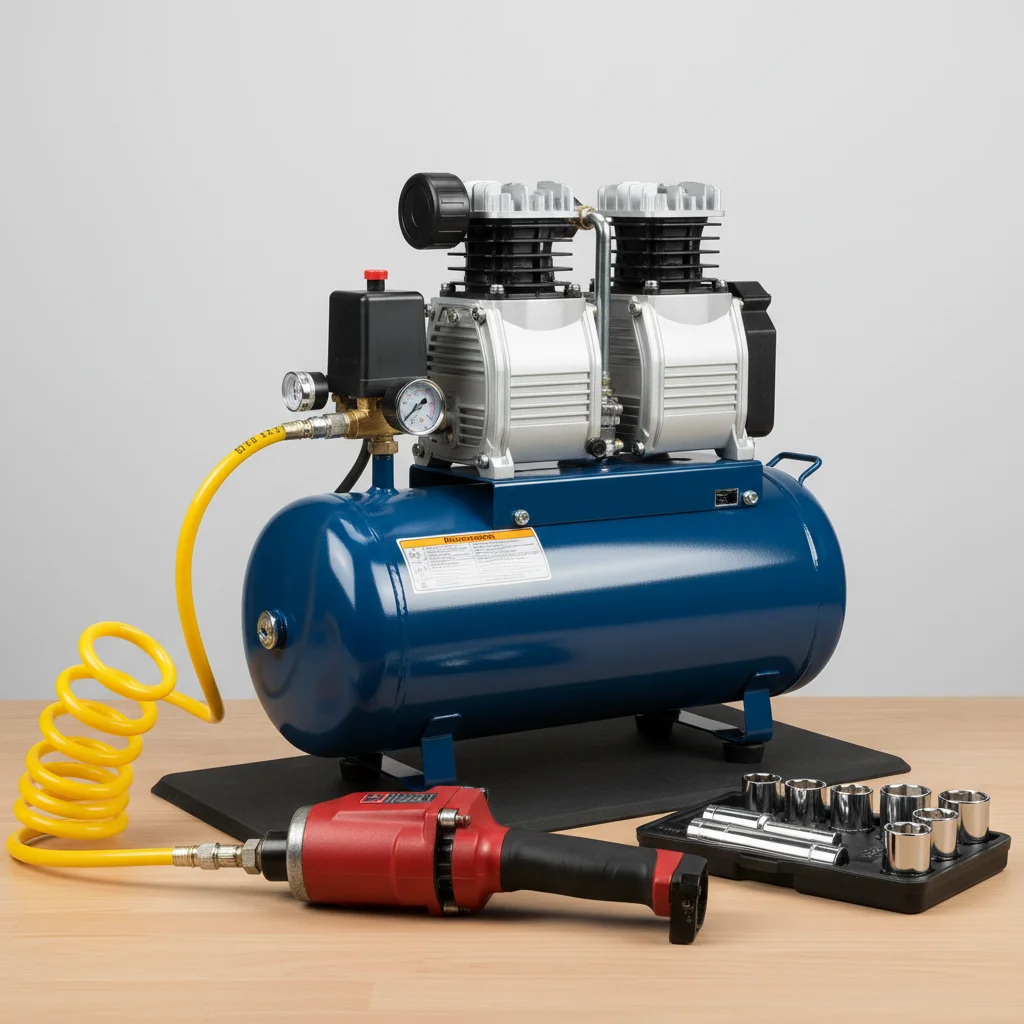
When selecting an air compressor for impact wrenches, you typically need a unit that can deliver at least 90 PSI and a CFM (Cubic Feet per Minute) of 4-5 CFM at 90 PSI for smaller wrenches, or 5-8 CFM at 90 PSI for larger, more demanding impact wrenches. The specific requirements depend heavily on the impact wrench’s air consumption and the tasks you’ll be performing.
Understanding Impact Wrench Air Requirements
Impact wrenches are powerful pneumatic tools that require a consistent supply of compressed air to operate effectively. Each impact wrench model will have a specified CFM requirement at a certain PSI, usually 90 PSI. It’s crucial to match your compressor’s output to these specifications to ensure optimal performance and prevent premature wear on both the tool and the compressor. Always check the tool’s manual for its exact air consumption.
Matching Compressor Output to Your Impact Wrench
To properly power an impact wrench, your air compressor needs to meet or exceed the tool’s CFM requirement at its operating pressure. If your compressor’s CFM is too low, the impact wrench will not deliver its full torque, leading to inefficient work and potential damage to fasteners. For intermittent use, a compressor with a slightly lower CFM might suffice, but for continuous operation, aim for a compressor that provides at least 1.5 times the tool’s stated CFM to allow for recovery time.
- Small impact wrenches (1/4″ to 3/8″ drive): Typically require 3-5 CFM at 90 PSI.
- Medium impact wrenches (1/2″ drive): Often need 4-6 CFM at 90 PSI.
- Large impact wrenches (3/4″ to 1″ drive): Can demand 6-10+ CFM at 90 PSI.
- Air tools used simultaneously: Add up the CFM requirements for all tools.
Tank Size and Sustained Performance
|
Our Picks for the Best Air Compressor in 2026
As an Amazon Associate I earn from qualifying purchases.
|
||
| Num | Product | Action |
|---|---|---|
| 1 | ECOMAX Air Compressor 6 Gallon 150 PSI Pancake Portable Oil-free Tank with 10 PCS Accessories Kit |

|
| 2 | DEWALT Tire Inflator Portable Air Compressor 20V MAX, Car Air Pump with Automatic Shut Off, LED Light, Tool Only (DCC020IB) |
|
| 3 | California Air Tools CAT-4710W 1.0 HP Quiet and Oil-Free Air Compressor with Wheels, 4.7 Gallon Steel Tank, 75 dBA Noise Level, Lightweight |
|
| 4 | CRAFTSMAN Air Compressor, 2 Gallon Portable Air Compressor 1/3HP Max 125 PSI Oil-Free Light Weight with 10 PCS Accessory Kit |
|
| 5 | Tire Inflator Portable Air Compressor, 150PSI Cordless Air Pump for Car Tires with Auto Shut-Off, Portable Tire Pump for Car, Bike, Motorcycle and Balls |
|
| 6 | Metabo HPT Pancake Air Compressor, 6-Gallon 165PSI, Portable Air Compressor with 1.0 HP Oil-Free High Efficiency Motor, Lihghtweight, Quick Couplers for Fast Tool Changes, EC711S |
|
| 7 | Craftsman Air Compressors 6 Gallon Portable Pancake Air Compressor,Oil Free Max 150 Psi 1.0HP 2.6 CFM@90PSI Electric Air Compressor Shop Air Compressor, CMXECXA02106410 |
|
| 8 | Quiet Air Compressor, Only 68dB, 5 Gallon Steel Tank, 2.8CFM @ 90PSI, Oil-Free, Electric Air Compressor Perfect for Woodwork Nailing, Garage, Car, Pneumatic Tool, Includes 11 Accessories |
|
| 9 | Airmoto Tire Inflator Portable Air Compressor - Air Pump for Car Tires with Digital Pressure Gauge, LED Light and Auto Shut-Off Function - Cordless Pump for Car, Motorcycle, Bicycle, Ball |
|
| 10 | AC Compressor for 2000-2027 Chevy Silverado/GMC Sierra/Cadillac Escalade (4.8L/5.3L/6.0L V8) | OE Replaces 15036042, 15707611, CO29002C,78363, 78362 | A/C Compressor & Kit |
|
While CFM dictates the continuous air supply, the air compressor’s tank size plays a critical role in sustained performance, especially for tools with high instantaneous air demands like impact wrenches. A larger tank provides a reserve of compressed air, allowing the compressor pump to run less frequently and providing a more consistent air supply during heavy use. For automotive work or prolonged fastening tasks, a tank of 20 gallons or more is often recommended.
Key Features to Look for in an Air Compressor
Beyond PSI and CFM, consider other features when choosing an air compressor for impact wrenches. Portability might be important if you need to move the compressor around your workspace. Noise level can also be a significant factor, especially in home garages or enclosed shops. Look for durable construction, reliable motors, and easy-to-use controls.Many modern compressors also include features like oil-free pumps for reduced maintenance and multiple air outlets for running several tools.
Maintenance Tips for Your Air Compressor and Impact Wrench
Proper maintenance is essential for the longevity of both your air compressor and impact wrench. Regularly drain moisture from the compressor tank to prevent rust and ensure clean air delivery. Check and replace air filters as needed. For your impact wrench, ensure it is properly lubricated according to the manufacturer’s guidelines, and inspect air lines and fittings for leaks.These simple steps will help maintain peak performance and extend the life of your equipment.
