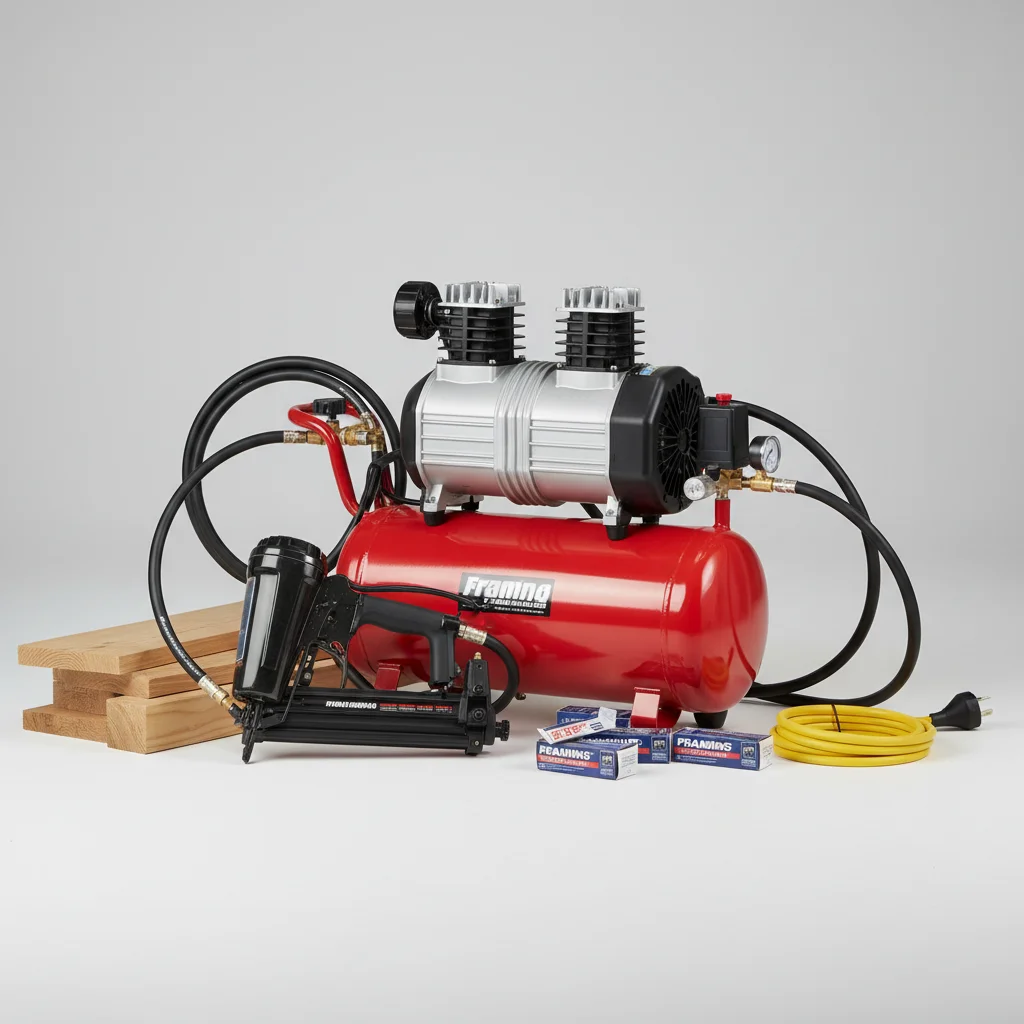
For framing projects, an air compressor typically requires a minimum of 90 PSI to effectively drive framing nails. However, a compressor capable of consistently delivering 100-120 PSI is ideal for optimal performance, ensuring nails are fully seated even in dense materials. This range provides sufficient power for most framing nailers without over-pressurizing the tool, which can lead to premature wear or inconsistent results.
Understanding PSI and CFM for Framing
When selecting an air compressor for framing, both PSI (pounds per square inch) and CFM (cubic feet per minute) are critical. While PSI dictates the force with which the nail is driven, CFM determines how quickly the compressor can recover and supply air for continuous use. A framing nailer typically consumes around 2.2 CFM at 90 PSI. Therefore, a compressor with a CFM rating of at least 2.5-3.0 CFM at 90 PSI is recommended to keep up with the demands of a framing gun, especially during sustained work.
Insufficient CFM will result in the compressor running constantly to keep up, leading to potential overheating and reduced lifespan. Conversely, a compressor with adequate CFM will cycle less frequently, providing a more consistent air supply and a quieter work environment.
Tank Size Considerations for Framing Applications
The tank size of an air compressor plays a significant role in its suitability for framing. While a larger tank doesn’t increase the maximum PSI, it does store more compressed air, allowing for longer periods of continuous nailing before the compressor motor needs to kick in and recharge. For light, intermittent framing tasks, a 6-gallon pancake or hot dog style compressor might suffice. However, for more extensive framing projects, a 10-gallon or even a 20-gallon tank is often preferred.
A larger tank helps maintain consistent pressure, which is crucial for driving nails flush every time. It also reduces the frequency of the motor cycling, which can be less disruptive on a job site. Consider the scale of your projects when deciding on tank capacity.
Key Features to Look for in a Framing Air Compressor
|
Our Picks for the Best Air Compressor in 2026
As an Amazon Associate I earn from qualifying purchases.
|
||
| Num | Product | Action |
|---|---|---|
| 1 | California Air Tools CAT-4710W 1.0 HP Quiet and Oil-Free Air Compressor with Wheels, 4.7 Gallon Steel Tank, 75 dBA Noise Level, Lightweight |

|
| 2 | AC Compressor for 2000-2027 Chevy Silverado/GMC Sierra/Cadillac Escalade (4.8L/5.3L/6.0L V8) | OE Replaces 15036042, 15707611, CO29002C,78363, 78362 | A/C Compressor & Kit |
|
| 3 | Quiet Air Compressor, Only 68dB, 5 Gallon Steel Tank, 2.8CFM @ 90PSI, Oil-Free, Electric Air Compressor Perfect for Woodwork Nailing, Garage, Car, Pneumatic Tool, Includes 11 Accessories |
|
| 4 | Airmoto Tire Inflator Portable Air Compressor - Air Pump for Car Tires with Digital Pressure Gauge, LED Light and Auto Shut-Off Function - Cordless Pump for Car, Motorcycle, Bicycle, Ball |
|
| 5 | Metabo HPT Pancake Air Compressor, 6-Gallon 165PSI, Portable Air Compressor with 1.0 HP Oil-Free High Efficiency Motor, Lihghtweight, Quick Couplers for Fast Tool Changes, EC711S |
|
| 6 | ECOMAX Air Compressor 6 Gallon 150 PSI Pancake Portable Oil-free Tank with 10 PCS Accessories Kit |
|
| 7 | CRAFTSMAN Air Compressor, 2 Gallon Portable Air Compressor 1/3HP Max 125 PSI Oil-Free Light Weight with 10 PCS Accessory Kit |
|
| 8 | Tire Inflator Portable Air Compressor, 150PSI Cordless Air Pump for Car Tires with Auto Shut-Off, Portable Tire Pump for Car, Bike, Motorcycle and Balls |
|
| 9 | Craftsman Air Compressors 6 Gallon Portable Pancake Air Compressor,Oil Free Max 150 Psi 1.0HP 2.6 CFM@90PSI Electric Air Compressor Shop Air Compressor, CMXECXA02106410 |
|
| 10 | DEWALT Tire Inflator Portable Air Compressor 20V MAX, Car Air Pump with Automatic Shut Off, LED Light, Tool Only (DCC020IB) |
|
Beyond PSI and CFM, several other features enhance an air compressor’s performance and usability for framing. Portability is often a major factor, as framing frequently involves moving the compressor around a job site. Look for models with wheels and a comfortable handle. Noise level is another important consideration; quieter compressors (typically under 70 dB) are more pleasant to work with, especially indoors.
- Oil-Free Pump: Requires less maintenance and is generally lighter.
- Roll Cage Design: Protects vital components from damage on busy job sites.
- Multiple Air Outlets: Allows for connecting more than one tool simultaneously.
- Quick Couplers: Facilitate fast and easy hose connections.
- Pressure Regulator: Essential for fine-tuning the output pressure to match your nailer’s requirements.
Maintaining Your Framing Air Compressor
Proper maintenance is crucial for the longevity and reliable performance of your air compressor, especially when used for demanding tasks like framing. Regularly drain the moisture from the tank to prevent rust and corrosion. Check and clean the air filter to ensure optimal airflow and prevent debris from entering the pump. For oil-lubricated models, monitor and change the oil according to the manufacturer’s recommendations.
Periodically inspect hoses and fittings for leaks, as even small leaks can significantly reduce efficiency and increase wear on the compressor. Keeping your compressor in top condition ensures it’s always ready to power your framing projects effectively.
Recommended Air Compressors for Framing
When choosing an air compressor for framing, consider models known for their durability and consistent performance. Brands like DeWalt, Makita, and Senco offer excellent options that meet the PSI and CFM requirements for most framing nailers. Look for compressors with robust motors and durable pumps that can withstand the rigors of construction sites.
Always check the specific requirements of your framing nailer before purchasing an air compressor to ensure compatibility. A well-matched compressor and nailer combination will lead to efficient work and professional results.
