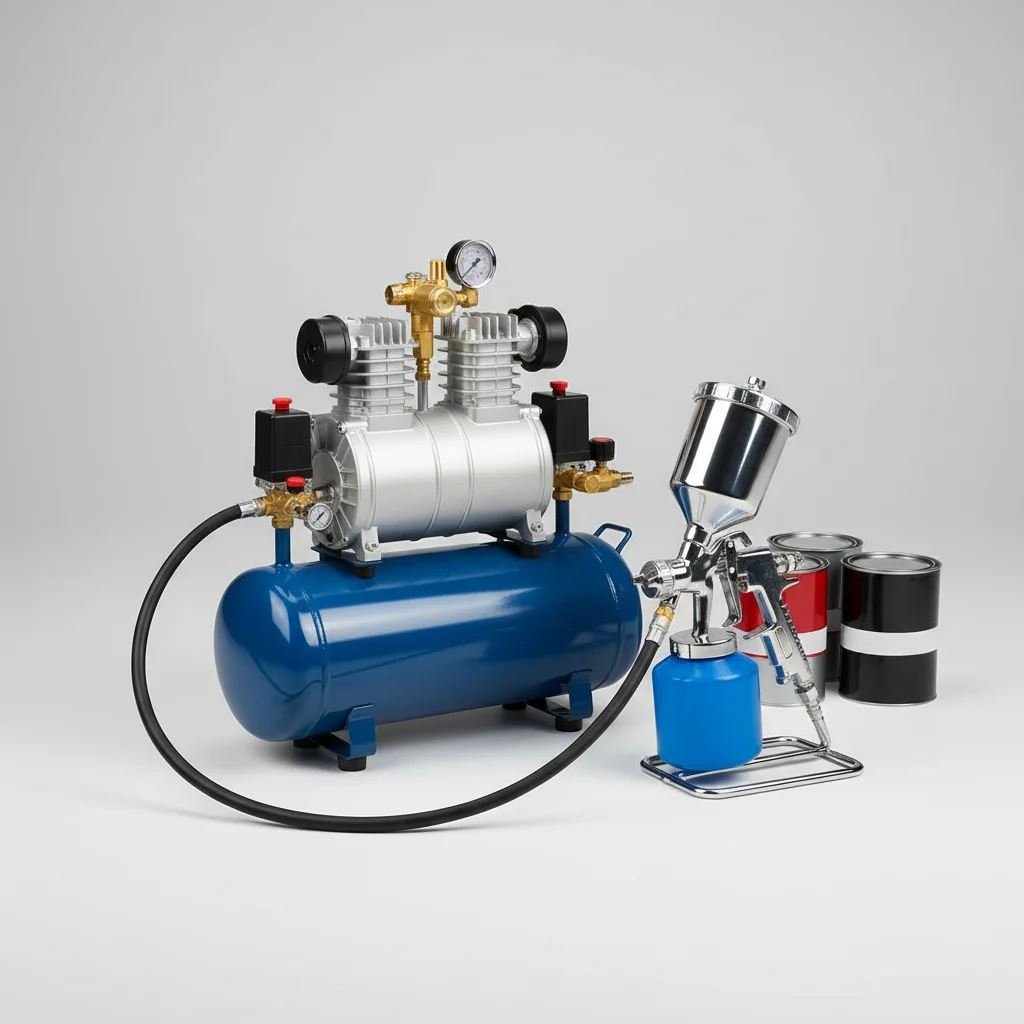
Choosing the right air compressor for automotive painting is crucial for achieving a flawless finish. For most DIY enthusiasts and small professional shops, a 60-gallon, two-stage air compressor with at least 5-7 CFM at 90 PSI is the ideal choice. This capacity ensures a consistent air supply for various painting tools without frequent cycling, which can lead to moisture buildup and an uneven spray pattern.
Understanding CFM and PSI for Automotive Painting
CFM (Cubic Feet per Minute) and PSI (Pounds per Square Inch) are the two most critical specifications when selecting an air compressor for automotive painting. Your spray gun will have specific CFM and PSI requirements, typically found in its manual. It’s essential to match or exceed these requirements with your compressor’s output. A common HVLP (High Volume Low Pressure) spray gun might require around 10-15 CFM at 30-40 PSI, while a conventional gun could need 15-20 CFM at 50-60 PSI. Always check your specific tool’s needs. For air compressor buying guides on this site.
Undersizing your compressor can lead to pressure drops during continuous spraying, resulting in an inconsistent finish, known as ‘fisheyes’ or ‘orange peel’ texture. Over-sizing, while not harmful, can be an unnecessary expense. Aim for a compressor that provides at least 25-30% more CFM than your highest-demand tool to ensure a comfortable buffer.
Single-Stage vs. Two-Stage Compressors
For automotive painting, a two-stage air compressor is generally recommended over a single-stage unit. Single-stage compressors compress air once, while two-stage compressors compress air twice, resulting in higher pressure and greater efficiency. This translates to a more consistent and cooler air supply, which is vital for painting applications where moisture and heat can negatively impact paint adhesion and finish quality.
Two-stage compressors are also typically more durable and designed for longer duty cycles, making them a better long-term investment for serious painting projects. While they come with a higher initial cost, their performance and longevity often justify the expense for automotive work.
Tank Size and Duty Cycle Considerations
|
Our Picks for the Best Air Compressor in 2026
As an Amazon Associate I earn from qualifying purchases.
|
||
| Num | Product | Action |
|---|---|---|
| 1 | ECOMAX Air Compressor 6 Gallon 150 PSI Pancake Portable Oil-free Tank with 10 PCS Accessories Kit |

|
| 2 | CRAFTSMAN Air Compressor, 2 Gallon Portable Air Compressor 1/3HP Max 125 PSI Oil-Free Light Weight with 10 PCS Accessory Kit |
|
| 3 | Metabo HPT Pancake Air Compressor, 6-Gallon 165PSI, Portable Air Compressor with 1.0 HP Oil-Free High Efficiency Motor, Lihghtweight, Quick Couplers for Fast Tool Changes, EC711S |
|
| 4 | Craftsman Air Compressors 6 Gallon Portable Pancake Air Compressor,Oil Free Max 150 Psi 1.0HP 2.6 CFM@90PSI Electric Air Compressor Shop Air Compressor, CMXECXA02106410 |
|
| 5 | Airmoto Tire Inflator Portable Air Compressor - Air Pump for Car Tires with Digital Pressure Gauge, LED Light and Auto Shut-Off Function - Cordless Pump for Car, Motorcycle, Bicycle, Ball |
|
| 6 | AC Compressor for 2000-2027 Chevy Silverado/GMC Sierra/Cadillac Escalade (4.8L/5.3L/6.0L V8) | OE Replaces 15036042, 15707611, CO29002C,78363, 78362 | A/C Compressor & Kit |
|
| 7 | DEWALT Tire Inflator Portable Air Compressor 20V MAX, Car Air Pump with Automatic Shut Off, LED Light, Tool Only (DCC020IB) |
|
| 8 | Quiet Air Compressor, Only 68dB, 5 Gallon Steel Tank, 2.8CFM @ 90PSI, Oil-Free, Electric Air Compressor Perfect for Woodwork Nailing, Garage, Car, Pneumatic Tool, Includes 11 Accessories |
|
| 9 | Tire Inflator Portable Air Compressor, 150PSI Cordless Air Pump for Car Tires with Auto Shut-Off, Portable Tire Pump for Car, Bike, Motorcycle and Balls |
|
| 10 | California Air Tools CAT-4710W 1.0 HP Quiet and Oil-Free Air Compressor with Wheels, 4.7 Gallon Steel Tank, 75 dBA Noise Level, Lightweight |
|
The tank size of your air compressor directly impacts its duty cycle and how long you can spray continuously without the motor cycling on. For automotive painting, a 60-gallon tank is a popular choice, providing sufficient reserve air to minimize compressor cycling. Smaller tanks, like 30-gallon units, might be acceptable for very small touch-up jobs, but for full panel or vehicle painting, they will struggle to keep up, leading to frequent motor restarts and potential pressure fluctuations.
A longer duty cycle means the compressor can run for extended periods without overheating. Look for compressors with a duty cycle of at least 50% for intermittent use, and ideally 70% or higher for continuous painting sessions. This ensures the compressor can handle the demands of automotive painting without premature wear.
Essential Features for Automotive Painting Compressors
- Built-in Air Dryer: Moisture in the air supply is a painter’s worst enemy. A compressor with an integrated air dryer or a separate refrigerated air dryer is highly recommended to prevent water spots and adhesion issues.
- Oil-Lubricated Pump: Oil-lubricated pumps generally run cooler, quieter, and last longer than oil-free models, making them preferable for the demands of automotive painting.
- Low Noise Level: While not directly impacting paint quality, a quieter compressor improves the working environment, especially in a home garage.
- Voltage Requirements: Most 60-gallon two-stage compressors require 240V power, so ensure your workshop has the appropriate electrical setup.
- Portability: While large compressors are not highly portable, consider models with sturdy wheels if you need to move it within your workspace.
Investing in the right air compressor for automotive painting is a critical step towards achieving professional-grade results. By carefully considering CFM, PSI, tank size, and essential features, you can select a unit that meets your specific needs and helps you lay down a perfect coat every time.
For a reliable and powerful option, consider the. It offers excellent CFM output and a robust design suitable for demanding automotive painting tasks. If you’re looking for a more budget-friendly yet capable compressor, theprovides a great balance of performance and value for smaller projects.
