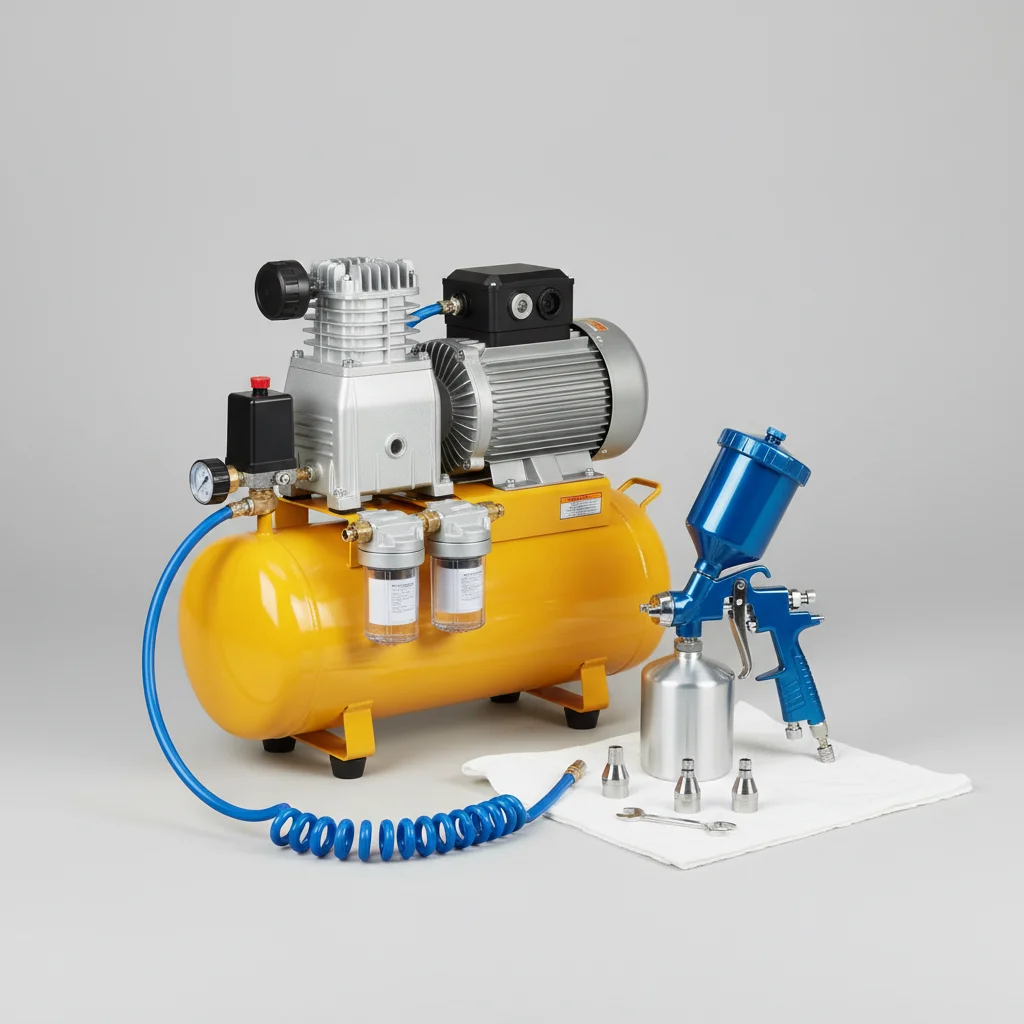
For effective automotive painting, you typically need an air compressor that can consistently deliver between 15 to 30 PSI at the spray gun, with the compressor itself capable of producing at least 90 PSI and a CFM rating of 10-15 at 90 PSI. This ensures proper atomization of paint and a smooth, even finish.
Understanding PSI and CFM for Automotive Painting
When selecting an air compressor for automotive painting, both PSI (pounds per square inch) and CFM (cubic feet per minute) are critical. PSI dictates the force with which the paint is expelled, while CFM measures the volume of air the compressor can deliver. Most automotive paint guns require a specific CFM range at a given PSI to operate optimally. For example, a typical HVLP (High Volume Low Pressure) spray gun might require 10-15 CFM at 25-30 PSI. Undersized compressors will struggle to maintain consistent pressure, leading to an uneven paint job and potential rework.
Choosing the Right Tank Size and Horsepower
The tank size of your air compressor plays a significant role in maintaining a consistent airflow, especially during continuous painting sessions. A larger tank, such as a 60-gallon or 80-gallon unit, provides a greater reserve of compressed air, reducing the frequency of the compressor cycling on and off. This not only extends the life of your compressor but also helps prevent fluctuations in air pressure that can negatively impact your paint finish. For horsepower, a 3-5 HP motor is generally recommended for serious automotive painting to ensure adequate air production.
Essential Air Compressor Accessories for Painting
|
Our Picks for the Best Air Compressor in 2026
As an Amazon Associate I earn from qualifying purchases.
|
||
| Num | Product | Action |
|---|---|---|
| 1 | DEWALT Tire Inflator Portable Air Compressor 20V MAX, Car Air Pump with Automatic Shut Off, LED Light, Tool Only (DCC020IB) |

|
| 2 | California Air Tools CAT-4710W 1.0 HP Quiet and Oil-Free Air Compressor with Wheels, 4.7 Gallon Steel Tank, 75 dBA Noise Level, Lightweight |
|
| 3 | ECOMAX Air Compressor 6 Gallon 150 PSI Pancake Portable Oil-free Tank with 10 PCS Accessories Kit |
|
| 4 | Craftsman Air Compressors 6 Gallon Portable Pancake Air Compressor,Oil Free Max 150 Psi 1.0HP 2.6 CFM@90PSI Electric Air Compressor Shop Air Compressor, CMXECXA02106410 |
|
| 5 | Airmoto Tire Inflator Portable Air Compressor - Air Pump for Car Tires with Digital Pressure Gauge, LED Light and Auto Shut-Off Function - Cordless Pump for Car, Motorcycle, Bicycle, Ball |
|
| 6 | Quiet Air Compressor, Only 68dB, 5 Gallon Steel Tank, 2.8CFM @ 90PSI, Oil-Free, Electric Air Compressor Perfect for Woodwork Nailing, Garage, Car, Pneumatic Tool, Includes 11 Accessories |
|
| 7 | Metabo HPT Pancake Air Compressor, 6-Gallon 165PSI, Portable Air Compressor with 1.0 HP Oil-Free High Efficiency Motor, Lihghtweight, Quick Couplers for Fast Tool Changes, EC711S |
|
| 8 | AC Compressor for 2000-2027 Chevy Silverado/GMC Sierra/Cadillac Escalade (4.8L/5.3L/6.0L V8) | OE Replaces 15036042, 15707611, CO29002C,78363, 78362 | A/C Compressor & Kit |
|
| 9 | CRAFTSMAN Air Compressor, 2 Gallon Portable Air Compressor 1/3HP Max 125 PSI Oil-Free Light Weight with 10 PCS Accessory Kit |
|
| 10 | Tire Inflator Portable Air Compressor, 150PSI Cordless Air Pump for Car Tires with Auto Shut-Off, Portable Tire Pump for Car, Bike, Motorcycle and Balls |
|
Beyond the compressor itself, several accessories are crucial for achieving a professional automotive paint job. An air filter regulator is essential for removing moisture and oil from the air supply, preventing imperfections in the paint. A desiccant dryer can further enhance air quality by removing even more moisture. Additionally, a good quality air hose that is at least 3/8-inch in diameter will minimize pressure drop between the compressor and the spray gun. Always use a pressure gauge at the gun to ensure you are spraying at the manufacturer’s recommended PSI.
- Air filter regulator for moisture and oil removal.
- Desiccant dryer for superior air drying.
- High-quality 3/8-inch air hose to prevent pressure drop.
- In-line pressure gauge for accurate gun pressure.
- Quick-connect fittings for easy tool changes.
Maintenance Tips for Optimal Painting Performance
Regular maintenance of your air compressor is vital for consistent performance, especially when used for automotive painting. This includes draining the air tank daily to remove accumulated moisture, checking and changing the air filter regularly, and inspecting hoses and fittings for leaks. For oil-lubricated compressors, ensure the oil level is correct and change it according to the manufacturer’s recommendations. A well-maintained compressor will deliver clean, dry air at the correct pressure, which is paramount for a flawless paint finish.
Safety Considerations When Painting with Air Compressors
Safety should always be a top priority when using an air compressor for automotive painting. Always wear appropriate personal protective equipment (PPE), including a respirator, safety glasses, and gloves, to protect against paint fumes and overspray. Ensure your work area is well-ventilated to prevent the buildup of hazardous fumes. Never exceed the maximum rated pressure of your air compressor or spray gun. Regularly inspect all equipment for damage and ensure electrical connections are secure. Proper grounding of the compressor is also essential to prevent electrical hazards.
