An air compressor is an invaluable tool for countless tasks, from powering pneumatic tools in a bustling workshop to inflating tires in your home garage. However, the true efficiency, safety, and longevity of your air-powered equipment hinge on one crucial component: the air compressor regulator. Without proper adjustment, you risk damaging expensive tools, wasting energy, and even creating hazardous working conditions. This guide will walk you through the essential steps to understand, safely adjust, and maintain your air compressor regulator, ensuring your pneumatic system operates at its peak.
Understanding Your Air Compressor Regulator
At its core, an air compressor regulator acts as a sophisticated gateway, meticulously controlling the flow of compressed air from the storage tank to your connected tools. While the compressor itself generates high-pressure air, often exceeding 150 PSI, most pneumatic tools require a specific, much lower operating pressure to function correctly and safely. The regulator reduces this high tank pressure to a consistent, usable output pressure, matching the demands of your specific application.
This precision adjustment is vital for several reasons. Firstly, it protects your tools from over-pressurization, which can cause rapid wear, damage internal components, and destroy seals, significantly shortening their lifespan. Secondly, it contributes to energy savings; operating tools at a pressure higher than necessary wastes considerable energy. Reducing the pressure by even a small amount can lead to notable energy cost reductions. Finally, proper regulation is paramount for safety, preventing unexpected tool reactions and meeting compliance standards for compressed air systems.
A typical air compressor regulator assembly features several key components: an adjustment knob or actuator for setting the desired pressure, an inlet pressure gauge displaying the air pressure from the tank, an outlet pressure gauge showing the regulated pressure being delivered to your tools, and often a locking mechanism to prevent accidental adjustments. Understanding these parts is the first step toward effective control.
Essential Safety Precautions Before Adjustment
Working with compressed air systems demands a strict adherence to safety protocols. Before attempting any adjustments, always prioritize your well-being and the integrity of your equipment.
The most critical step is to power down and fully depressurize your air compressor. Turn off the compressor’s power switch, disconnect it from its electrical source, and ensure the circuit breaker in your control cabinet is off. For larger systems, close inlet and outlet valves for physical isolation. Slowly open the tank’s drain valve to release all stored compressed air until both the tank and outlet gauges read zero. Allow a few minutes for any residual pressure to dissipate completely.
Always wear appropriate Personal Protective Equipment (PPE), including safety glasses to shield your eyes from potential debris or sudden air bursts, and hearing protection, especially when initially powering up the compressor. Lastly, make it a habit to consult your air compressor’s owner’s manual. Each manufacturer may have specific recommendations or unique features for their regulator, and the manual is your most reliable source for precise instructions and critical safety warnings. Ignoring these steps can lead to severe injury or equipment damage.
Preparing for Regulator Adjustment
Before you begin turning any knobs, a little preparation goes a long way in ensuring a smooth and accurate adjustment process.
First, locate the regulator on your air compressor. On most models, it’s positioned prominently near the air outlet, typically identifiable by its adjustment knob and two pressure gauges – one for tank pressure and one for outlet pressure. If you’re unsure, your compressor’s manual will pinpoint its exact location.
Next, and crucially, identify the PSI requirements of your pneumatic tool. Every air tool has an optimal operating pressure range, usually specified in pounds per square inch (PSI) in its user manual or on a label directly on the tool. Running a tool above its recommended PSI can lead to premature failure, while operating below it results in poor performance. Make a note of this recommended pressure.
Finally, connect your air tool and hose. Attach the air hose securely to your pneumatic tool, then connect the hose to the air compressor’s regulated air outlet. Double-check all connections to ensure they are tight and leak-free, as even small leaks can compromise pressure accuracy and waste air.
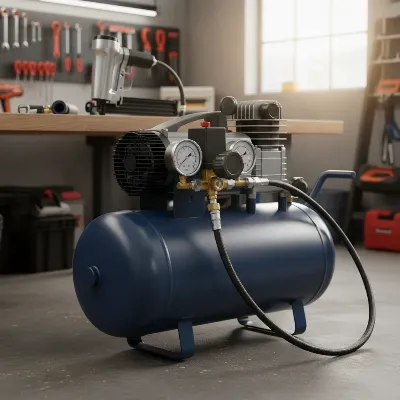 Air compressor regulator with gauges and hose connected to a pneumatic tool.
Step-by-Step Guide to Adjusting Your Air Compressor Regulator
With safety measures in place and your tools connected, you’re ready to adjust the regulator. Follow these steps carefully to achieve optimal performance.
Power On and Pressurize
|
Our Picks for the Best Air Compressor in 2026
As an Amazon Associate I earn from qualifying purchases.
|
||
| Num | Product | Action |
|---|---|---|
| 1 | AC Compressor for 2000-2027 Chevy Silverado/GMC Sierra/Cadillac Escalade (4.8L/5.3L/6.0L V8) | OE Replaces 15036042, 15707611, CO29002C,78363, 78362 | A/C Compressor & Kit |

|
| 2 | Metabo HPT Pancake Air Compressor, 6-Gallon 165PSI, Portable Air Compressor with 1.0 HP Oil-Free High Efficiency Motor, Lihghtweight, Quick Couplers for Fast Tool Changes, EC711S |
|
| 3 | CRAFTSMAN Air Compressor, 2 Gallon Portable Air Compressor 1/3HP Max 125 PSI Oil-Free Light Weight with 10 PCS Accessory Kit |
|
| 4 | Tire Inflator Portable Air Compressor, 150PSI Cordless Air Pump for Car Tires with Auto Shut-Off, Portable Tire Pump for Car, Bike, Motorcycle and Balls |
|
| 5 | California Air Tools CAT-4710W 1.0 HP Quiet and Oil-Free Air Compressor with Wheels, 4.7 Gallon Steel Tank, 75 dBA Noise Level, Lightweight |
|
| 6 | Quiet Air Compressor, Only 68dB, 5 Gallon Steel Tank, 2.8CFM @ 90PSI, Oil-Free, Electric Air Compressor Perfect for Woodwork Nailing, Garage, Car, Pneumatic Tool, Includes 11 Accessories |
|
| 7 | Airmoto Tire Inflator Portable Air Compressor - Air Pump for Car Tires with Digital Pressure Gauge, LED Light and Auto Shut-Off Function - Cordless Pump for Car, Motorcycle, Bicycle, Ball |
|
| 8 | Craftsman Air Compressors 6 Gallon Portable Pancake Air Compressor,Oil Free Max 150 Psi 1.0HP 2.6 CFM@90PSI Electric Air Compressor Shop Air Compressor, CMXECXA02106410 |
|
| 9 | ECOMAX Air Compressor 6 Gallon 150 PSI Pancake Portable Oil-free Tank with 10 PCS Accessories Kit |
|
| 10 | DEWALT Tire Inflator Portable Air Compressor 20V MAX, Car Air Pump with Automatic Shut Off, LED Light, Tool Only (DCC020IB) |
|
After ensuring all connections are secure and the tank is depressurized, switch on your air compressor. Allow it to run until it reaches its maximum cut-off pressure, indicated on the tank pressure gauge. This ensures a stable inlet pressure for accurate regulator adjustment.
Unlock the Regulator
Many air compressor regulators feature a locking mechanism to prevent accidental changes. This is often a knob that needs to be pulled outwards or a collar that needs to be twisted to unlock. If your regulator has such a feature, engage it to free the adjustment mechanism.
Adjust the Pressure Setting
This is the core of the adjustment process.
- To increase the outlet pressure, turn the adjustment knob clockwise.
- To decrease the outlet pressure, turn the adjustment knob counter-clockwise.
Make these adjustments slowly and incrementally. While turning the knob, continuously monitor the outlet pressure gauge. Your goal is to match the tool’s recommended PSI precisely. It’s often beneficial to approach the desired setting gradually rather than making large turns. Remember that you may need to set the regulator slightly higher than the tool’s recommendation to compensate for any pressure drop that occurs along a long air hose or piping.
Test and Verify
Once you’ve set the gauge to the desired pressure, briefly actuate your pneumatic tool. Observe its performance. Does it operate smoothly and with the expected force? This real-world test confirms that the pressure setting is suitable for the application.
Lock the Setting
After successfully adjusting and verifying the pressure, push the adjustment knob back in (or twist the locking collar) to secure the setting. This prevents the regulator from accidentally drifting to a different pressure during operation, maintaining consistent performance and safety.
Common Regulator Issues and Troubleshooting Tips
Even with proper adjustment, air compressor regulators can experience issues. Knowing how to identify and address these common problems can save you time and prevent more significant equipment damage.
One frequent complaint is pressure fluctuations, often manifesting as “creep” or “droop.” Creep occurs when the outlet pressure slowly increases over time without any adjustment, while droop describes a decrease in pressure as airflow increases. These fluctuations can stem from various issues, including air leaks, worn internal seals, or the regulator being incorrectly sized for your system’s demands.
Leaks are another widespread problem. Regularly inspect your regulator and its connections for any visible signs of damage. A simple and effective way to detect leaks is to spray a solution of soapy water onto all potential leak points, such as fittings and seals. Bubbles will rapidly form where air is escaping. Addressing leaks, even minor ones, is crucial for maintaining pressure stability and efficiency.
If your regulator is not holding pressure despite adjustments, the culprit could be damaged seals, internal debris, or significant wear and tear of its components. Debris on valve seats, for instance, can prevent the regulator from closing completely, leading to pressure loss.
Lastly, calibration issues can cause inaccurate pressure readings, leading to tools operating outside their optimal range. Over time, a regulator’s calibration can degrade. If you suspect your gauge is inaccurate or the regulator’s performance is inconsistent, recalibration by a professional or replacement might be necessary.
Maintaining Your Air Compressor Regulator
Regular maintenance of your air compressor regulator is key to its longevity, accuracy, and the overall efficiency of your compressed air system. Proactive care can prevent many common issues and ensure consistent performance.
Perform regular visual inspections. Look for any signs of physical damage, corrosion, or wear on the regulator body, gauges, and connecting lines. Also, check for leaks periodically, as even small leaks can worsen over time and lead to significant air loss.
Keeping the regulator clean and free of debris is essential. Foreign particles can accumulate on internal valve seats, preventing the regulator from sealing properly and leading to pressure creep or outright failure. If your system includes a filter regulator, ensure you regularly check and drain any accumulated moisture from the filter bowl. Moisture and contaminants are detrimental to air tools and regulator components.
While some minor issues can be troubleshooted, know when to consider replacement. If your regulator shows significant wear, irreparable damage, or if troubleshooting steps consistently fail to resolve pressure issues, investing in a quality replacement compatible with your system is the most prudent action. A failing regulator can jeopardize not only your tools but also the safety of your operation.
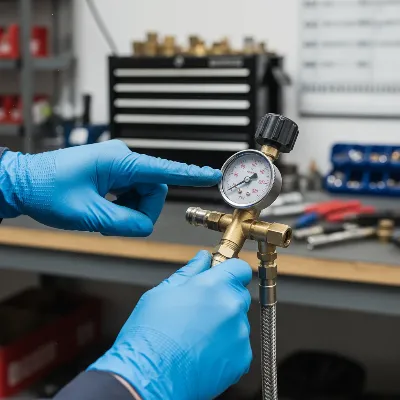 Technician performing maintenance on an air compressor regulator, checking connections and gauges.
Conclusion
Mastering the adjustment of your air compressor regulator is a fundamental skill for anyone operating pneumatic tools. This small but mighty component is instrumental in protecting your equipment, saving energy, and ensuring a safe working environment. By understanding its function, adhering to critical safety precautions, and following the step-by-step adjustment process, you gain precise control over your air supply. Remember to consult your manufacturer’s manual, diligently troubleshoot common issues, and commit to regular maintenance. With these practices, you can confidently optimize your air compressor system, extending the life of your tools and enhancing the efficiency of every task. What aspect of air compressor maintenance do you find most challenging in your daily operations?
Frequently Asked Questions
What does an air compressor regulator do?
An air compressor regulator, also known as a pressure reducing valve, takes the high-pressure air from your compressor’s tank and reduces it to a consistent, lower, and usable pressure for your pneumatic tools and equipment. It ensures tools receive the correct air pressure, preventing damage and improving safety and efficiency.
How do I know what PSI to set my regulator to?
You should always set your regulator to the recommended operating pressure (PSI) specified in the user manual of the pneumatic tool you are using. Operating tools outside their recommended pressure range can lead to poor performance or premature wear.
Can I adjust my air compressor regulator while the compressor is running?
Yes, you can adjust the air compressor regulator while the compressor is running and pressurized. In fact, it’s necessary for the compressor to be running and pressurized to accurately see the changes on the outlet pressure gauge as you make adjustments. However, always follow safety guidelines and consult your manual.
Why is my air compressor regulator not holding pressure?
A regulator not holding pressure can be due to several reasons, including damaged or worn internal seals, accumulation of debris or contamination on the valve seats, or the regulator being improperly sized for your system’s flow requirements. Leaks in the air lines or fittings can also contribute to pressure loss.
What’s the difference between a relieving and non-relieving regulator?
A relieving regulator is designed to vent excess downstream pressure to the atmosphere if the downstream pressure rises above the set point. A non-relieving regulator does not vent excess pressure; it traps the pressure downstream. Relieving regulators are common for compressed air, while non-relieving regulators are preferred for hazardous or expensive gases where venting is undesirable. [cite: 5_search_types]
How often should I check my air compressor regulator?
You should perform a visual inspection of your air compressor regulator regularly, ideally before each significant use or at least monthly, checking for leaks, physical damage, and proper gauge function. Internal maintenance or professional inspection might be needed annually, depending on usage and environmental conditions.
